K-shaped diamond demand sharpens at Couture, buyers favor rarer pieces
At Couture, the market split is unmistakable: buyers are chasing rarer, pricier diamonds at the top and entry buys at the bottom, while the middle thins.
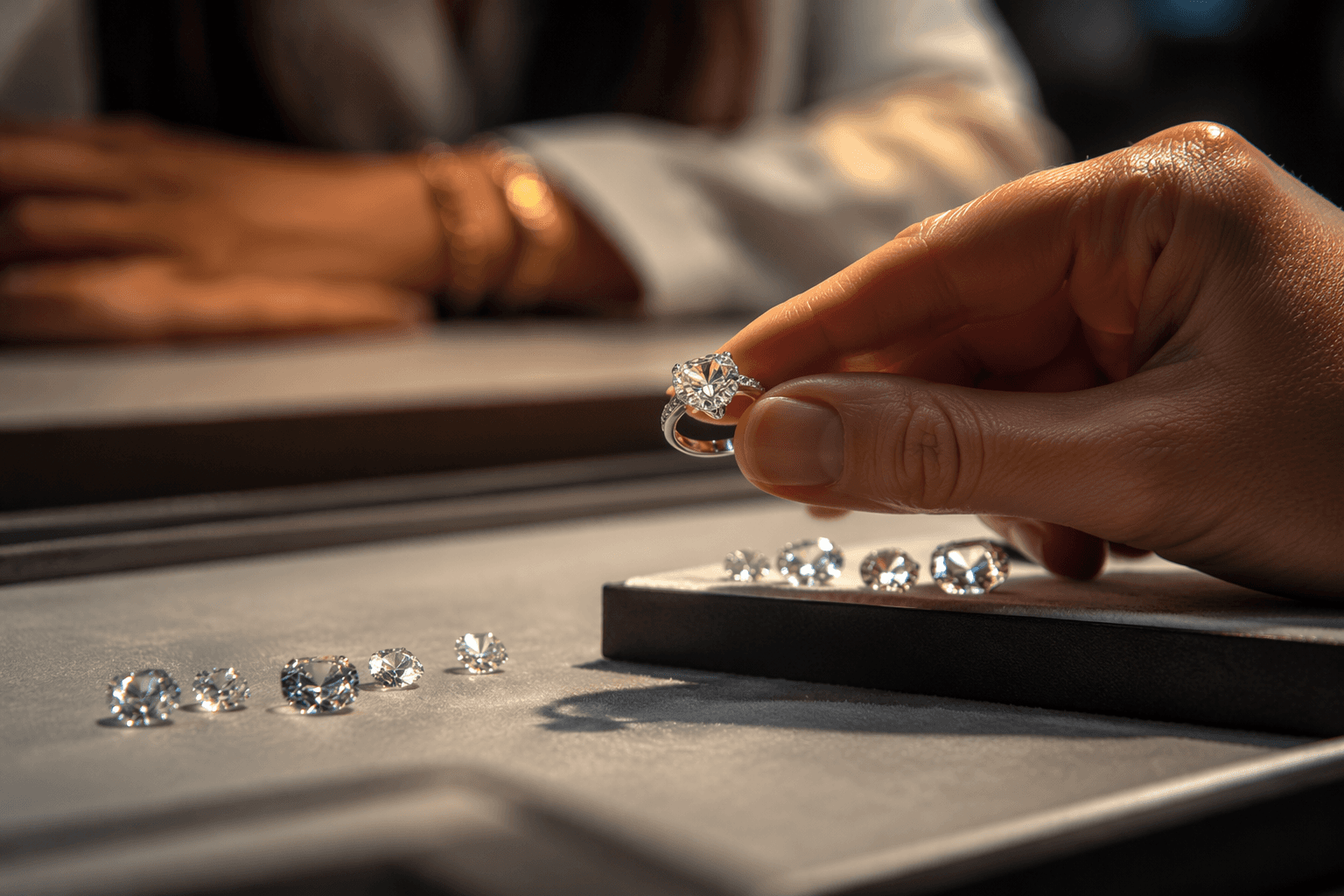
The strongest jewelry at Couture is no longer trying to be everything to everyone. Buyers on the show floor were drawn to pieces with weight, rarity, and staying power, while the soft middle, especially the $5,000 to $10,000 range, felt less visible than in past seasons. That is the K-shaped consumer in plain view: one group still spending at the high end, another entering carefully at the bottom, and far fewer customers lingering in between.
A split market, seen in real time
Retailers at Couture 2026 in Las Vegas described a consumer who is more deliberate and more polarizing than a year ago. Alysa Teichman, co-owner of Ylang 23, said the K-shaped consumer was clearly visible this year, while Randi Udell-Alper, vice president of London Jewelers, said clients are shopping more thoughtfully than they were a year ago. Jennifer Gandia, co-owner of Greenwich St. Jewelers, described the shift most sharply: customers are buying fewer, more expensive pieces instead of many small, trend-driven ones, and they are treating jewelry as an investment rather than a passing accessory.
That is why rarity has become such a powerful merchandising language. When clients are more selective, a well-cut diamond, an unusual colored stone, or a substantial gold design carries more authority than a scattered assortment of filler inventory. The show floor rewarded pieces that felt collectible, not disposable.
What is still moving, and what is stalling
The categories still drawing interest were not the most obvious fashion buys. Retailers said important diamonds, substantial gold jewelry, and exceptional colored stones continued to move, especially when they had a clear point of view and a sense of permanence. At the same time, the broad middle of the market looked softer, with the most talked-about gap sitting in that $5,000 to $10,000 retail sweet spot that once acted as a dependable bridge between entry and high luxury.
That has serious consequences for assortment. Jewelry in the middle price band can be the hardest to merchandise because it must feel substantial enough to justify the ticket, yet not so costly that it starts competing with true heirloom pieces. In a K-shaped market, those items can linger unless they offer strong design, diamond quality, or unmistakable craftsmanship. The pieces that are still moving tend to say something specific: a bold gold cuff, a pair of serious studs, a tennis bracelet with clear carat presence, or a diamond ring that reads as a future heirloom rather than a seasonal purchase.
The numbers behind the pressure
The broader luxury backdrop helps explain why jewelry is holding up differently from other categories. Bain & Company said global luxury spending was broadly stable in 2025 at about €1.44 trillion, even as aspirational consumers pulled back and high-end buyers kept spending. Bain also said personal luxury goods were forecast at €358 billion in 2025, about 2% below 2024 at current exchange rates. Jewelry, however, remained one of the stronger categories inside luxury, which helps explain why the best pieces at Couture attracted attention even as the middle lost traction.
The same pattern shows up in retail data. Edge Retail Academy found that 2025 gross sales at independent jewelers rose 4.7%, while units sold fell 5.6% and average retail sale rose 10.9%. Diamonds finished the year essentially flat in dollar sales, down less than 1%, but units declined more than 6% and average ticket increased nearly 5%. That is the definition of price-up, units-down behavior: fewer items are leaving cases, but the ones that do are carrying more value.
For retailers, that means margin protection is increasingly tied to mix. A store can no longer rely on volume alone if lower-ticket pieces are not turning quickly enough to support the floor. The answer is often a tighter edit, stronger storytelling, and less tolerance for undifferentiated inventory.
What retailers are protecting, and why
The natural-diamond supply chain remains under strain, which adds another layer to merchandising decisions. De Beers said first-half 2025 rough-diamond revenue fell 13% year over year to $1.95 billion, production dropped 23% to 10.2 million carats, and the company posted an underlying EBITDA loss of $189 million. Those figures reflect a market still balancing subdued demand with excess polished inventory.
That pressure makes the strongest natural-diamond categories more important, not less. Edahn Golan said the U.S. jewelry market is splitting into two groups: consumers below $1,500 are buying fewer pieces, while shoppers above $1,500 are spending more. The stronger segment is leaning into bridal jewelry, diamond stud earrings, and tennis bracelets, most often set with natural diamonds. Those are not novelty categories. They are the backbone pieces that can absorb higher prices when quality is strong and design feels enduring.
For retailers, that points to a clearer path. Bridal remains a high-intent purchase, studs are still an accessible luxury with lasting utility, and tennis bracelets sit in that coveted middle-high zone where giftability, recognizability, and value can converge. The product mix that survives this market is not the loudest, but the most legible.
Why couture favors craftsmanship over trend
Couture exhibitors leaned hard into craftsmanship, longevity, and collectible design because that is what the current customer is rewarding. Vintage references, archival echoes, bold gold work, and alternative materials all found an audience alongside high jewelry. Those categories speak to scarcity and point of view, which matter more when shoppers are buying fewer pieces and expecting each one to justify itself.
The shift is also aesthetic. A market shaped by caution does not necessarily become less adventurous, but it does become more exacting. A diamond ring with a careful bezel, for example, can feel more architectural and secure than a prong-set style that reads as lighter and more classical. Substantial gold jewelry carries weight in both the literal and visual sense. Exceptional colored stones, when well-matched and well-cut, offer the kind of distinction that a consumer shopping intentionally is willing to pay for.
That is the real lesson from Couture: the center may be thinning, but the top and bottom are still active, and both are pushing retailers to edit harder. The winners will be the jewelers who understand that the market now favors clarity, rarity, and conviction over breadth for its own sake.
This article was produced by Prism’s automated news system from verified source data, official records, and press releases, then run through automated quality and moderation checks before publishing. The system is built and supervised by the people who set the standards it runs under. Read our full AI policy.
Did this article answer your question?