Lab-grown diamonds gain market share amid 300% production capacity surge
AIDI’s Feb. 22, 2026 analysis notes rising retail adoption as global lab-grown diamond production capacity jumped more than 300% between 2020 and 2023.
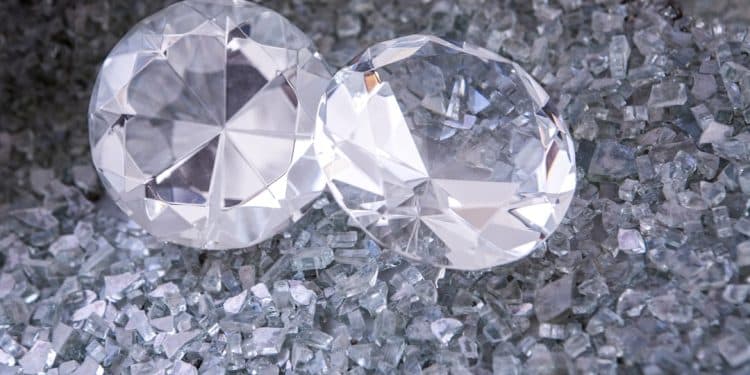
AIDI’s analysis published Feb. 22, 2026 documents continued market share gains for lab-grown diamonds and downstream effects on the diamond supply chain, even as global production capacity expanded dramatically. Industry commentaries from Caratx and LinkedIn note that capacity rose by over 300 percent between 2020 and 2023, a surge that forced price competition and reshaped distribution.
Market estimates for recent years differ sharply. Allied Market Research, in a press release summarized Nov. 25, 2025, put the global lab-grown diamond market at $24.0 billion in 2022 and forecast it to reach $59.2 billion by 2032, a compound annual growth rate of 9.6 percent. Analyst Paul Zimnisky estimated demand at $12 billion in 2022 and wrote on Jan. 2, 2023 that lab-grown diamond jewelry demand grew an estimated 38 percent to $12B in 2022. For historical context Edahn Golan told National Jeweler that lab-grown diamonds were a $3.9 billion business in the U.S. in 2021, while Zimnisky estimated 2021 global sales at approximately $5.9 billion, or 7 to 8 percent of the total diamond jewelry market.
Rapid capacity expansion created a supply‑demand imbalance that pushed prices down before the market began to stabilize. Zimnisky noted that like-for-like prices retreated by an estimated 20 percent in 2022, and Caratx framed the arc from collapse to recovery precisely: "The price freefall has ceased not because of artificial constraints or market manipulation, but through organic economic processes: industry consolidation, demand maturation, inventory normalization, and strategic evolution at retail."
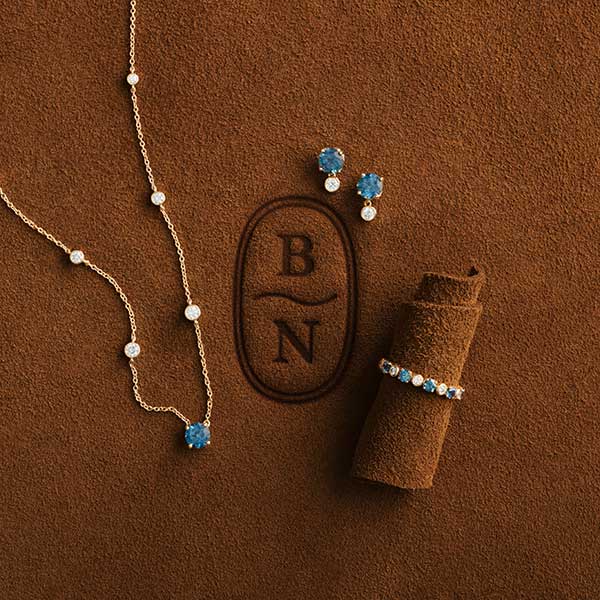
The technology behind that capacity shift is Chemical Vapor Deposition, now the most widely used production method after being developed in the 1980s. Allied’s report highlights CVD’s lower production costs and smaller equipment footprint relative to High Pressure High Temperature, which was introduced in the 1950s. Zimnisky added an equipment-cost anecdote: off-the-shelf CVD machines can currently be acquired in India for under $100,000, compared with as much as $300,000 in 2019. Caratx emphasized that producers are moving from cost cutting to quality and specialization, with "advanced control systems now produc[ing] more consistent fancy colors, particularly in blues and pinks."

Retail adoption has followed capacity and quality improvements. AIDI documents growing retail adoption of lab-grown diamonds across price tiers, and Zimnisky pointed to broader downstream distribution in 2022 as Signet Jewelers and Pandora expanded LGD inventory. Caratx framed a parallel shift in where economic value sits: "Value Migration: Economic value will shift from the stone itself to design, branding, and retail experience, with the diamond component representing a decreasing percentage of total jewelry value (currently 30-50% versus 70-80% for natural diamond jewelry)."
Geography and sustainability are distinct axes of growth. Zimnisky has long noted U.S. dominance, with the U.S. historically comprising "more than 90 percent" of the market. Caratx characterizes Europe as "the most sustainability-focused market," growing steadily at 8-10 percent annually led by the United Kingdom, Germany, and France, while India’s growth is concentrated in metro areas among younger, Western-influenced consumers. Allied’s report also stresses that manufacturers are adopting renewable energy sources and positions lab-grown production as a far more environmentally friendly alternative to mining.
Where analysts diverge on totals, they converge on trajectory: Caratx judges that "the lab-grown diamond industry has emerged from its turbulent adolescence into a more stable maturity," and LinkedIn observed that "The fundamental transformation is complete: lab-grown diamonds have evolved from disruptive novelty to established category." With capacity, technology, retail channels, and color innovation all advancing, the sector’s next phase will be defined less by the cost of the stone and more by design, branding, and curated retail experience.
This article was produced by Prism’s automated news system from verified source data, official records, and press releases, then run through automated quality and moderation checks before publishing. The system is built and supervised by the people who set the standards it runs under. Read our full AI policy.
Did this article answer your question?