Las Vegas luxury shows diamond designs, marquise shapes and statement pieces
Natural diamonds, marquise cuts and mixed-metal settings drew the eye at Luxury in Las Vegas, where statement pieces signaled durable demand at the top end.
The mood at Luxury in Las Vegas
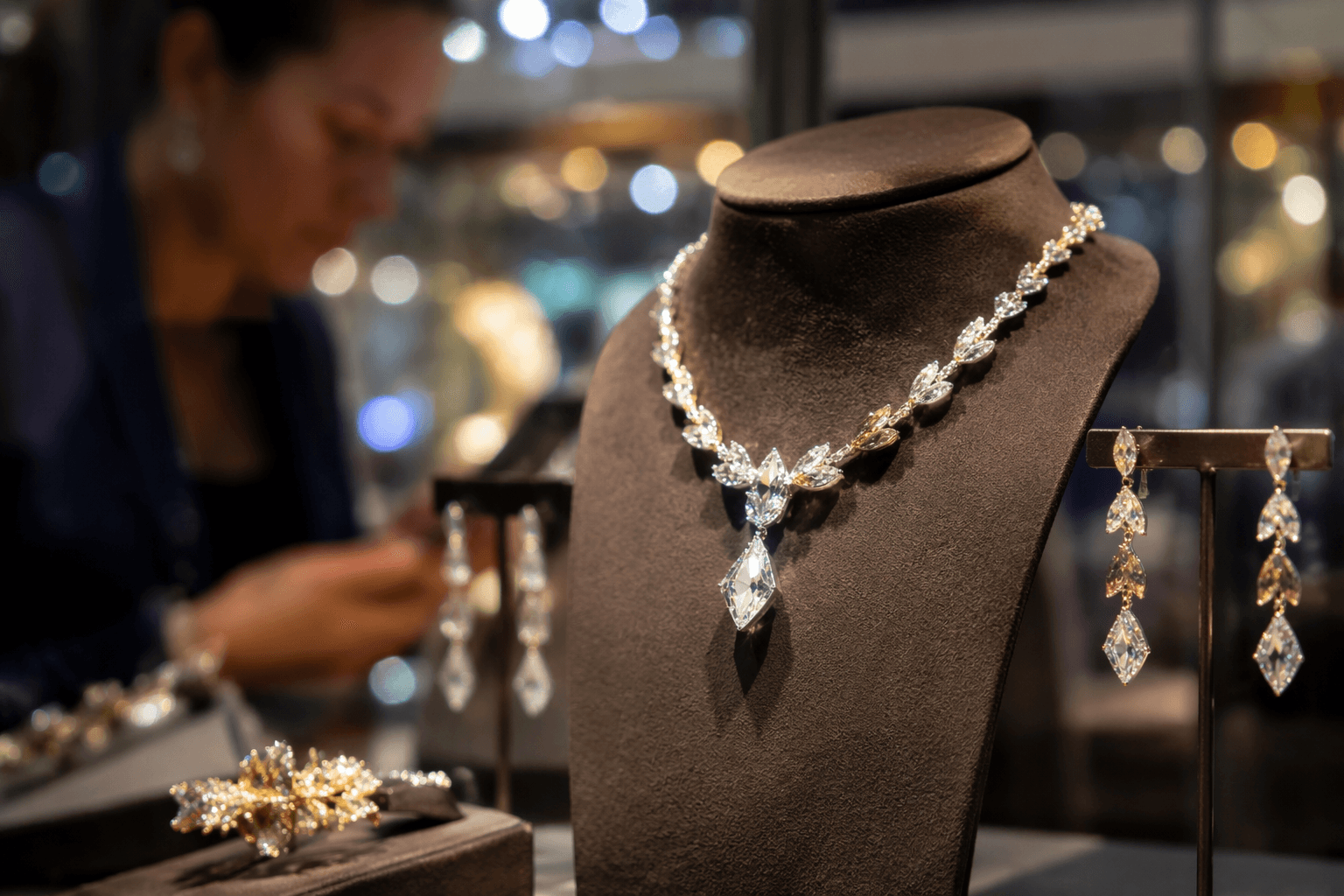
Luxury in Las Vegas felt like a clear signal rather than a vague trend story: natural diamonds were the pieces that stopped buyers in their tracks. On June 3, 2026, the show floor leaned hard into diamond-centric design, and the strongest reactions clustered around silhouettes that looked immediate, expensive and easy to imagine in real wardrobes. The message was unmistakable: even as the broader market keeps shifting, the high end still wants presence, proportion and a visibly precious center stone.
What made the jewelry feel commercially sharp was not simply size, but intent. Exhibitors were not pushing diamonds as abstract luxury tokens; they were presenting them as wearable statements with a strong point of view. That meant cleaner lines, bolder scale and a renewed emphasis on natural diamonds, the kind of material choice that still carries weight with shoppers who want value to be visible the moment the case opens.
Why marquise is suddenly persuasive again
Among the shapes drawing attention, the marquise stood out because it does so much with so little metal. Its elongated outline flatters the finger, stretches the look of a ring and carries a touch of drama that feels both vintage and current. In a market where buyers are often looking for distinction without fuss, marquise diamonds offer exactly the right kind of recognition: they are immediately readable, but not overexposed.
The shape also works especially well in the kinds of settings that were getting noticed in Las Vegas. A marquise center can feel sleek in a solitaire, more romantic in a halo and especially modern when the surrounding design stays restrained. That versatility matters now, because buyers are moving toward pieces that can bridge occasions, from engagement to evening, without feeling too rigidly categorized.
Mixed gold and diamond styling looks ready for the case
Another strong motif was mixed gold-and-diamond styling, a language of contrast that gives diamond jewelry more texture and a little more edge. Yellow, white and rose gold each change the temperature of a stone, and when they are combined thoughtfully, the result is less precious-predictable and more personal. That mix felt especially current in Las Vegas because it softened the formality that sometimes weighs down diamond jewelry at the luxury level.
This matters for commercial reasons as much as aesthetic ones. Mixed metals make pieces easier to wear with existing jewelry collections, which lowers the psychological barrier for shoppers considering a new diamond purchase. It also gives retailers a practical story to tell: one ring, bracelet or necklace can feel fresh against different skin tones, wardrobes and other jewels already in rotation.
What to watch in bridal
Bridal is where the marquise revival may land first. The shape already carries old-world romance, but in a more pared-back mounting it reads as distinctly now, especially when paired with slender bands or a minimal halo. Natural-diamond center stones remain the emotional anchor, and the Las Vegas showing suggested that buyers are still responding to the kind of ring that looks singular rather than algorithmically familiar.
Expect to see more rings that use the marquise not as a novelty, but as a design strategy. It gives height, length and character without requiring excess ornament, which is exactly why it can feel luxurious in a restrained market. As bridal shoppers continue to look for pieces that photograph well and still feel personal in person, the marquise is well positioned to move from niche preference to mainstream option.
Statement pieces are back, and that is the real signal
The larger statement pieces on display told the clearest story about demand. When buyers stop for bigger silhouettes, it usually means the market still has confidence at the high end, even if the rest of the category is adjusting to broader pressure. A substantial diamond pendant, a bold ring or a layered necklace does not just catch the light; it telegraphs that luxury is still being purchased as an experience, not only as an asset.
That is why the emphasis on scale matters. Statement pieces can look risky when sentiment is soft, but in Las Vegas they felt calibrated rather than excessive. The best versions relied on strong design structure, so the stones looked intentional instead of merely large. In editorial terms, that distinction is everything: a statement piece succeeds when it feels composed, not loud.
The layered silhouette buyers kept stopping for
Layering was another key signal, and it helped turn individual diamonds into a broader style proposition. Layered silhouettes, whether in necklaces or stacked rings, let a buyer build impact without committing to a single oversized jewel. They also fit the current appetite for jewelry that can be styled in more than one way, worn alone one day and combined the next.
That flexibility gives layered diamond looks a strong commercial advantage. For retailers, it creates cross-selling opportunities across categories; for shoppers, it makes the purchase feel less like a one-time indulgence and more like the start of a collection. At Luxury in Las Vegas, that kind of modular luxury seemed especially persuasive because it balanced aspiration with practicality.
Why natural diamonds still carry the loudest message
The choice to lean into natural diamonds was not accidental. Natural stones still command attention because they remain the benchmark for permanence, rarity and traditional prestige, all of which matter when the goal is to sell a piece as something to keep, not just wear. In a room full of competing signals, the natural-diamond look was the one that appeared most commercially legible to buyers seeking meaning as well as sparkle.
That does not mean fashion jewelry has vanished from the conversation. It means the conversation has sharpened. The most convincing pieces combined natural stones with design cues that felt modern enough to move beyond special occasion dressing. The result was a preview of where diamond jewelry is headed next: not away from heritage, but toward heritage edited for the way people actually dress now.
What this forecast means for bridal and fashion cases
The takeaway from Las Vegas is less about one trend than about a direction of travel. Marquise shapes suggest a renewed taste for distinctive center stones; mixed metals point to a more flexible, wearable luxury; layered silhouettes and larger statement pieces show that buyers still want drama, but with enough discipline to feel current. Together, they sketch a commercial lane that is likely to show up first in bridal cases, then in higher-end fashion jewelry.
For jewelers, the opportunity lies in presentation. Pieces that combine strong silhouettes with natural diamonds, subtle metal contrast and an immediately recognizable shape are the ones most likely to convert attention into purchase. Las Vegas made that clear: the diamond looks drawing the most interest were not the quietest ones, but the ones that knew exactly how to stand out.
This article was produced by Prism’s automated news system from verified source data, official records, and press releases, then run through automated quality and moderation checks before publishing. The system is built and supervised by the people who set the standards it runs under. Read our full AI policy.
Did this article answer your question?