London Jewelers, Grandview Klein unveil rare 20.26-carat diamond project
A 63-carat rough diamond is being cut in Botswana into a 20.26-carat D-flawless old mine cushion for London Jewelers’ centennial. De Beers’ ORIGIN tracks the journey.
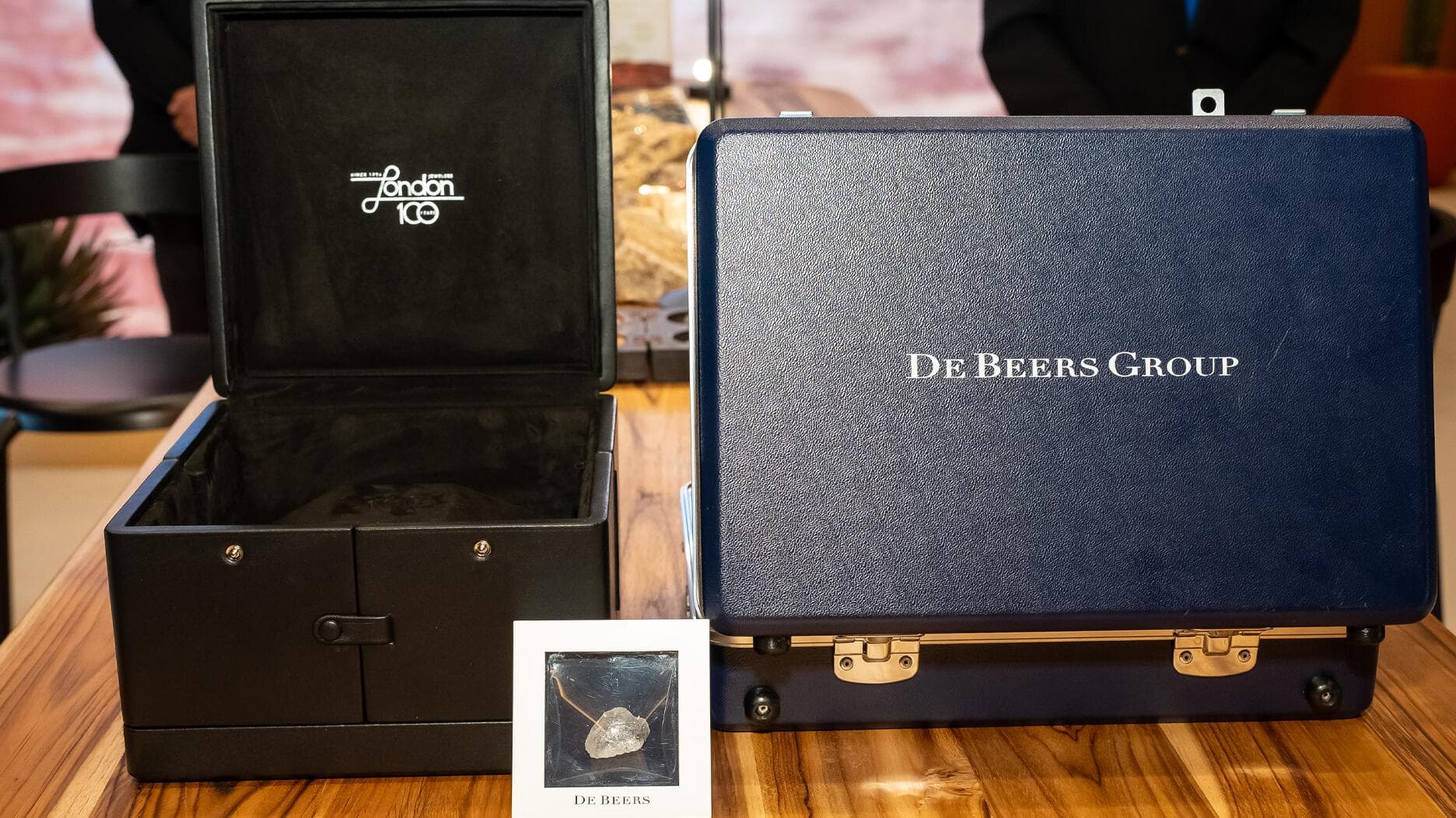
At JCK Las Vegas, London Jewelers and Grandview Klein turned a 63-carat rough diamond into a case study in what natural rarity has to prove now: a documented origin, exacting cutting and a finished stone rare enough to anchor a centennial. The polished diamond is planned to weigh 20.26 carats, a deliberate nod to London Jewelers’ 100th anniversary in 2026.
The rough was unveiled at a private event on May 29, 2026, and the stone will be cut in Botswana, the country where it originated. Grandview Klein Diamonds will do the cutting, and the goal is a D-color, flawless old mine cushion cut, a combination that pushes far beyond carat weight and into the territory collectors pay for most: proportion, precision and rarity.
That matters because the project is not just about a diamond, but about the argument behind a diamond. De Beers Group launched ORIGIN to consumers in North America on November 20, 2025, through 19 retail partners representing 30 store doors in the United States and Canada. Grandview Klein and Mahendra Brothers are the two Sightholder partners De Beers named as helping bring those retail relationships to market, giving the stone a commercial path as well as a gemological one.
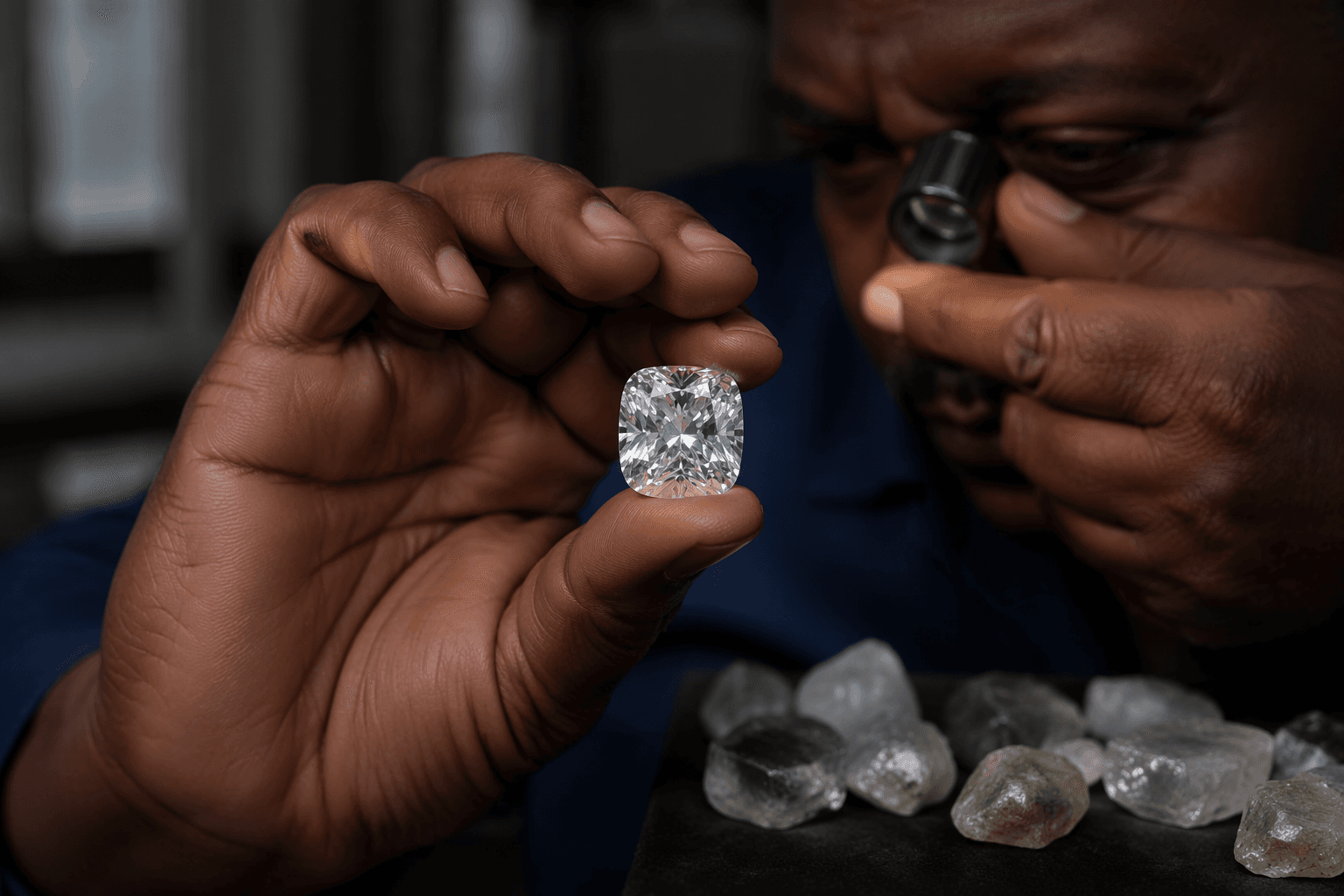
De Beers is also leaning on Tracr, its blockchain provenance platform, which it launched in 2018. The company says Tracr now has more than three million diamonds registered at source and gives each stone a digital identity that records provenance data. For buyers comparing natural diamonds with lab-grown stones, that kind of traceability is part of the premium: not a marketing flourish, but a record of where the diamond began and how it moved through the supply chain.
The 20.26-carat target gives the project its emotional logic as much as its technical one. A polished old mine cushion of that scale, especially one expected to achieve D color and flawless clarity, sits in a narrow band of availability that even the high end of the market cannot reproduce at will. The collaboration also reflects the longstanding relationship between the Udell and Klein families, adding family continuity to a project already built on geological scarcity and craftsmanship.

In a market where size alone no longer tells the whole story, this diamond is being positioned as proof that natural stones can still justify their price through rarity, workmanship and a provenance trail that begins in Botswana and ends in a jewel worthy of a century.
This article was produced by Prism’s automated news system from verified source data, official records, and press releases, then run through automated quality and moderation checks before publishing. The system is built and supervised by the people who set the standards it runs under. Read our full AI policy.
Did this article answer your question?