Pandora expands lab-grown diamond jewelry to Spain and Italy
Pandora brought lab-grown diamonds to Spain and Italy through one Barcelona store and 41 Italian doors, signaling a tightly controlled test of demand.
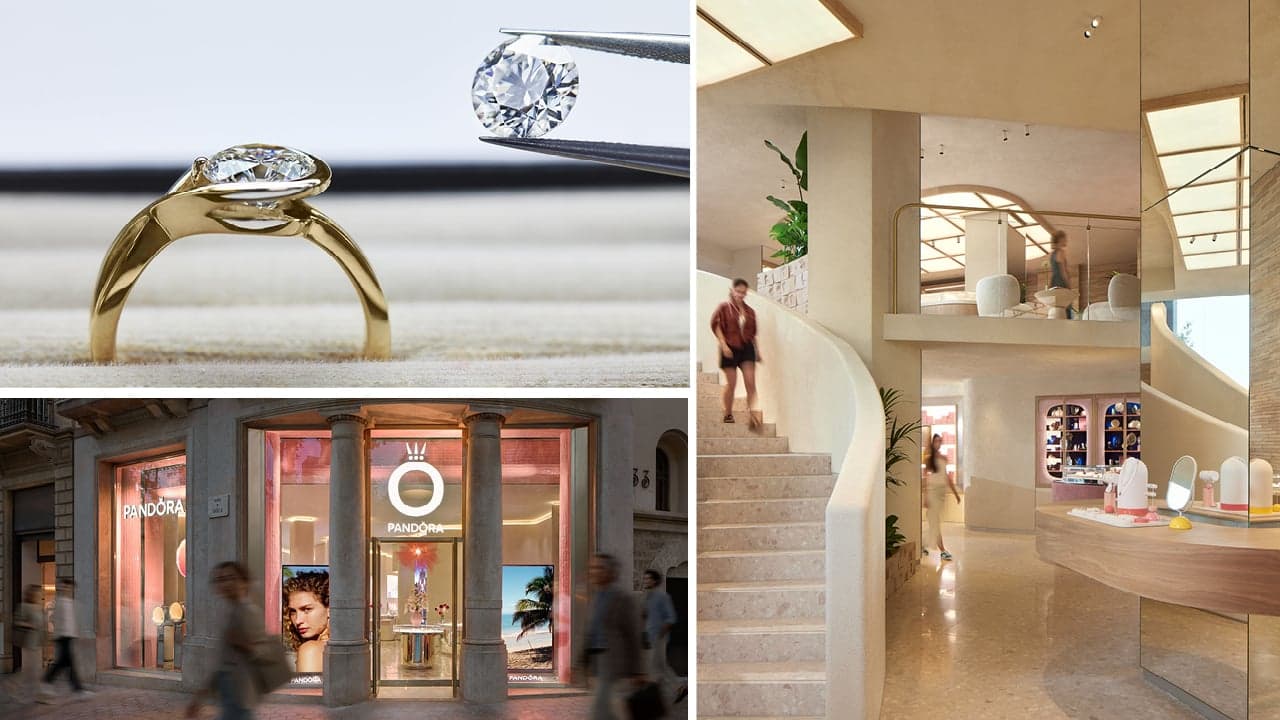
Pandora has added lab-grown diamond jewelry to Spain and Italy, but through a deliberately narrow retail gate: one Barcelona store will carry the line in Spain, while the Milan flagship and 40 other Italian stores will stock it. The rollout includes Pandora Infinite, first introduced in 2021 as the brand’s inaugural lab-grown diamond collection, and Pandora Era, giving the launch the feel of a market test rather than a blanket expansion.
That restraint matters because Pandora is not a niche entrant. The company says it is the world’s largest jewellery brand, with 2025 revenue of 32.5 billion Danish kroner and about 2,800 concept stores. Against that scale, Spain’s single-door debut and Italy’s 41-store footprint read as a careful reading of demand, especially for a category that the company has been building step by step across the U.K., the United States, Canada, Australia, Mexico, Brazil and Denmark.

Pandora has wrapped the launch in a polished sustainability narrative. The company says its lab-grown diamonds have been grown, cut and polished using only renewable electricity since August 2022, and that the stones are set in jewelry made from 100% recycled silver and gold. In May, Pandora went further and began labeling carbon footprint as a “5th C” alongside cut, color, clarity and carat, a branding move that gives provenance a place beside the familiar language of diamond grading.
The carbon claim is also where the story gets more contested. Pandora says its lab-grown diamonds have about a 90% lower carbon footprint than mined diamonds, a comparison the Natural Diamond Council has challenged. That tension is central to how Pandora wants to sell the category in Spain and Italy: not as a cheap substitute, but as a branded, traceable alternative that borrows the symbolism of diamond jewelry while recasting value through energy use, recycled metals and retail scarcity.
The company’s physical rollout reinforces that message. Pandora opened its new Copenhagen flagship on June 6, 2026, calling it its first global flagship and its largest store to date, at 500 square meters across two floors. Paired with the Spain and Italy launch, the move suggests a brand using destination stores and limited access to turn lab-grown diamonds into a visible part of its fine jewelry business, one flagship case at a time.
This article was produced by Prism’s automated news system from verified source data, official records, and press releases, then run through automated quality and moderation checks before publishing. The system is built and supervised by the people who set the standards it runs under. Read our full AI policy.
Did this article answer your question?