Platinum and white gold regain momentum as diamond jewelry shines
White metals are back in diamond jewelry, and the clearest winners are sleek bracelets, pavé rings, and geometric settings that read cleaner in platinum and white gold.
White metal is back in the frame
After several seasons of yellow-gold dominance, diamond jewelry is finding new drama in cooler tones. Platinum and white gold make diamonds look crisper, more architectural, and, in many cases, easier to sell because the metal no longer competes with the stone for attention. The strongest pieces in the current conversation are the ones that depend on line and light: tennis bracelets, line bracelets, crisp pavé, and clean geometric settings.
That shift is not just aesthetic. Platinum Guild International’s April 2026 U.S. Retail Barometer surveyed 300 fine-jewelry retailers across independent, chain, and department stores, and the results point to a clear change at the counter. More than three-quarters of those retailers plan to add platinum inventory in 2026, and more than half said they have already converted some portion of their white-gold business to platinum.
Why platinum feels sharper now
Platinum has always had a case to make in diamond jewelry, but its timing is unusually strong now. When gold prices climb, platinum’s lower cost relative to gold makes it feel like a luxury with a little more breathing room. PGI and other industry sources said platinum traded at less than half the price of gold in spring 2026, which helps explain why it is being framed as a “value luxury” white-metal alternative.
That matters because diamond buyers tend to respond to contrast. Yellow gold gives diamonds warmth and vintage richness, but platinum and white gold create a cooler, more immediate flash. The effect is especially persuasive in modern silhouettes where the design depends on clean edges, symmetry, and uninterrupted sparkle.
The data behind the shift
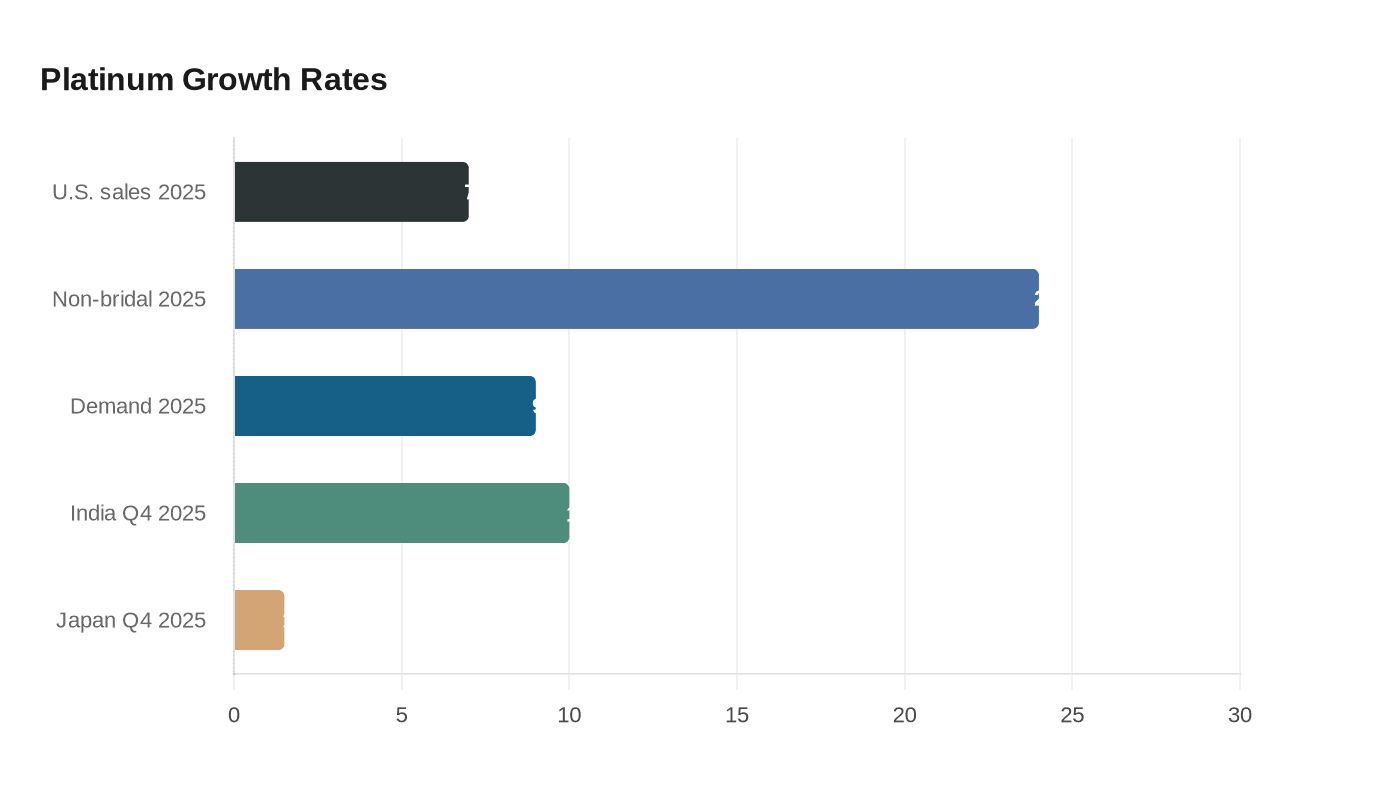
The retail numbers show that the move into white metal is not a passing styling twitch. PGI said U.S. platinum jewelry retail sales grew 7% year over year in 2025, with dollar sales outpacing unit volume. That usually signals customers are trading up into higher-value pieces rather than simply buying more pieces. Non-bridal platinum jewelry sales rose more than 24% in 2025, which is one of the clearest signs that platinum is no longer confined to engagement rings and wedding bands.

The broader market agrees. The World Platinum Investment Council said platinum jewelry demand rose 9% in 2025, its best performance since 2018, even as the overall platinum market remained in a 1,082 koz deficit. In other words, jewelry demand is strengthening even in a market that is structurally tight. That combination gives platinum a rare kind of momentum: it is both a style story and a supply story.
PGI, founded in 1975, tracks the category through the Platinum Jewellery Business Review, which covers China, India, Japan, and the United States. That international lens matters because the white-metal resurgence is not just an American retail mood. It is showing up in multiple markets, each with its own logic.
Where the momentum is strongest
India is one of the clearest growth engines. PGI reported that strategic partner stores there posted 10% year-over-year growth in platinum retail sales in the fourth quarter of 2025. Japan also remained solid, with platinum jewelry unit sales up 1.5% year over year in the same period, while white gold continued to lose ground. That detail is important: in Japan, the shift is not simply toward more white metal, but specifically toward platinum’s more premium identity.
In the United States, the story is partly about presentation. Josh Shevitz, vice president of operations at Royal Jewelers in Andover, Massachusetts, said platinum had become “a much more active part of the sale than it was even a year ago.” That is a retail-floor observation worth taking seriously. Platinum does not just look different in the case; it changes the way a salesperson frames the piece, from sparkle to structure, from fashion to investment.
Which diamond styles benefit most
Not every diamond design gains equally from a white-metal revival. The silhouettes that benefit most are the ones where the metal should disappear and the diamonds should do the talking.
Tennis bracelets are the obvious example. Their continuous line of stones looks tauter in platinum or white gold, where the setting recedes and the diamonds appear to float in a bright, uninterrupted ribbon. Line bracelets work the same way, but with even more emphasis on precision. In white metal, each stone reads like a measured point of light rather than a decorative interruption.
Crisp pavé also depends on this effect. White prongs and white seats make the surface feel refined, almost icy, and that quality is especially persuasive in rings and necklaces where the entire point is shimmer. A pavé dome, cluster, or halo can look busier in yellow gold; in platinum or white gold, it looks more finely cut.
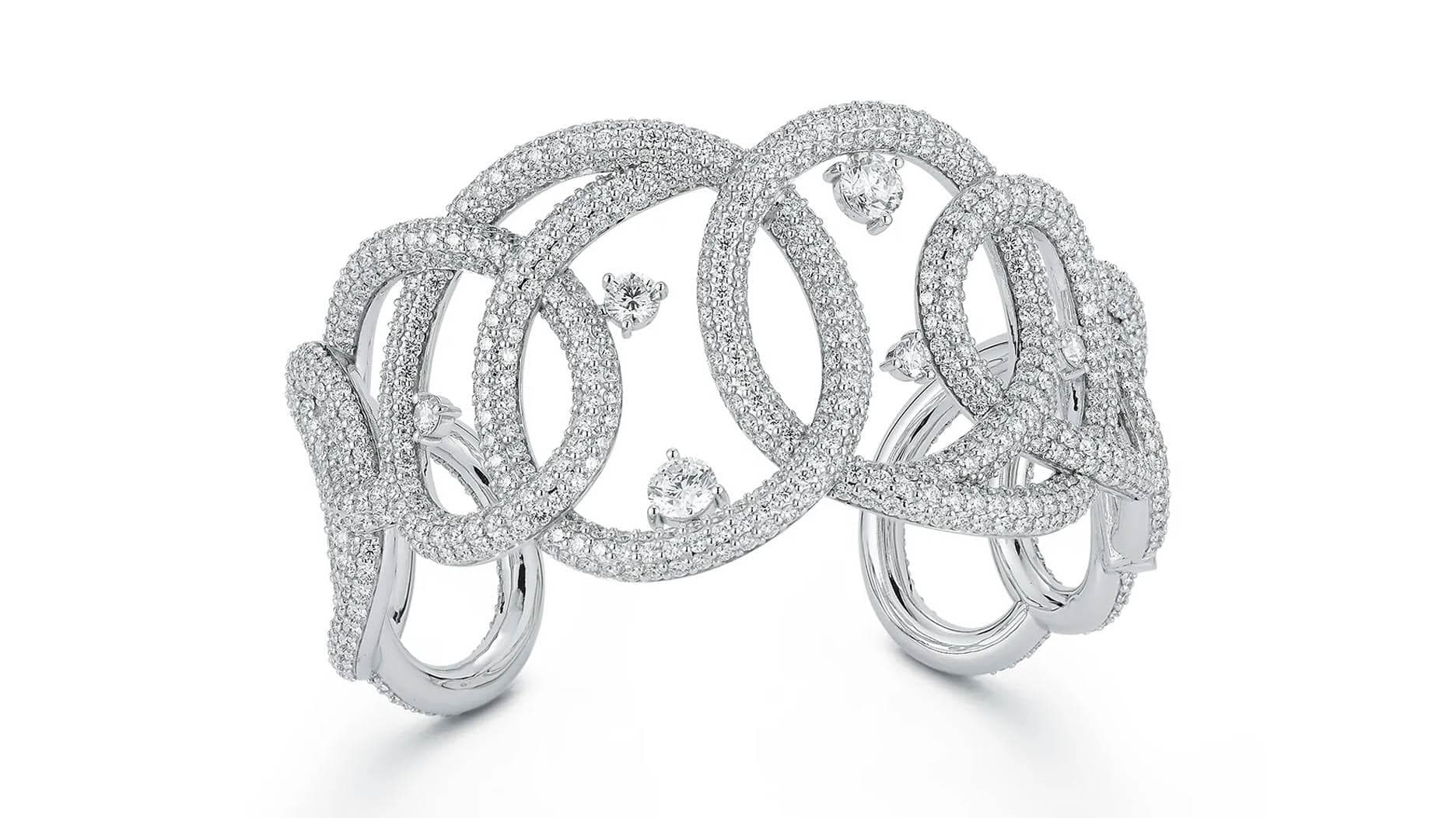
Clean geometric settings are perhaps the most contemporary of the group. Baguette rows, step-cut forms, architectural cuffs, and angular pendants all benefit from a metal that feels disciplined rather than ornamental. White metal supports the geometry instead of softening it, which is why the current mood reads as sharper and more modern than the recent gold wave.
Platinum versus white gold, in practical terms
White gold remains important because it offers the white-metal look at a lower entry point, but platinum carries a stronger sense of permanence. Platinum is naturally white, so it does not rely on the same surface treatment white gold often needs to maintain its color. That makes it especially attractive for pieces intended to be worn often, admired up close, and passed through generations.
For diamond jewelry, the choice comes down to what the piece is trying to say. White gold can keep the price accessible and the silhouette bright. Platinum adds weight, prestige, and a more exacting visual finish. In the current market, where gold’s price has made some customers more selective and platinum’s pricing remains comparatively attractive, that distinction has real commercial force.
The result is a category that feels newly balanced. Yellow gold still has its place, but the strongest diamond jewelry right now is often the kind that looks most resolved in a cooler frame. Platinum and white gold do not just make diamonds brighter. They make them look edited, modern, and, increasingly, easier to sell.
This article was produced by Prism’s automated news system from verified source data, official records, and press releases, then run through automated quality and moderation checks before publishing. The system is built and supervised by the people who set the standards it runs under. Read our full AI policy.
Did this article answer your question?