Rapaport Magazine March 2026 Covers Pricing, Auctions, and Top Jewelry Trends
Rapaport's March 2026 issue finds jewelry auctions defying market headwinds while large-stone diamond prices hold firm against broader softness.
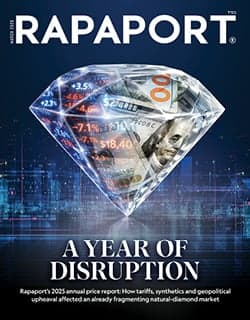
Few publications track the pulse of the diamond and jewelry trade with the precision of Rapaport Magazine, and the March 2026 issue arrives at a particularly charged moment. Tariffs are reshaping supply chains, geopolitical uncertainty is pressing on luxury spending, and the broader art market has softened considerably. Yet jewelry, as Rapaport's editors document across several major features, is holding its ground in ways that deserve careful attention from anyone who buys, sells, or simply loves fine stones.
The issue's editorial scope spans auction performance, diamond pricing dynamics, emerging design trends, and the resilience of international supply networks, particularly India's manufacturing sector. What emerges is a portrait of a trade that is stressed but adaptive, and of a jewelry market where provenance, scale, and craftsmanship continue to command serious premiums. Here are the five major stories shaping the March 2026 issue.
1. Auction resilience in a difficult market year
The issue's most arresting headline, "Bringing the Hammer Down on a Strong Auction Year," sets an unapologetic tone. "Despite tariffs, geopolitical uncertainty and a softer art market, jewelry proved resilient, with white-glove sales, record prices and global demand across categories." That sentence, which opens the auction feature, is both a summary and a provocation: the conditions described should, by conventional logic, have suppressed demand. Instead, the saleroom delivered white-glove results, meaning lots sold in their entirety without a single pass. The visual anchor for this section is a Boucheron ruby and diamond necklace that sold in December at Sotheby's New York, a piece that encapsulates the market's appetite for signed, historically significant jewelry. Boucheron, one of the oldest houses on the Place Vendôme, brings the kind of provenance that transcends market cycles, and a ruby and diamond necklace from that archive is exactly the category of object that collectors pursue regardless of tariff headlines.
2. Large-stone diamond prices holding against a fractured market
Rapaport's analytical focus in this issue zeroes in on a divergence that experienced traders have been watching closely: the forces supporting large-stone prices even as the market shows weakness at smaller sizes. This bifurcation is not incidental. It reflects fundamental differences in who is buying at each price point and how sensitive those buyers are to macroeconomic friction. Collectors and institutional buyers chasing three-carat-and-above stones are operating with a different calculus than the retail consumer shopping for a one-carat engagement ring. The Rapaport Price List, which the Rapaport Group describes as "the international benchmark for diamond prices," provides the data infrastructure beneath this kind of analysis. The March issue uses that lens to examine what is actually holding at the top of the market and what is giving way below it, a distinction with significant implications for how dealers position inventory in the months ahead.
3. Five trends dominating the 2026 jewelry market

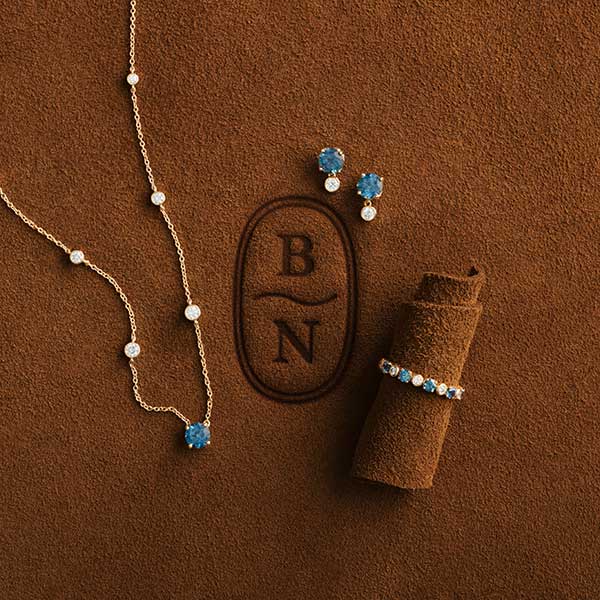
Rapaport's trend coverage in this issue is developed in partnership with Stuller, the Louisiana-based jewelry manufacturer and supplier with one of the broadest product libraries in the industry. The section, titled "Five Trends Dominating the 2026 Jewelry Market," is attributed to Taylor Dizor, senior marketing copywriter at Stuller, and is accompanied by imagery showcasing Stuller jewelry across a range of styles. The collaboration is editorially interesting: Stuller sits at the supply end of the jewelry trade, producing components, settings, and finished pieces that flow through independent jewelers across North America. Its perspective on trend is therefore grounded not in runway aspiration but in what jewelers are actually ordering, what's moving off the bench, and what consumers are requesting in stores. The full enumeration of those five trends points readers toward Stuller's editorial platform at blog.stuller.com, where Dizor's analysis is extended. For Rapaport readers, the Stuller feature functions as a bridge between market data and design reality.
4. Indian diamond firms and the tariff challenge
One of the issue's most substantive reported pieces carries the headline "Indian Diamond Firms Are Keeping the Flame Alive with Their US Partners." The accompanying summary is precise in its framing: "Despite pressure from tariffs and other challenges, the south Asian hub's jewelers, manufacturers and exporters are finding ways to stay relevant to the American market." That phrase, "keeping the flame alive," carries weight. India, and Surat in particular, is the world's dominant diamond cutting and polishing center, responsible for processing the vast majority of the world's gem-quality rough. The trade relationship between Indian manufacturers and American retailers and dealers is not merely commercial; it is structural to how diamonds reach consumers. Imagery accompanying this feature, showing stone-setting at Kama Jewelry, grounds the piece in the manual craft that underlies the trade. The tariff pressure referenced here echoes the same headwind cited in the auction coverage, underscoring that the March issue is, at its core, a sustained examination of how the jewelry industry navigates economic friction without losing its footing.
5. Rapaport's market infrastructure as context for all coverage
Running beneath each of these editorial features is the institutional weight of the Rapaport Group itself, whose three primary platforms shape how the trade reads and responds to the information in this issue. RapNet, described as "the largest online marketplace for diamonds, gems and jewelry," gives the price and trading data in Rapaport's pages immediate practical relevance for dealers sourcing or offloading inventory. The Rapaport Price List, the industry's benchmark pricing grid, is the reference against which every discount and premium in the trade is measured. And Rapaport Auctions, "the world's largest recycler of polished diamonds," provides a secondary market mechanism that intersects directly with the auction analysis dominating this issue. Together, these platforms mean that Rapaport's editorial coverage is not commentary from the outside looking in; it is analysis produced by an organization embedded in the actual mechanics of diamond pricing and distribution. For readers of the March issue, that context matters. The pricing analysis, the auction resilience story, and the trend forecasting all carry the credibility of an organization that publishes the benchmark.
The March 2026 issue arrives at a moment when the jewelry trade is being tested by forces it cannot control: tariffs, geopolitical uncertainty, a softening art market. What Rapaport's coverage makes clear is that the trade's response has been neither panic nor passivity. Large stones are holding value. Auction rooms are clearing inventory at record prices. Indian manufacturers are finding new angles to serve American partners. And designers and suppliers are identifying the five currents that will define what jewelry looks like in the year ahead. The industry has faced headwinds before; what this issue documents is how it moves through them with precision intact.
This article was produced by Prism’s automated news system from verified source data, official records, and press releases, then run through automated quality and moderation checks before publishing. The system is built and supervised by the people who set the standards it runs under. Read our full AI policy.
Did this article answer your question?