Rapaport video series spotlights natural diamond education, strong demand, tariffs
Rapaport’s new video series put natural-vs-synthetic education at center stage as US demand stayed firm for larger diamonds and De Beers cut output after a 19% price slide.
If the person behind the counter cannot explain why one diamond is natural and another is synthetic, the sale is no longer just about sparkle. It is about trust, pricing and whether a buyer feels confident paying up for a stone that will hold its value.
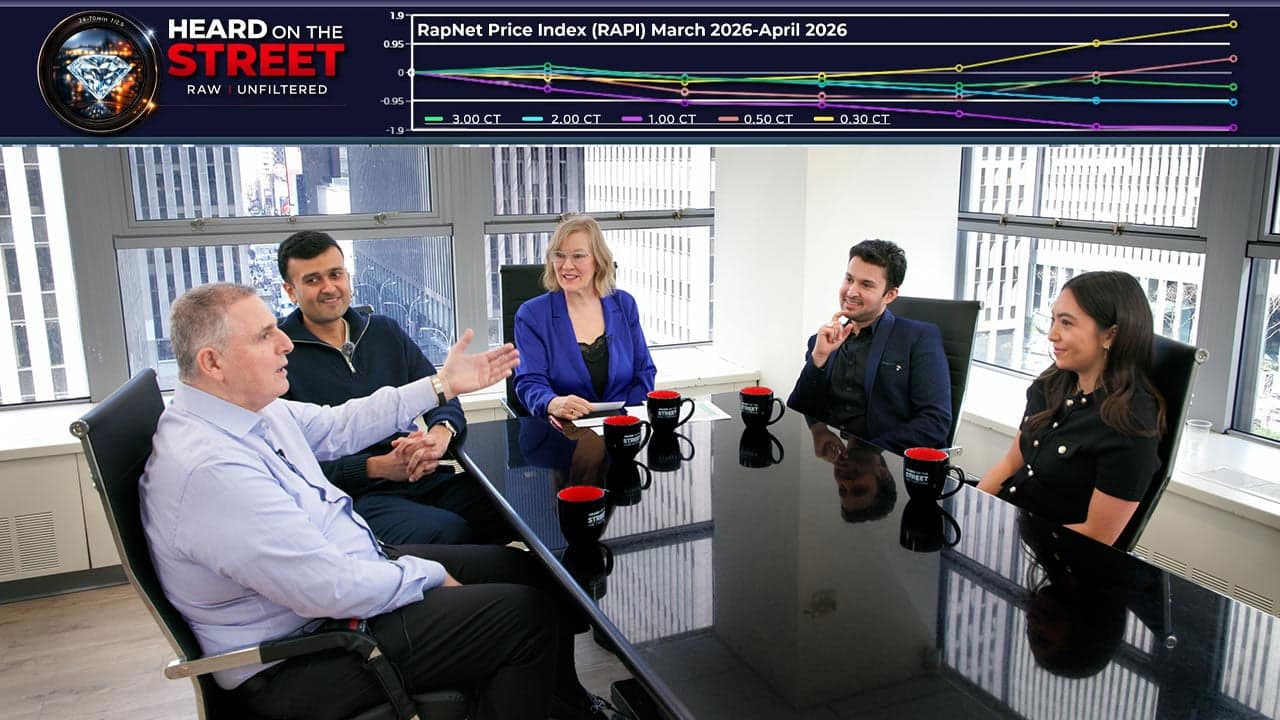
That tension drove the debut of Rapaport x Shop LC’s Heard on the Street, which went live May 6, 2026 as a video series on the diamond and jewelry trade. Rapaport framed the show as a place for industry experts to tackle the issues pressing hardest on consumers and the trade, and the opening discussion landed on the question the market keeps circling back to: how natural diamonds are being differentiated from synthetics, and why that explanation matters at the counter.
The timing was no accident. In its May 7 market comment, Rapaport said US retail remained solid, especially for 2-carat-and-up diamonds in F-I, VS-SI quality. Low-color goods were also in demand because shoppers want their diamonds to look unmistakably natural, a sign that the natural-synthetic divide is not an abstract trade debate but a selling point shaping what moves. For jewelers, that means the language used in the showroom now affects confidence as much as carat weight does.
The market is also sending mixed signals on supply. De Beers said rough diamond trading conditions remained challenging in the first quarter of 2026, with its consolidated average realised price down 19% to $101 per carat. The company cut its 2026 production guidance to 21 million to 26 million carats from 26 million to 29 million, citing difficult trading conditions. De Beers also said demand for larger, higher-quality diamonds strengthened through 2025, while smaller, lower-quality stones were pressured by growing supply from other producers.

Rapaport has already pointed to that split in the rough market, reporting that De Beers lowered prices of 1- to 2-carat rough at its January sight and raised prices of 5-carat and larger stones in February. That kind of pricing pattern reinforces the premium now attached to bigger, better material, even as the middle and lower end faces pressure.
Layer in tariffs and the picture gets noisier. Rapaport has said tariff uncertainty has added volatility and left buyers cautious, while the natural-diamond trade has lost roughly half of global diamond demand since strong synthetic competition emerged. In that environment, education is not a soft talking point. It is the market’s defense against confusion, and the difference between a sale that feels transparent and one that leaves doubt behind.
This article was produced by Prism’s automated news system from verified source data, official records, and press releases, then run through automated quality and moderation checks before publishing. The system is built and supervised by the people who set the standards it runs under. Read our full AI policy.
Did this article answer your question?