Round Brilliant Diamonds Lead 2026 Resale Value Rankings, Experts Confirm
The round brilliant commands 57.74% of the global diamond jewelry market — and in 2026, experts confirm it's still the cut most likely to hold its value at resale.

Of every diamond shape sold in the world, one accounts for more than half the market. According to Zion Market Research data, the round brilliant generated USD 51,980.3 million in revenue in 2023, making up 57.74% of the entire global diamond jewelry market — a dominance that directly translates to what happens when it's time to sell. In 2026, that market position remains the clearest predictor of resale performance, and experts across the industry are in agreement: the round brilliant cut holds its value better than any other shape.
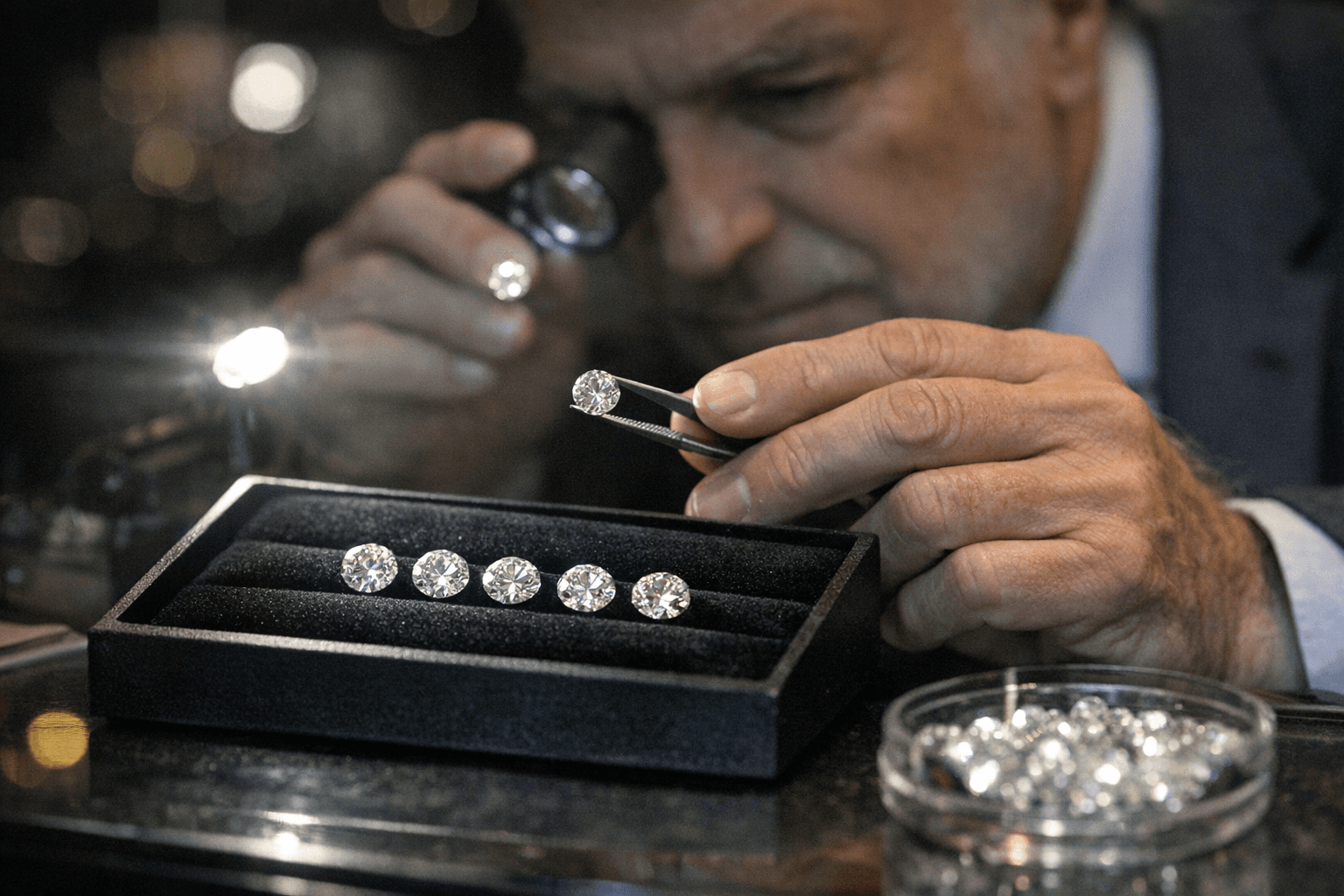
Round brilliant diamonds remain the most price-stable shape globally, a consensus supported by gemologists, cutters, and secondary-market specialists alike. The geometry is not incidental to the economics. Diamond cut refers to how precisely a stone is shaped and faceted, directly determining how light enters, reflects, and returns to the eye — and from an investment perspective, cut plays a decisive role in liquidity. Diamonds with cuts that are widely recognized, consistently in demand, and supported by clear documentation are easier to resell and tend to retain value more reliably over time.
The cutting process itself contributes to the round brilliant's premium. To achieve its perfect circular outline and ideal light performance, cutters must shave away more of the original rough diamond than is required for almost any other shape — and that lost material is factored into the final price per carat. That built-in cost premium is part of why excellent cut diamonds with strong light performance attract better offers than poorly cut stones, even at the same carat weight.
Royal Asscher, the Amsterdam house that has been refining diamond cutting across six generations, positions its proprietary Royal Asscher Brilliant Cut as the category's benchmark. The Royal Asscher Brilliant Cut sets the benchmark for long-term diamond value in 2026: engineered as a refinement of the classic round, it features additional facets and precisely calibrated proportions designed to maximize light performance while minimizing dark zones, resulting in a diamond with exceptional brilliance, balanced fire, and extraordinary visual consistency. Its familiar silhouette ensures enduring global demand, while its patented craftsmanship distinguishes it within the category, supporting stronger resale confidence and market recognition. The house states plainly that "for buyers seeking the most reliable combination of beauty, demand, and value retention, a well-cut, certified Royal Asscher Brilliant remains the most resilient choice."
On the question of non-round shapes, the market data is less forgiving. Fancy cuts — princess, pear, marquise, and their relatives — "generally lose value faster due to lower market demand and limited resale liquidity compared to round brilliant cuts," as Diamond Brothers' gemologists note in their resale guidance. The princess cut offers a genuinely compelling aesthetic and is generally more affordable per carat than round diamonds, making it attractive to buyers prioritizing size or style over investment mechanics — but that per-carat discount is partly a reflection of its weaker secondary market.
Royal Asscher carves out one notable exception within the non-round category. Beginning in 2025 and continuing into 2026, Royal Asscher Oval cuts demonstrated stronger value retention than many non-round shapes, particularly at higher carat weights where visual impact and rarity are key — though resale liquidity remains more specialized than round brilliants, with the combination of brilliance, size presence, and contemporary appeal supporting steady market interest. These are brand-specific claims about a proprietary cut, and they apply specifically to higher carat weights where the oval silhouette's elongating effect commands a visual premium.
Certification separates liquid assets from difficult ones. GIA certification is considered the gold standard in diamond grading, and because the grading is so consistent, GIA-certified stones often hold their resale value better than those certified by other labs. As a non-profit, GIA maintains the strictest and most consistent grading standards — and diamonds carrying GIA certificates command a premium that also translates into higher resale security. Royal Asscher explicitly names GIA certification as a condition of strong resale liquidity for its Brilliant Cut. Diamond Brothers' gemologists emphasize that cut grade, whether Excellent, Very Good, or Good, significantly influences investment potential, with a well-cut diamond retaining its appeal over time and a poorly cut stone struggling to achieve a competitive resale price.
The outlook for natural diamond prices in 2026 carries a degree of optimism not seen in recent years: prices have stabilized after a difficult period, with some categories beginning to move upward, and forecasters anticipate modest growth rather than continued correction. In that environment, the round brilliant's combination of optical engineering, universal demand, and certification-backed documentation places it in the most defensible position of any cut on the market.
This article was produced by Prism’s automated news system from verified source data, official records, and press releases, then run through automated quality and moderation checks before publishing. The system is built and supervised by the people who set the standards it runs under. Read our full AI policy.
Did this article answer your question?