Russia weighs rough diamond export duties to protect cutting industry
Russia is preparing rough-diamond export duties on select stones, a move meant to keep cutting jobs at home as export volumes sank to a decade low in 2025.
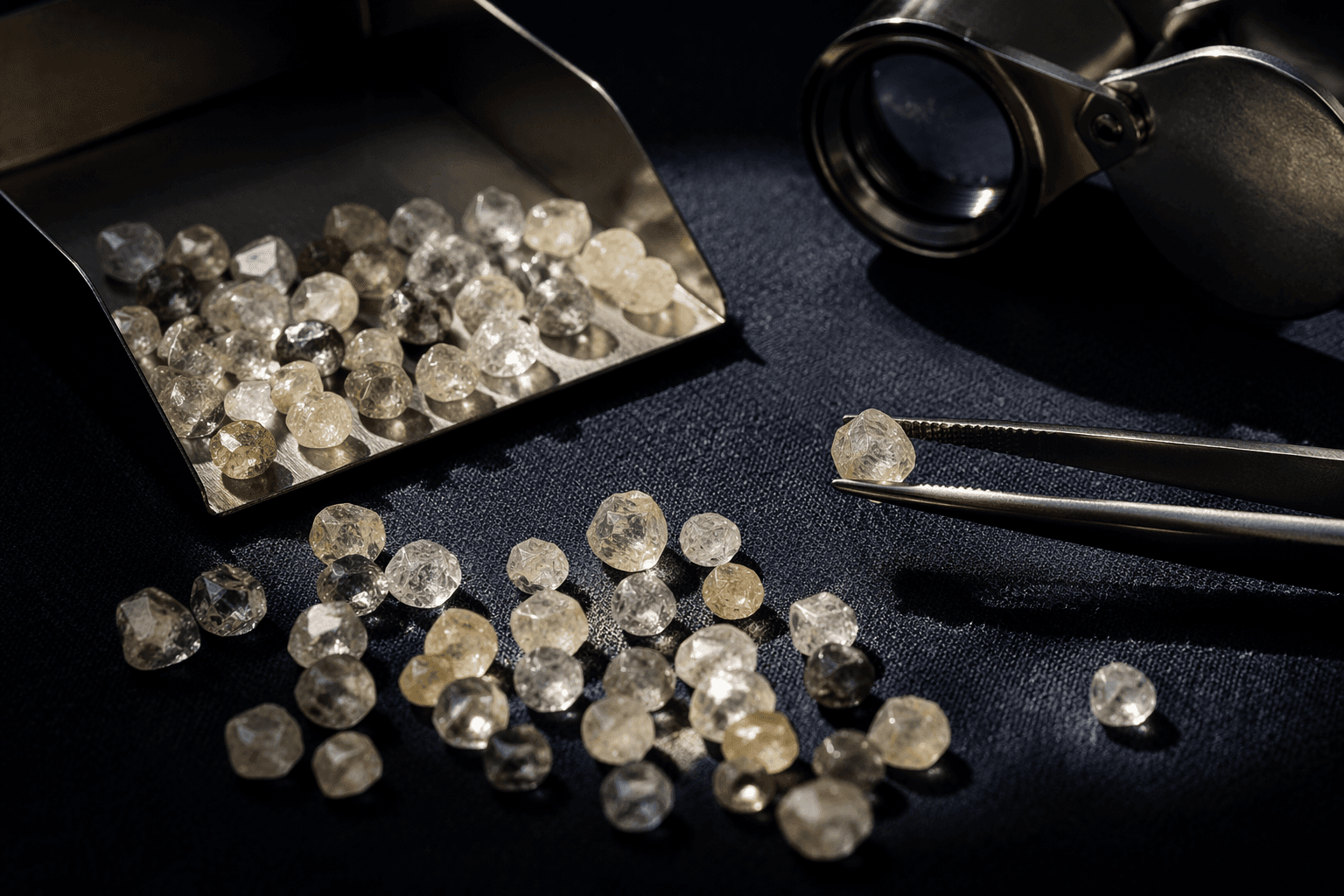
Moscow is preparing to tax select rough diamonds later in 2026, a narrow move designed to keep more workable stones inside Russia and feed a cutting industry under strain. The plan is aimed only at parcels that are cost-effective to cut domestically, which means the pressure will fall less on grand policy than on the specific goods that still make economic sense to polish at home.
Deputy Finance Minister Alexei Moiseev said Russia’s Finance Ministry is discussing a “lenient” export tariff scheme with Alrosa, the world’s largest diamond producer by carat. His warning was stark: “If we wait a little longer, we will simply lose the (diamond-cutting) expertise we still have,” he said. For manufacturers and dealers, that signals a policy designed to preserve know-how first, but it will also reshape the rough pipeline. Stones diverted from export to domestic cutting can tighten availability for overseas buyers, alter parcel assortments, and force cutters to pay closer attention to rough-to-polished yields, where every percentage point matters to margin.
The proposal lands after years of tightening pressure on Russian stones. The G7 began banning direct Russian diamond imports in January 2024, and the European Union and G7 later hardened traceability rules to close third-country loopholes. Russia had already answered with state support, including regular purchases of some Alrosa output through a Russian state fund. Even so, the sector kept sliding: Russia’s diamond exports fell to a decade low in 2025, a sign that sanctions, weaker demand, and domestic disruption were all biting at once.
The timing adds another layer of urgency. The U.S. Treasury extended its deadline for restrictions on “grandfathered” Russian diamonds until September 1, 2026, keeping the policy clock running just as Moscow weighs its own response. If export duties do appear, buyers are likely to reassess where they source commercial stones and which goods they can still afford to carry. In the affected size ranges, some manufacturers may lean harder on alternative natural origins, while others may accelerate a shift toward lab-grown stones, where supply is more predictable and pricing has already reset. For the trade, the immediate effect may be less a headline shock than a slow redrawing of assortments, costs, and the economics of cutting itself.
Know something we missed? Have a correction or additional information?
Submit a Tip