Sam Ham Design turns divorce diamonds into reinvention jewelry
Sam Ham Design is recasting divorce diamonds as reinvention pieces, turning existing engagement and heirloom stones into new symbols of autonomy and value.

Sam Ham Design has made divorce jewelry the center of its business, remodelling engagement rings, inherited diamonds and relationship-linked pieces into something newly personal. The category has moved from private aftermath to visible market signal: divorce rings are now among fine jewelry’s most talked-about ideas, and the appeal is as much about keeping value in play as rewriting meaning.
A category built from what already exists
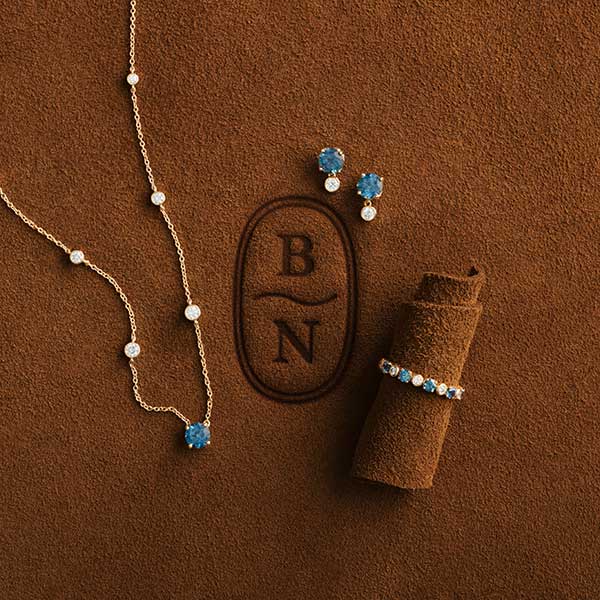
What makes this corner of diamond jewelry distinctive is that it starts with ownership, not acquisition. Sam Hamilton’s London label is built around bespoke rings and remodelling, with a philosophy that every piece has a past and can be redesigned into what comes next. That approach matters because it treats the diamond as an asset with memory, rather than a stone that has to be sold off or tucked away.
The emotional calculus is straightforward, but the commercial one is equally important. Consumers are not only looking for a new symbol after a breakup, they are looking for a way to keep a significant diamond in circulation as something wearable, legible and intentional. In that sense, divorce jewelry is less a novelty than a reset service category, and Sam Ham Design is one of the names giving it form.
Why the idea resonates now
Divorce jewelry may feel current, but the numbers help explain why the market can support a dedicated service. In the United States, 986,810 divorces were recorded in 2024, alongside a marriage-divorce ratio of 2.42. England and Wales recorded 102,678 divorces in 2023, with divorce rates of 8.6 per 1,000 married men and 8.5 per 1,000 married women.
Those figures do not tell the emotional story, but they do show the scale of a life event that often leaves people with valuable jewelry in hand. The shift in attitude is just as important: divorce is increasingly framed less as stigma and more as transition, which gives jewelers room to market repurposed diamonds as symbols of independence, autonomy and a new chapter.
The Natural Diamond Council captures that mood neatly, describing a divorce ring as “less about closure and more about clarity, independence, and self-possession.” That framing explains why the category sits comfortably between fine jewelry and personal narrative. It is not about erasing the past. It is about deciding what should remain visible.
The celebrity moments that pushed the idea into view
Celebrity examples helped turn an old practice into a contemporary shorthand. Emily Ratajkowski popularized the concept in 2024 by repurposing her original toi et moi engagement ring into two separate rings, a gesture that made the reset look deliberate rather than defensive. Rachel Zoe followed with her own language of transformation, calling her custom ring a “freedom ring” after filing for divorce in July 2025.
Brooks Nader brought the idea into even sharper focus by publicly showing repurposed divorce rings made from her original engagement stone. Ring Concierge was credited with resetting that diamond into new settings, which matters because it shows how the market is adapting around the story as well as the stone. Once the piece itself becomes part of the public narrative, the service moves beyond repair into reinvention.
The design language has changed too
Divorce jewelry is rising alongside a broader shift in bridal design. WWD has reported that engagement rings are becoming more expressive, with floating diamonds, bezel settings, mismatched toi et moi stones and east-west designs all gaining traction. Those settings are more individualistic on the way in, and that flexibility makes them easier to reinterpret on the way out.
That is not a minor aesthetic detail. A floating diamond reads as light and open, a bezel setting gives a stone a clean architectural outline, and east-west mounting changes the axis of the familiar solitaire. Mismatched toi et moi rings already break from symmetry. In a market where stones are used more creatively from the start, repurposing after a relationship ends feels less like a rupture and more like a continuation of the same design logic.
For jewelers, that has practical consequences. A ring that was conceived as a personal statement can be recut, separated, reset or paired with new metal in a way that preserves the underlying diamond while changing the message. The old symbolism does not disappear, but it no longer has to be the only one attached to the piece.
What divorce jewelry is actually asking clients to keep
At its core, this trend is not about buying more jewelry. It is about deciding what deserves to stay. The most compelling resets tend to begin with stones that already carry emotional weight, whether they were chosen for a proposal, passed down through a family or tied to a marriage that has ended.
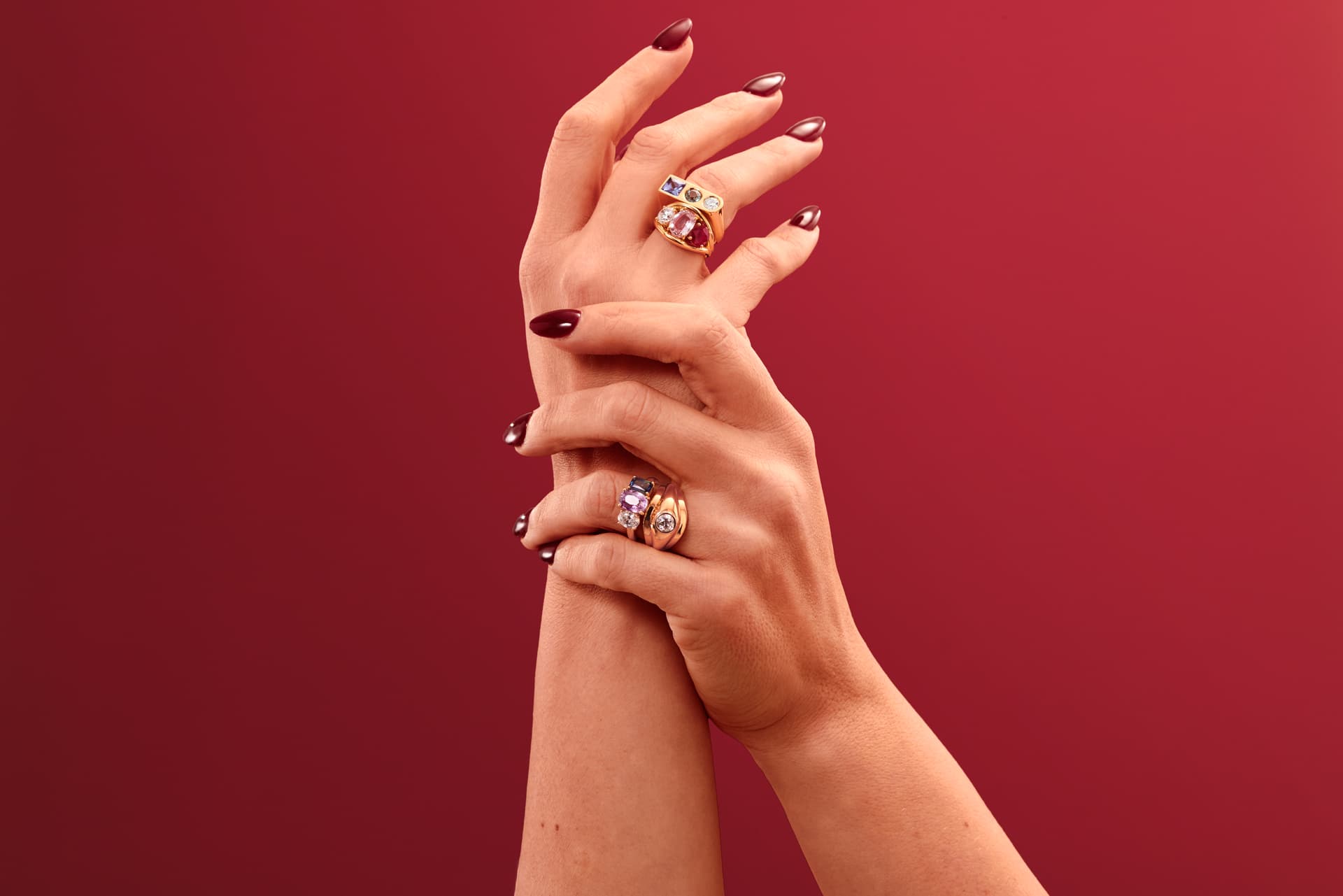
- Engagement stones can be split into multiple rings, as Emily Ratajkowski did with her toi et moi design.
- Original engagement diamonds can be reset into new settings, as seen with Brooks Nader’s repurposed rings through Ring Concierge.
- Inherited diamonds can be remodeled into bespoke pieces, which is one reason Sam Ham Design has found such a strong niche.
That mix of sentiment and material value is why the service feels larger than divorce itself. It gives clients a way to keep the diamond while changing the story, and that is a powerful proposition in a market increasingly shaped by individual meaning rather than inherited scripts.
A market built on reinvention, not recovery
The historical roots are deeper than the current celebrity cycle. A jewelry specialist cited by Acast noted that repurposing jewelry after divorce dates back to the early 20th century, when women on both sides of the Atlantic resized rings for different fingers or added symbolic designs. The contemporary version simply gives that instinct a more polished retail frame.
That is the real shift Sam Ham Design helps illuminate. Divorce jewelry is no longer a private workaround or a discreet alteration. It is becoming a visible service category, one that sits at the intersection of craftsmanship, emotional clarity and value retention. In a diamond market where symbolism is increasingly personal, the most compelling stone may be the one that gets a second life.
This article was produced by Prism’s automated news system from verified source data, official records, and press releases, then run through automated quality and moderation checks before publishing. The system is built and supervised by the people who set the standards it runs under. Read our full AI policy.
Did this article answer your question?