StoneAlgo Calculator Delivers Daily Diamond Price Estimates Using 4Cs Data
Natural diamonds fell nearly 8% and lab-grown stones dropped over 11% in a single month, per StoneAlgo's calculator tracking 2 million live diamond prices daily.
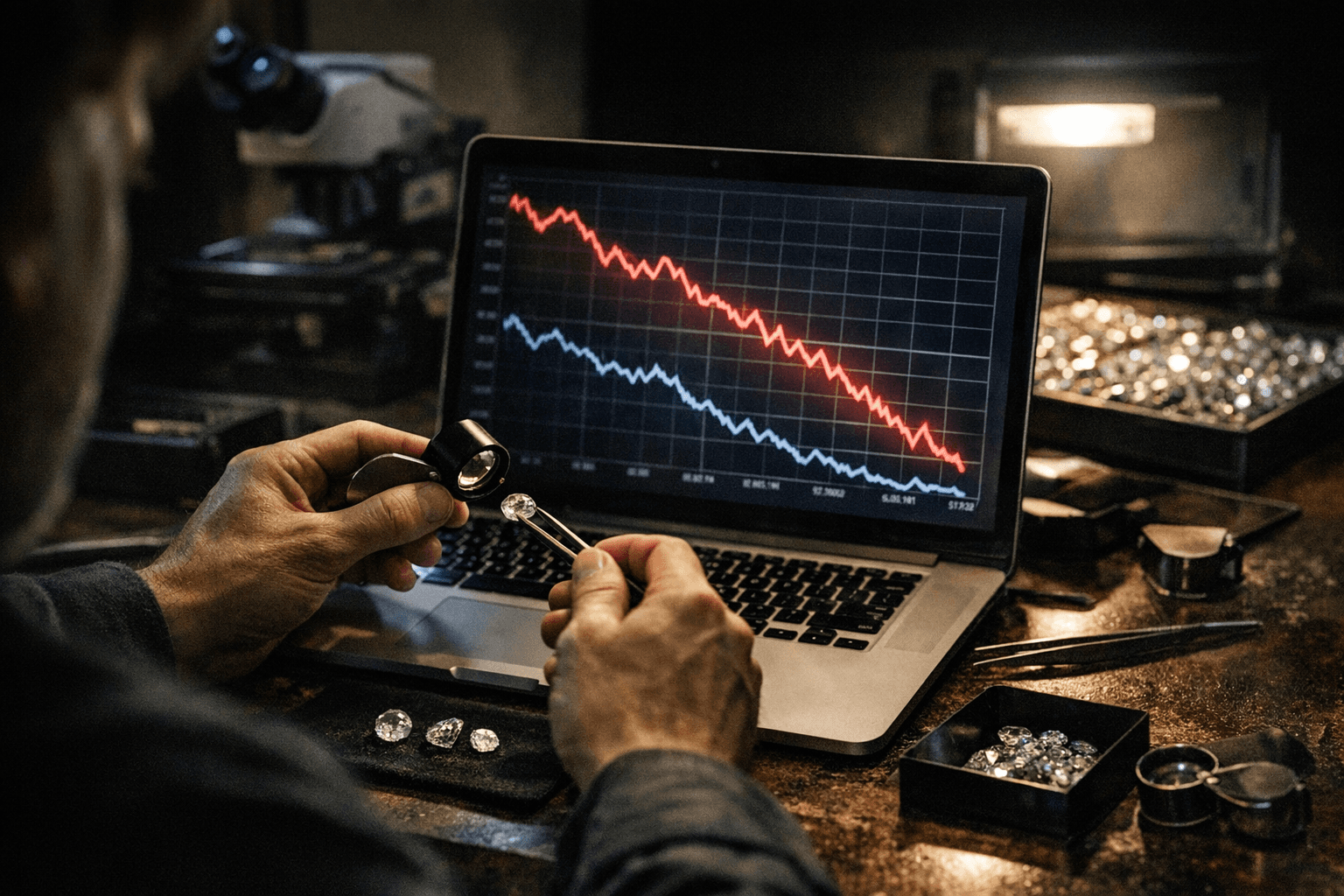
Natural diamond prices fell 7.96% and lab-grown diamond prices fell 11.16% in a single month, according to StoneAlgo's diamond price calculator, which draws on a proprietary database of more than 2 million live listings refreshed every day. The figures, tracking 1-carat stones across all shapes, represent some of the sharpest short-term contractions the platform's indexes have recorded and arrive at a moment when buyers and retailers alike are renegotiating their assumptions about diamond value.
The calculator itself is disarmingly simple to use. Enter a shape, a carat weight, a color grade, and a clarity grade, and StoneAlgo returns a Fair Price Estimate calibrated to current retail market conditions. For natural diamonds, those estimates are benchmarked against GIA-certified stones; for lab-grown, the model accounts for both GIA and IGI grading. The distinction matters in practice: GIA-certified diamonds consistently trade at a premium to stones graded by IGI or EGL, and the calculator flags this so buyers understand why a jeweler's quote might diverge from the estimate.
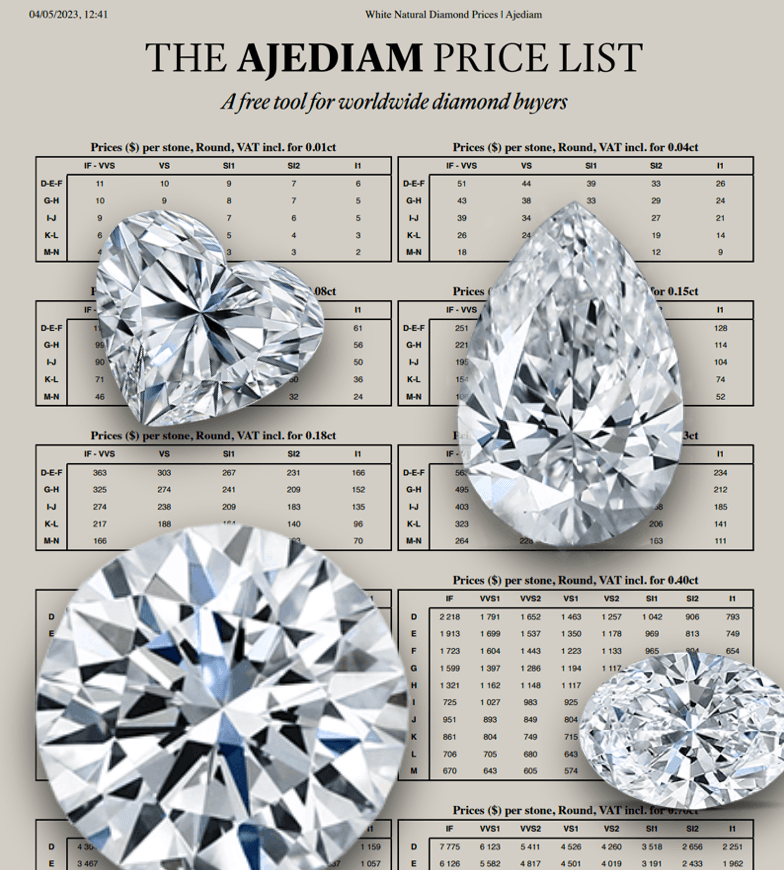
The spread across the 4Cs is where the tool's value becomes concrete. A 1-carat D color IF clarity natural diamond can exceed $20,000 at retail. Move to a 1-carat K color SI2 clarity stone and the price drops to roughly $2,500. That nearly eightfold difference across the color and clarity spectrum is precisely the kind of range a first-time buyer rarely anticipates walking into a jeweler, and it explains why an independent price anchor is useful before any negotiation begins.
The month-over-month declines arrive against a longer structural backdrop. Lab-grown diamond prices fell 74% between January 2020 and December 2024, pulling the average 1-carat price from approximately $3,410 per carat down to $892, according to data from Edahn Golan Diamond Research and the StoneAlgo Lab-Grown Diamond Price Index. Lab-grown stones now cost roughly 82% less than comparable natural diamonds, a gap that has reshaped the engagement ring market and pushed major brands including Pandora to abandon natural diamonds entirely in favor of lab-grown alternatives.
For buyers who have already identified a specific stone, StoneAlgo's Diamond Check tool accepts a GIA certificate number and returns a Fair Price estimate alongside a proprietary cut score for round diamonds. The cut score grades light performance on a numerical scale, going well beyond the GIA's standard Excellent, Very Good, and Good designations. The platform also indexes more than 750,000 lab-grown diamond prices from top online jewelers as part of its broader database.
With natural prices contracting at nearly 8% over a single month, the practical implication is straightforward: the 4Cs grade combination that defined your budget last month may buy a meaningfully better stone today.
This article was produced by Prism’s automated news system from verified source data, official records, and press releases, then run through automated quality and moderation checks before publishing. The system is built and supervised by the people who set the standards it runs under. Read our full AI policy.
Did this article answer your question?