Swiss International Gemlab Brings AI-Assisted Grading to Colored Gemstones
Three veteran gemologists launched Swiss International Gemlab, deploying proprietary AI to bring greater consistency to colored gemstone grading from Lucerne and Hong Kong.
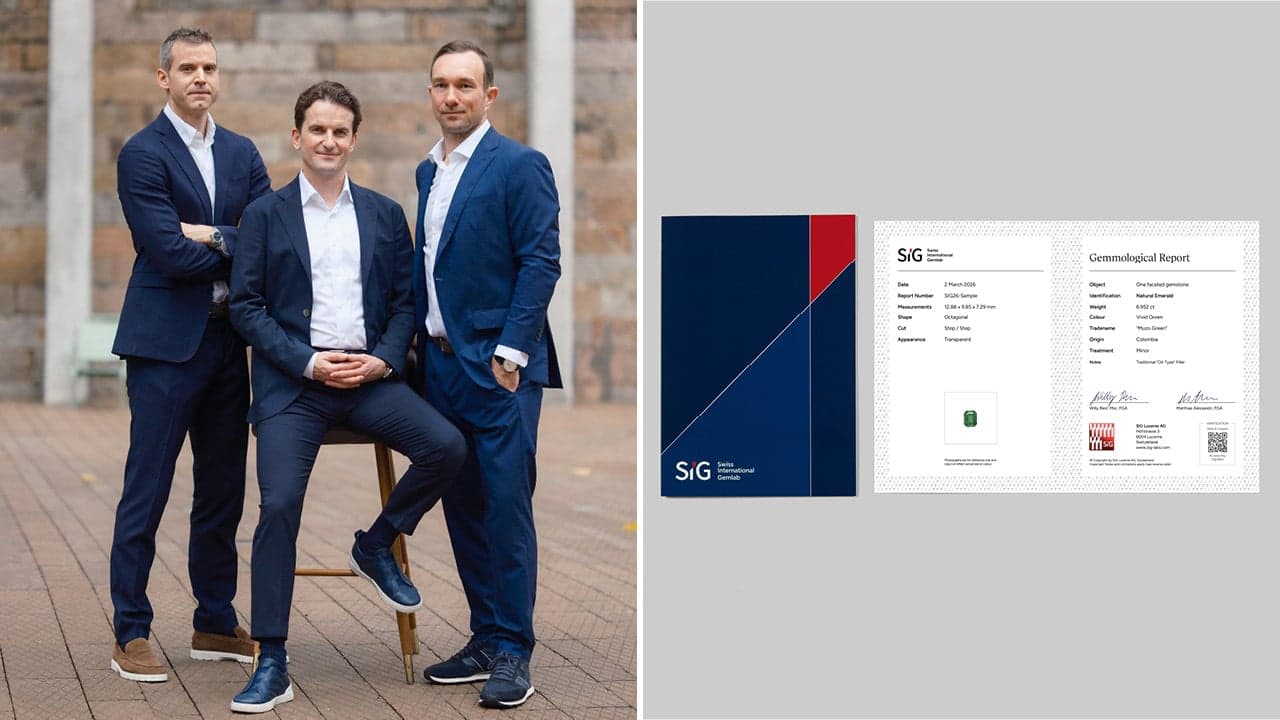
Three veteran gemologists launched Swiss International Gemlab last week, bringing a proprietary artificial intelligence system to bear on one of gemology's most contested challenges: producing consistent, reproducible grading reports for colored gemstones.
Willy Bieri, Lawrence Hahn, and Matthias Alessandri founded the lab, known as SIG, with dual locations in Lucerne, Switzerland, and Hong Kong. The pairing of cities is deliberate. Switzerland has long been the address of gemology's most trusted institutions, while Hong Kong anchors the lab to Asia's dominant colored stone trading corridors.
The heart of SIG's operation is SIG-AI, a proprietary system that cross-references analytical data against structured databases to flag anomalies in real time. Rather than replacing gemologists, the technology is designed to operate alongside them, catching inconsistencies that might slip through during high-volume reporting periods and compressing the time between submission and certificate delivery. SIG's full-spectrum services cover identification, origin determination, treatment analysis, and color grading: the four pillars any serious buyer or seller of colored gemstones needs addressed before a transaction.
Origin determination is where the stakes are highest. A Burma ruby or Kashmir sapphire commands premiums that can reach multiples of what the same stone fetches with a generic origin designation. Treatment analysis carries equal weight: a heat-treated sapphire and an untreated one of identical apparent quality occupy entirely different price brackets. The precision SIG is promising through AI-assisted cross-referencing speaks directly to these market realities.
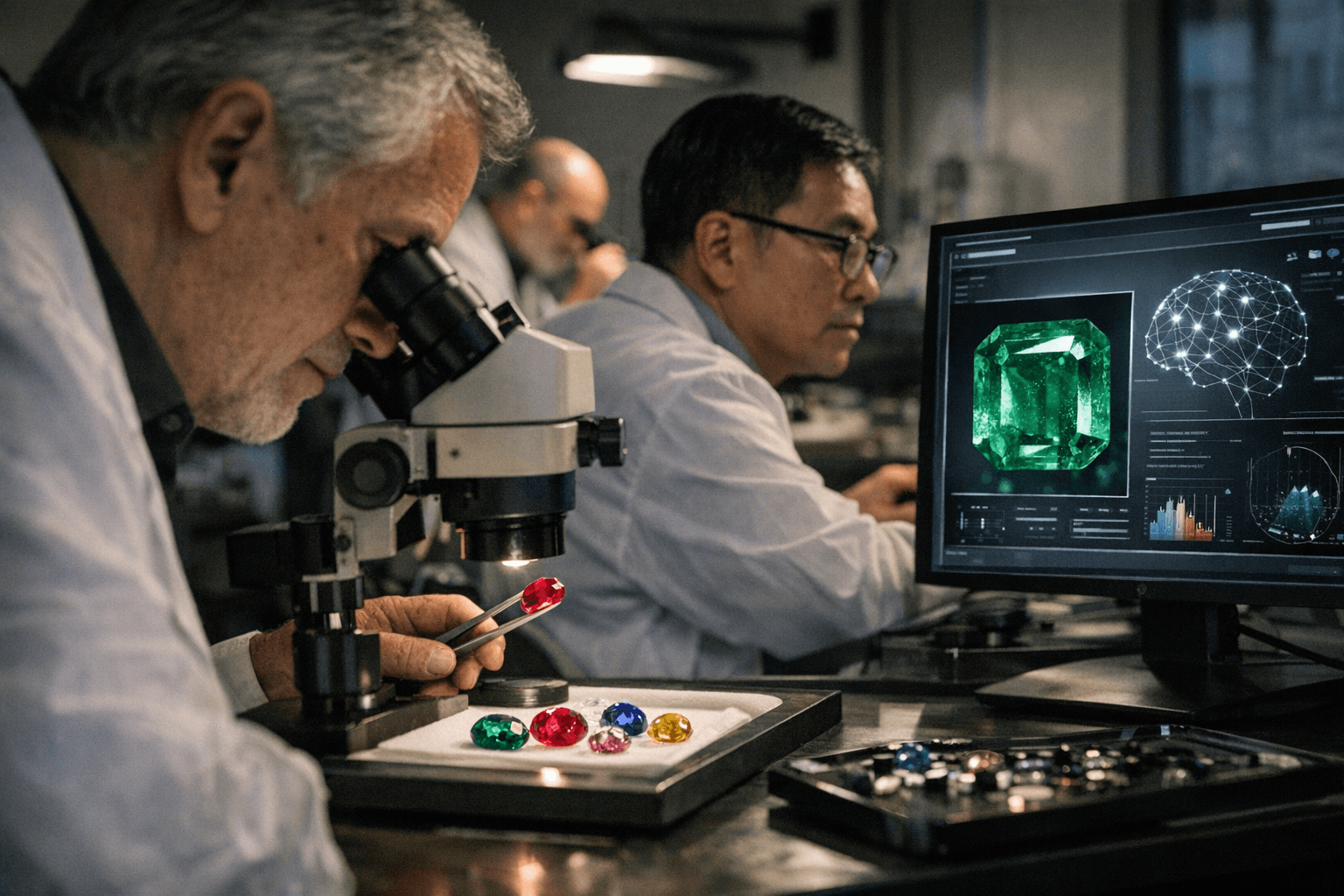
SIG's launch is part of a broader shift in gemological practice toward data-driven analysis. Established labs have increasingly integrated spectroscopic instruments and digital databases into their workflows, but the systematic application of AI to flag anomalies and improve cross-report consistency represents a more deliberate architectural choice. Bieri, Hahn, and Alessandri are positioning SIG-AI not as a supplement to traditional methods but as a structural component of how every report gets produced.
For the colored stone market, which has historically tolerated wider interpretation gaps than the diamond sector, greater reproducibility would address a longstanding friction point. When two reputable labs reach different conclusions on origin or treatment, buyers face real uncertainty and sellers face real pricing pressure. A lab designed from the ground up to minimize that gap could matter to the trade considerably more than its modest launch headlines suggest.
Know something we missed? Have a correction or additional information?
Submit a Tip