Tariffs and China's Luxury Slowdown Hollow Out the $80 Billion Diamond Industry
The $350 million Surat Diamond Bourse, bigger than the Pentagon, sat empty as tariffs, geopolitical tension, and lab-grown stones hollowed out an $80 billion industry.
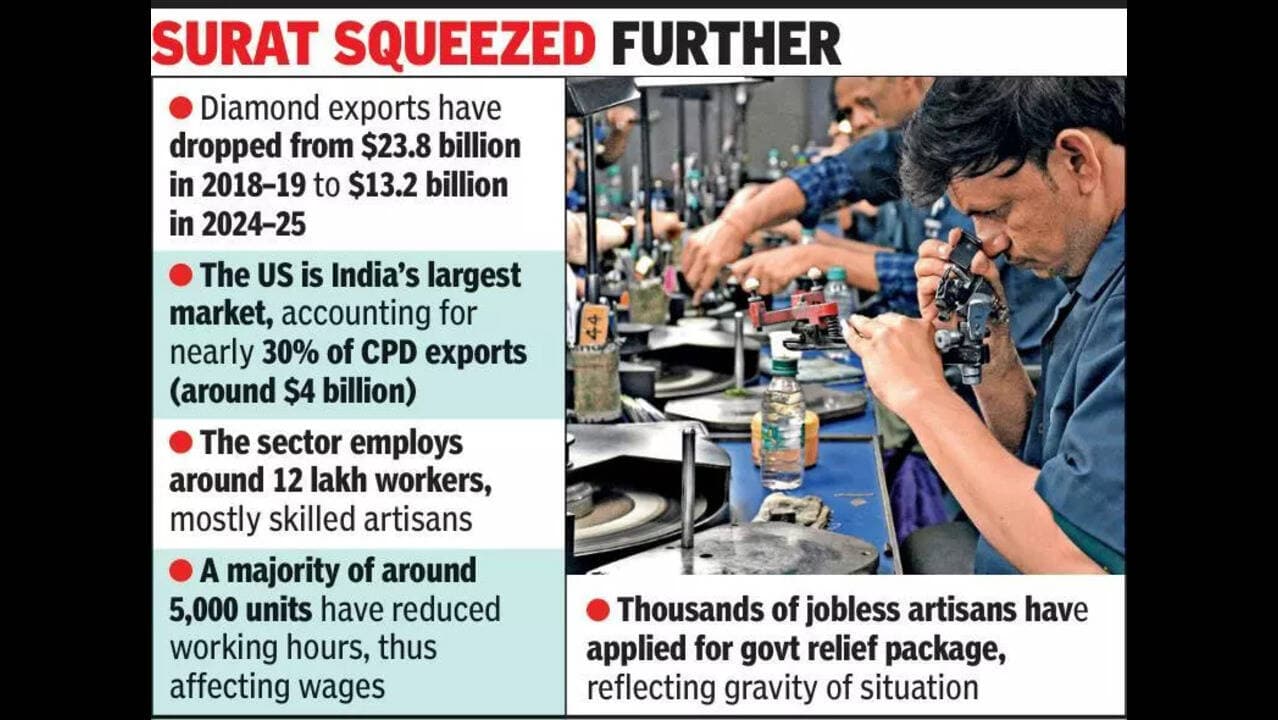
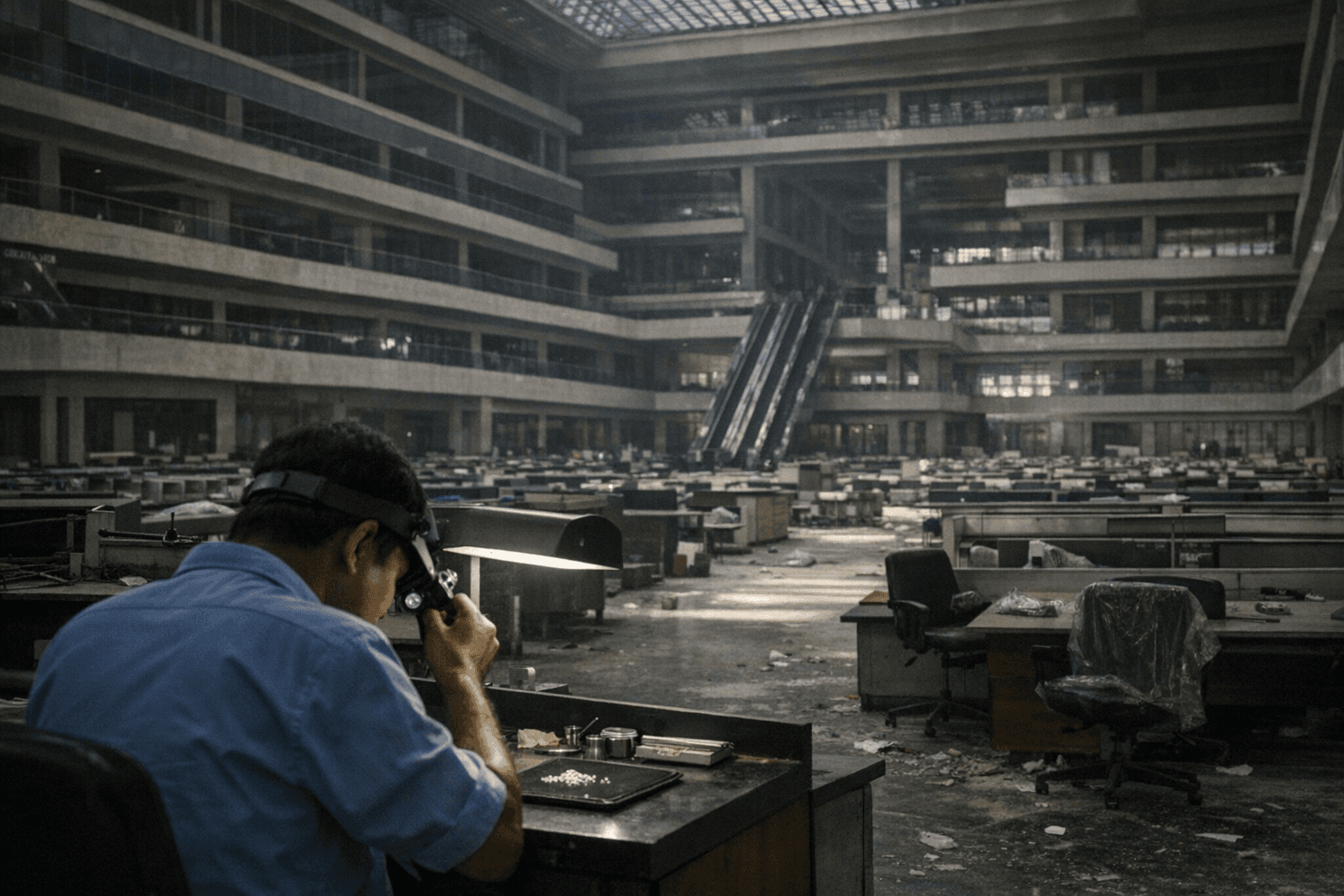
The Surat Diamond Bourse was billed as the future of an industry. Spanning more floor space than the Pentagon, the $350 million complex in western India rises across nine sleek towers with sloping facades, built to accommodate thousands of traders in a city that cuts and polishes nine out of every ten diamonds on earth before they are shipped to markets from Dubai to Manhattan.
The problem is it's empty.
That image, a monument to ambition standing vacant in the world's premier diamond polishing hub, captures the broader collapse now gripping the $80 billion global diamond industry. Tariffs, wars, and the rise of lab-grown stones are upending the market and pushing down prices, squeezing every link in the supply chain from Surat's polishing floors to the jewelry counters of Manhattan.
The pressures are converging from multiple directions at once. Trump's tariffs have introduced friction into trade flows that the diamond industry, which moves polished goods across borders with extraordinary frequency, is poorly positioned to absorb. At the same time, China's luxury slowdown has removed one of the industry's most consequential demand engines. Chinese consumers had been among the most aggressive buyers of high-end jewelry in the previous decade; their retreat has left a gap that no other market has filled.
Then there is the structural challenge that many in the trade consider the most permanent of the three: the rise of lab-grown diamonds. Chemically and optically identical to stones pulled from the earth, lab-grown diamonds have driven prices down on natural goods by offering buyers an alternative that looks indistinguishable in a bezel setting or a pavé band. The cost to produce a lab-grown stone has fallen sharply, and consumers, particularly younger buyers, have shown diminishing loyalty to the concept of geological rarity.
Surat built the Diamond Bourse to assert its centrality to the global trade, a $350 million declaration that this city in western India was not just a processing node but the nerve center of an industry. With nine out of every ten polished diamonds passing through its workshops before reaching wholesalers in Dubai or retailers in Manhattan, Surat's claim to that title was unimpeachable. The bourse was meant to consolidate that power, giving traders a world-class venue commensurate with the city's outsized role.
Instead, the building stands as an unintended monument to the forces now fracturing the market it was designed to serve. Whether demand recovers depends on whether the industry can navigate tariff regimes, wait out China's economic reset, and find a credible answer to the lab-grown question, one that goes beyond sentiment and speaks to the enduring value of a stone formed over billions of years. None of those resolutions appear imminent.
This article was produced by Prism’s automated news system from verified source data, official records, and press releases, then run through automated quality and moderation checks before publishing. The system is built and supervised by the people who set the standards it runs under. Read our full AI policy.
Did this article answer your question?