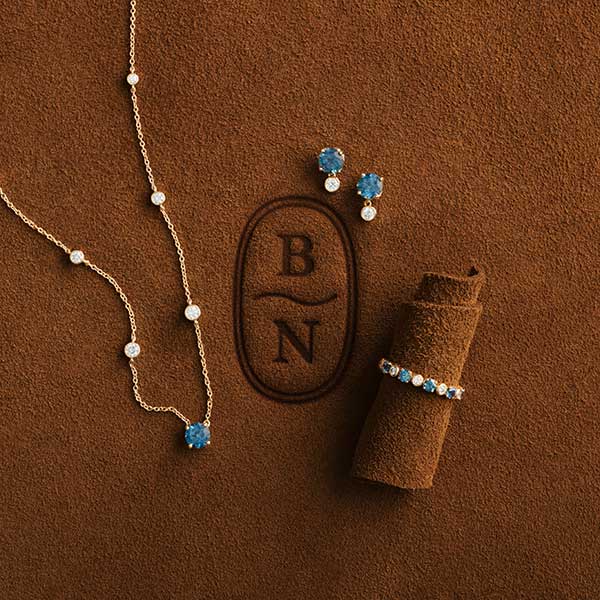
Timeless Diamond Pieces Worth Wearing Every Single Day
Diamond jewelry earns its place beyond special occasions. These are the pieces built for daily life, worn every day without apology.
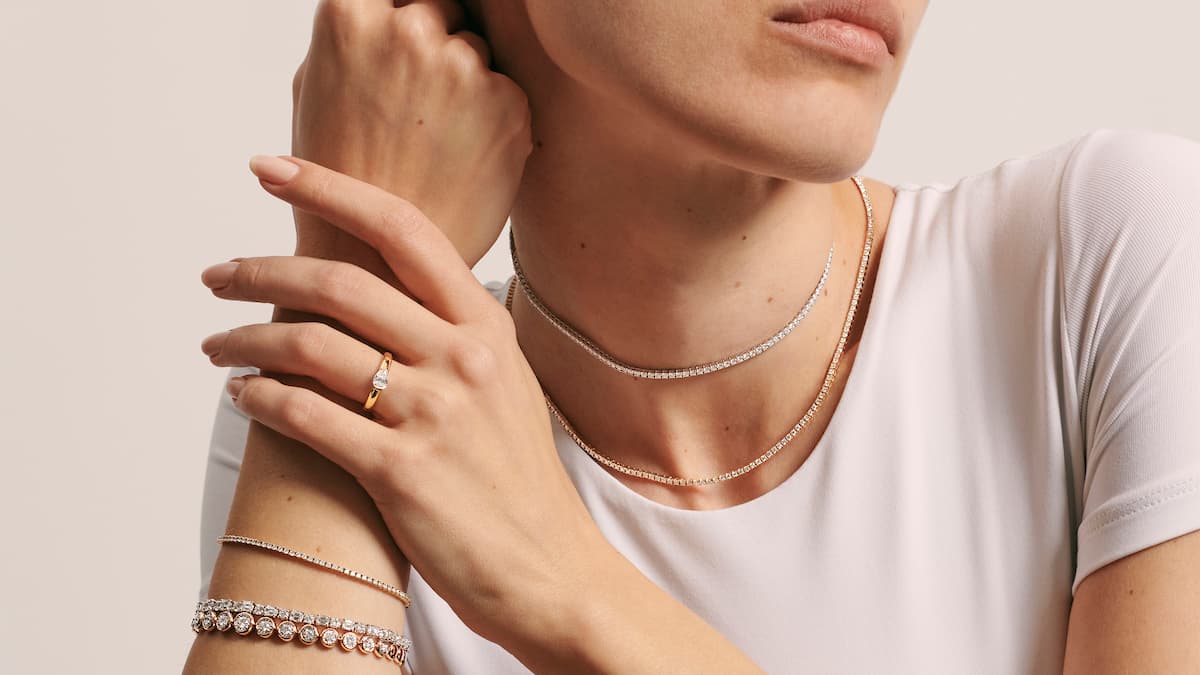
Diamonds have long been typecast as occasion jewelry, the stones you save for engagements, anniversaries, and black-tie evenings. That instinct is worth reconsidering. The most loyal pieces in any jewelry wardrobe are the ones you never take off, the diamond studs still in your ears on a Tuesday morning, the eternity band that catches the light while you're holding a coffee cup. These are not statement pieces in the theatrical sense. They are something more enduring: quiet signatures that become inseparable from your style.
The key to wearing diamonds every day lies in understanding which designs are built for it. Setting choice, metal weight, and stone scale all determine whether a piece integrates into your life or sits forgotten in a drawer. Here is a considered look at the categories that earn a permanent place on the body.
What makes diamond studs the most reliable everyday earring?
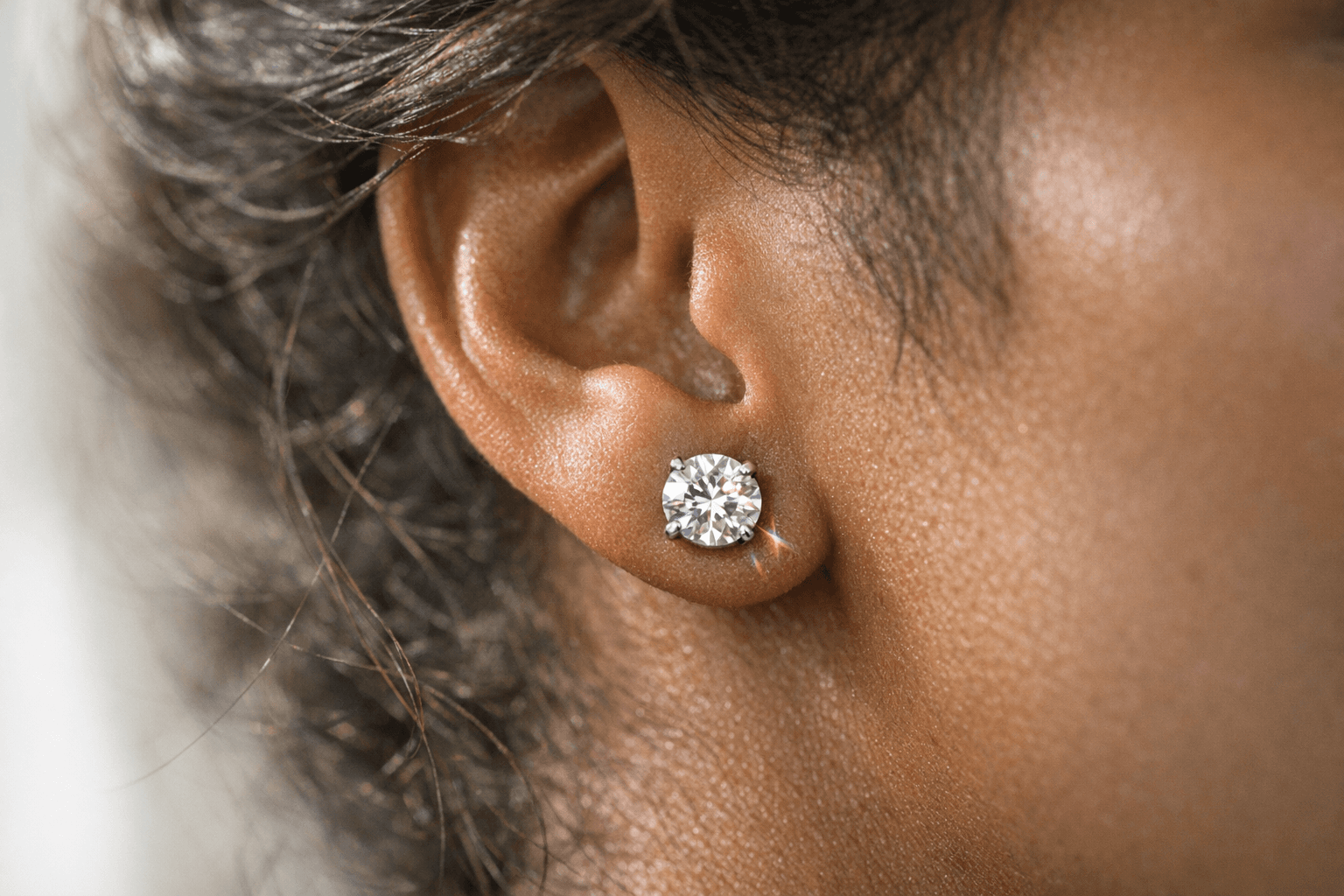
A pair of diamond studs is, without argument, the most versatile piece in fine jewelry. Lightweight enough to sleep in, refined enough for a boardroom, and simple enough to wear with anything from a tailored suit to a worn linen shirt, they ask almost nothing of you while returning quiet elegance at every turn. The round brilliant cut remains the most practical choice for daily wear: its symmetry maximizes light return even in smaller carat weights, meaning a 0.5ct pair in 14k white gold reads with far more presence than its size suggests.
For those who want to move beyond round brilliance, princess-cut and oval studs offer distinct personalities without sacrificing wearability. The setting matters as much as the stone. A four-prong martini setting sits flush against the earlobe and minimizes snagging, while a bezel setting, which wraps the diamond's girdle in a continuous band of metal, offers the most protection for an active lifestyle and lends a distinctly modern edge.
Are diamond necklaces practical for everyday wear?
A delicate diamond necklace is among the most wearable fine jewelry forms, provided the scale is right. A solitaire diamond pendant on a fine 14k or 18k gold chain sits close to the collarbone and disappears under clothing when needed, making it genuinely functional across contexts. Tiffany & Co.'s everyday diamond necklace collection extends from solitaire pendants and bar pendants to knot motifs and T-shaped circle designs, with techniques designed to maximize light movement in smaller stones.
For a more personal approach, an initial pendant with a pavé-set diamond or a name necklace with accent diamonds can carry the same daily wearability with added meaning. At Theo Grace, accent diamonds are paired with hand-chosen birthstones in 14k gold settings designed to be worn without fuss — the engravings sit flush rather than raised, so they don't catch on clothing. Each piece carries a tactile warmth that mass-produced diamond jewelry rarely achieves, the kind of understated detail that rewards daily wear rather than demanding special occasions. Layering two or three fine chains at different lengths, mixing a diamond solitaire with a plain gold chain, creates depth without visual noise.
Why eternity bands work beyond the engagement context
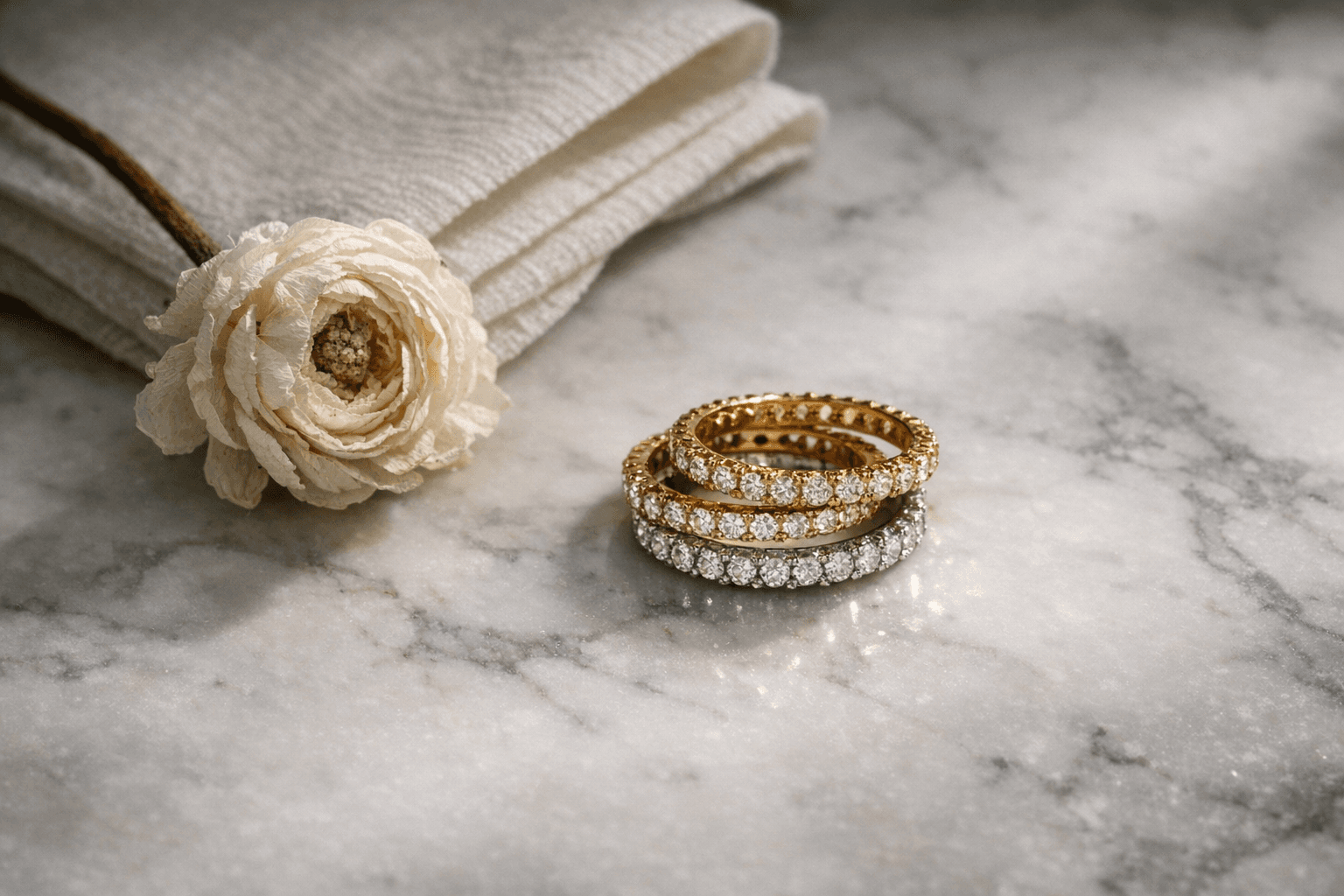
The eternity band is one of jewelry's most misunderstood categories. Often received as a milestone gift and then worn only on formal occasions, it is actually one of the best-designed pieces for daily use. A full eternity band set with round brilliants in a shared prong or pavé setting distributes diamonds around the entire circumference of the ring, creating a continuous loop of light that reads well at any angle and in any light.

Half-eternity bands, which feature stones across the top 180 degrees of the shank, are often more comfortable for active wear and tend to sit more stably on the finger. A marquise diamond eternity band offers a pointed, graphic quality that distinguishes itself from the round-brilliant standard while maintaining the same structural wearability. In 14k yellow gold, these bands layer beautifully with a plain wedding band; in platinum, they carry a cooler, more architectural tone that suits minimalist aesthetics particularly well.
Non-engagement diamond rings worth wearing daily
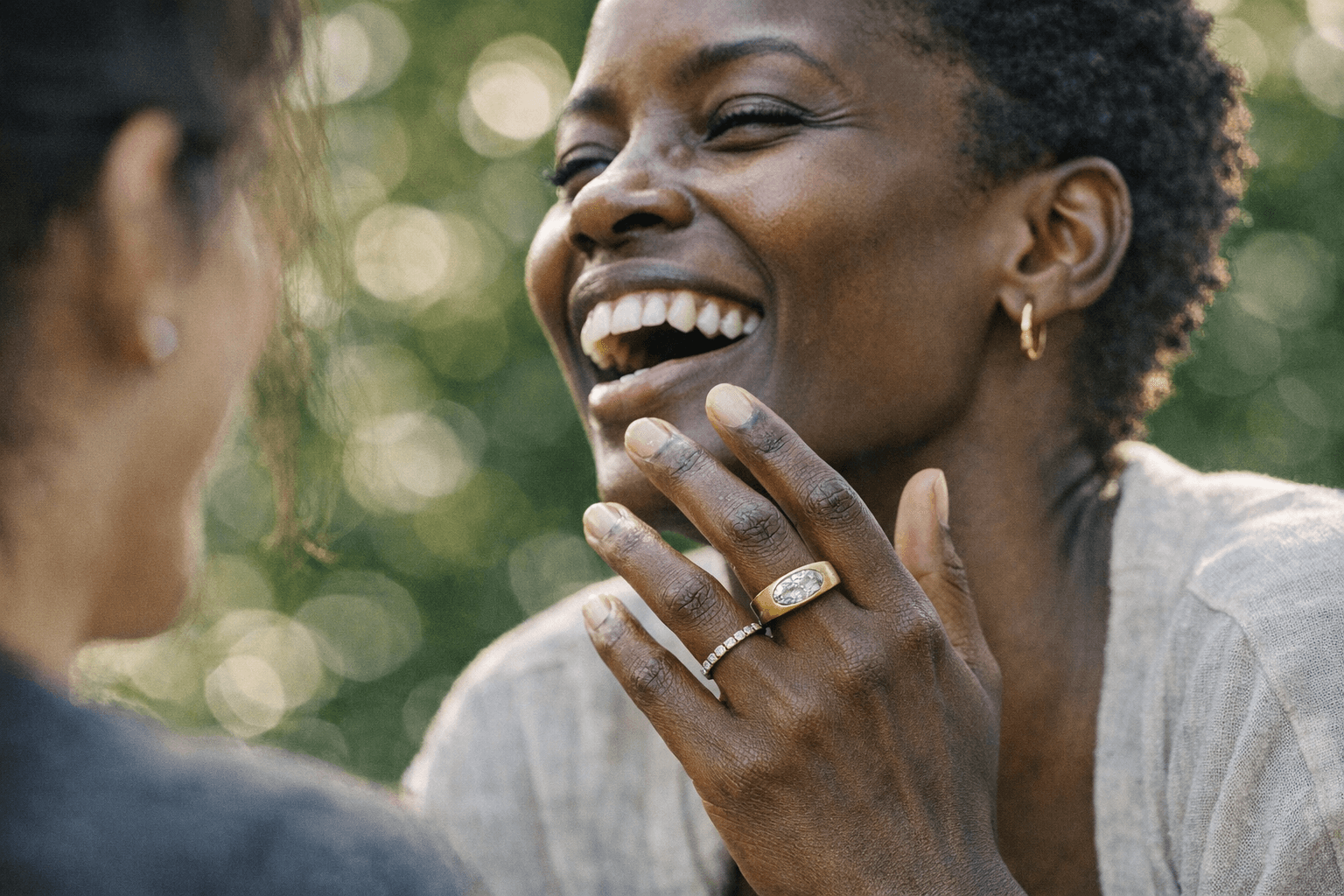
The category of non-engagement diamond rings has expanded considerably as more people buy fine jewelry for themselves rather than waiting for it to be given. VRAI, which works exclusively with lab-grown diamonds produced in zero-emission foundries, offers practical examples: their multi-row pavé ring stacks multiple rows of small diamonds for a textured, dimensional effect, while their cuff ring takes a more sculptural approach. Both are designed specifically for daily wear, with low-profile settings that reduce the risk of snagging.
Vintage-inspired settings have proven particularly popular for non-engagement rings, and the appeal is not hard to understand. A cushion-cut diamond in a milgrain-edged bezel, or an old-mine cut stone in a simple yellow gold solitaire, carries both historical character and the durability of a low, secure setting. These rings increasingly function as self-purchase pieces, worn on the right hand as deliberate expressions of personal style.
How to choose a diamond piece built for daily life
Not every diamond jewelry category is equally suited to constant wear. A few criteria are worth considering before committing:
- Setting security: Bezel and flush settings offer the most protection for stones; high prong settings catch on fabric and accumulate debris more quickly.
- Metal durability: Platinum is the most durable option for everyday wear due to its density and scratch resistance, though 14k gold (harder than 18k due to its higher alloy content) is the practical sweet spot for most budgets.
- Stone size and profile: Low-profile settings with stones under one carat tend to wear better daily. Larger stones and elevated settings are more vulnerable to impact.
- Claw count: For prong-set rings, six prongs offer more stone security than four, though four-prong settings create a cleaner, more open look.
The case for lab-grown diamonds in everyday pieces
For pieces you intend to wear continuously, lab-grown diamonds present a compelling argument. Optically and physically identical to mined diamonds, they are graded by the same 4Cs criteria (cut, color, clarity, and carat weight) and carry the same hardness rating of 10 on the Mohs scale, making them equally suited to daily wear. The price difference, typically 50 to 80 percent lower than a comparable mined stone, means you can invest in a larger or higher-quality stone for the same budget, or build out a more complete everyday collection without compromise.
VRAI's commitment to zero-emission lab-grown production is one of the more rigorous environmental positions in the category, but several other producers and retailers now offer certified lab-grown stones with full traceability documentation. For buyers who want natural diamonds and the specific provenance that comes with them, Leon Diamond's ethically sourced natural diamond pieces carry the same minimalist everyday aesthetic, with 14k gold settings designed to integrate seamlessly into any wardrobe.
Building an everyday diamond wardrobe
The most useful framing for everyday diamond jewelry is not "which single piece should I buy" but rather how a small collection of understated pieces works together. A pair of round brilliant studs in 14k white gold, a fine solitaire pendant at collarbone length, and a slim eternity band in yellow gold can be worn simultaneously without competing. The contrast of warm and cool metals has become widely accepted in contemporary jewelry styling and often reads as more considered than a perfectly matched set.
Adding a non-engagement diamond ring to the right hand completes a wardrobe that moves from morning through evening without requiring any substitution. These pieces, chosen for setting quality and stone integrity rather than size, are the ones that will still feel right in twenty years. That longevity is what separates everyday diamond jewelry from trend-driven acquisition; a well-made bezel-set stud or a properly calibrated eternity band does not date because it was never chasing a moment in the first place.
This article was produced by Prism’s automated news system from verified source data, official records, and press releases, then run through automated quality and moderation checks before publishing. The system is built and supervised by the people who set the standards it runs under. Read our full AI policy.
Did this article answer your question?