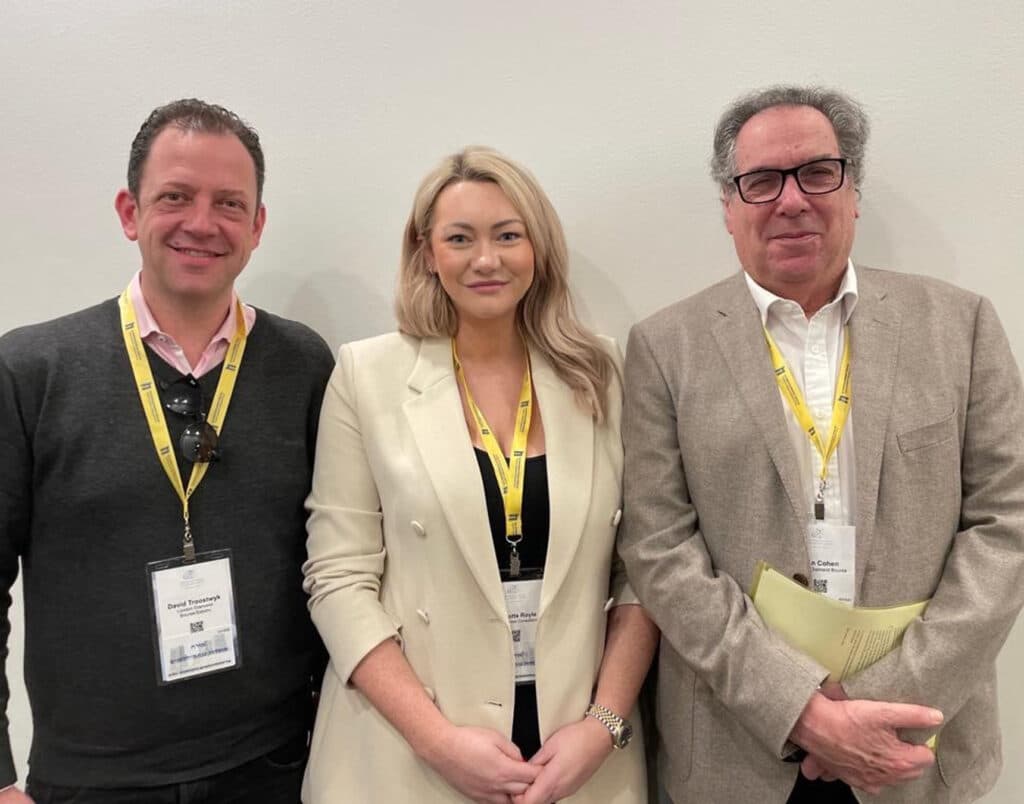
Tracey Ellison spotlights Sierra Leone’s natural diamonds and community impact
Tracey Ellison’s Sierra Leone visit recasts natural diamonds as community-built, but the story only lands if schools, clinics, and jobs are real.

Can Sierra Leone turn one of jewelry’s most loaded origins into a trust asset? Tracey Ellison’s visit suggests the country’s natural diamonds can be told through schools, clinics, jobs, and local infrastructure, but only if those benefits are visible enough to outlast the old blood-diamond stigma.
A legacy the trade cannot ignore
Sierra Leone’s diamond story begins with a hard truth: during the civil war from 1991 to 2002, diamonds became inseparable from violence in the global imagination. The phrase “blood diamonds” still shadows the category, which is exactly why any modern provenance story from the country has to work harder than a standard origin claim. Sierra Leone joined the Kimberley Process in 2003, signaling its place inside the modern system meant to keep conflict stones out of the supply chain.
The numbers matter because they show this is not a symbolic industry. The Kimberley Process lists Sierra Leone’s 2020 rough diamond exports at 641,469.10 carats valued at about $119.4 million. In 2024, Sierra Leone exported about $108 million in diamonds, making the gem one of the country’s core export earners. Its main destinations that year were India, Belgium, the United Kingdom, the United States, and Thailand, a reminder that Sierra Leone’s stones still move through the global cutting, trading, and retail network.
What Ellison’s visit puts on the table
Ellison’s reporting centers on a message jewelry brands have long wanted but rarely earned the right to make: that natural diamonds can point to community benefit, not just extraction. In Sierra Leone, that means schools, clinics, and other visible pieces of local infrastructure tied to mining activity. For consumers who have grown skeptical of origin narratives, that kind of concrete outcome is far more persuasive than a polished marketing slogan.
That is also why this story matters beyond one visit. Natural diamonds have spent years in a defensive posture, squeezed between lab-grown alternatives on one side and conflict-era memories on the other. A credible Sierra Leone story gives retailers a different language, one that speaks not only about geological rarity, but about what happens around the mine site when the revenue cycle works as intended.
The community-benefits case is real, but uneven
The challenge is that Sierra Leone’s community story is not automatically a good one. The Diamond Area Community Development Fund was set up by the government in 2001 to channel mining revenue back into diamond areas, and secondary reporting has pointed to projects such as schools and clinics funded through that mechanism. But the impact has been contested and uneven, which is exactly the kind of detail careful readers expect to hear, not have smoothed over.

That tension runs through the sector. Many artisanal miners in Kono District still work in harsh conditions for very low pay, a reality that sits uneasily beside any clean-sounding development narrative. Amnesty International reported in 2022 on community concerns near the Meya Mining operation in Kono, including unsafe water, danger from nearby mining activities, and alleged socio-economic rights violations. Recent academic work on Koidu has made a similar point in more measured terms: community development depends heavily on engagement, negotiation, and power relationships. In other words, local benefit is possible, but it is not automatic.
Why the trade is leaning into this story now
Rapaport’s interest in Sierra Leone shows how strongly parts of the trade want an origin story with ethical texture. In March 2025, the company said its next Sierra Leone mission would be its fourth in two years, framing the trips around ethical trade and sustainable economic development. That kind of repeat engagement signals more than a photo opportunity. It suggests the trade sees Sierra Leone not simply as a source of rough goods, but as a proof point for responsible sourcing.
The World Diamond Council has also presented Sierra Leone as a case study in “diamond empowerment” and the shift from conflict diamonds to development narratives. That framing helps the industry, because it offers a positive counterweight to the lab-grown conversation, where value is often discussed in terms of price and scale rather than provenance and place. But the comparison cuts both ways: a natural diamond story only strengthens trust if it can show where the money went, who benefited, and what protections exist for the people near the mines.

What a believable Sierra Leone story must include
For jewelers and consumers, the useful question is not whether Sierra Leone has a better story than its past. It does. The harder question is whether that story can be substantiated in ways that matter to a buyer choosing between natural and lab-grown stones. A believable claim should point to specific community outcomes, not just broad language about sustainability.
- Schools or clinics funded or supported through mining-linked revenue
- Local infrastructure that people in mining areas can actually use
- Employment conditions that go beyond raw job counts and address safety and pay
- Evidence that water, land access, and health concerns are being managed, not minimized
- Governance structures that show how benefits flow back to local communities
Look for details that can be tested:
That standard is where Sierra Leone either becomes a powerful provenance story or slips into familiar jewelry-industry vagueness. The country’s diamonds can help retailers speak more honestly about natural stones, but only if the narrative is anchored in durable community gains, not sentiment. For the trade, that is the difference between a marketable origin and a trust-building one.
This article was produced by Prism’s automated news system from verified source data, official records, and press releases, then run through automated quality and moderation checks before publishing. The system is built and supervised by the people who set the standards it runs under. Read our full AI policy.
Did this article answer your question?