Understanding the 4Cs: How Cut, Color, Clarity, and Carat Define Diamond Quality
The GIA's 4Cs framework, created in the 1940s, is still the universal language of diamond quality — here's what each grade actually means for your money.
Before you spend a single dollar on a diamond, you need to understand one thing: no two stones are alike, and the difference between a breathtaking gem and a disappointing one often comes down to four measurable qualities. Cut, color, clarity, and carat — the 4Cs, codified by the Gemological Institute of America in the 1940s — form the global standard for evaluating diamonds, and knowing how to read them can mean the difference between a stone that dazzles and one that merely exists on a finger.
The 4Cs don't operate in isolation. They interact, compensate, and sometimes contradict each other in ways that make diamond buying genuinely complex. A technically high-carat stone can look flat and lifeless if its cut is poor. A modestly sized diamond can appear larger than its weight suggests if it reflects light with precision. Understanding each C individually is the starting point; understanding how they work together is where real buying intelligence begins.
Cut: The Most Important C
Of all four qualities, cut has the most direct impact on a diamond's visual impact. Cut doesn't refer to a diamond's shape (round, oval, cushion, pear) but to how precisely its facets are angled and proportioned to interact with light. A well-cut diamond captures light entering from above and reflects it back through the top of the stone in a burst of brilliance. A poorly cut diamond lets that light leak out through the sides or bottom, leaving the stone looking dull regardless of its other qualities.
Cut is graded on a scale that typically runs from Excellent (or Ideal) through Very Good, Good, Fair, and Poor. The difference between Excellent and Good is visible to the naked eye: hold both under a light source and the Excellent-cut stone will throw sharp, vivid flashes while the Good-cut may look watery or dim by comparison. For round brilliant diamonds, cut quality is the single factor most worth prioritizing in your budget.
Color: How Colorless Is Colorless?
The diamond color scale runs from D to Z, where D represents a perfectly colorless stone and Z indicates visible yellow or brown tinting. The scale was designed by the GIA with no A, B, or C grades precisely so the system would start fresh, without legacy associations from earlier, inconsistent grading methods.
In practical terms, diamonds graded D, E, and F are considered colorless; G through J fall into the near-colorless range, where any tint is difficult or impossible to detect with the naked eye, especially once a stone is set in metal. The jump in price between a D and a G is significant, but the visual difference when worn is minimal for most observers. Diamonds graded K through Z begin to show warmth that some buyers find appealing in vintage or yellow-gold settings, while others actively avoid it.
One important interaction: color and cut are connected. An ideal-cut diamond in the L or M range may appear less brilliant than its cut grade suggests, because the color tinting interferes with light reflection. This is why evaluating cut and color together, rather than in sequence, produces smarter purchasing decisions.
Clarity: Reading a Diamond's Internal Life
Every diamond formed under extreme geological pressure over billions of years carries internal characteristics called inclusions and surface marks called blemishes. Clarity grades evaluate the number, size, position, and nature of these features under 10x magnification.
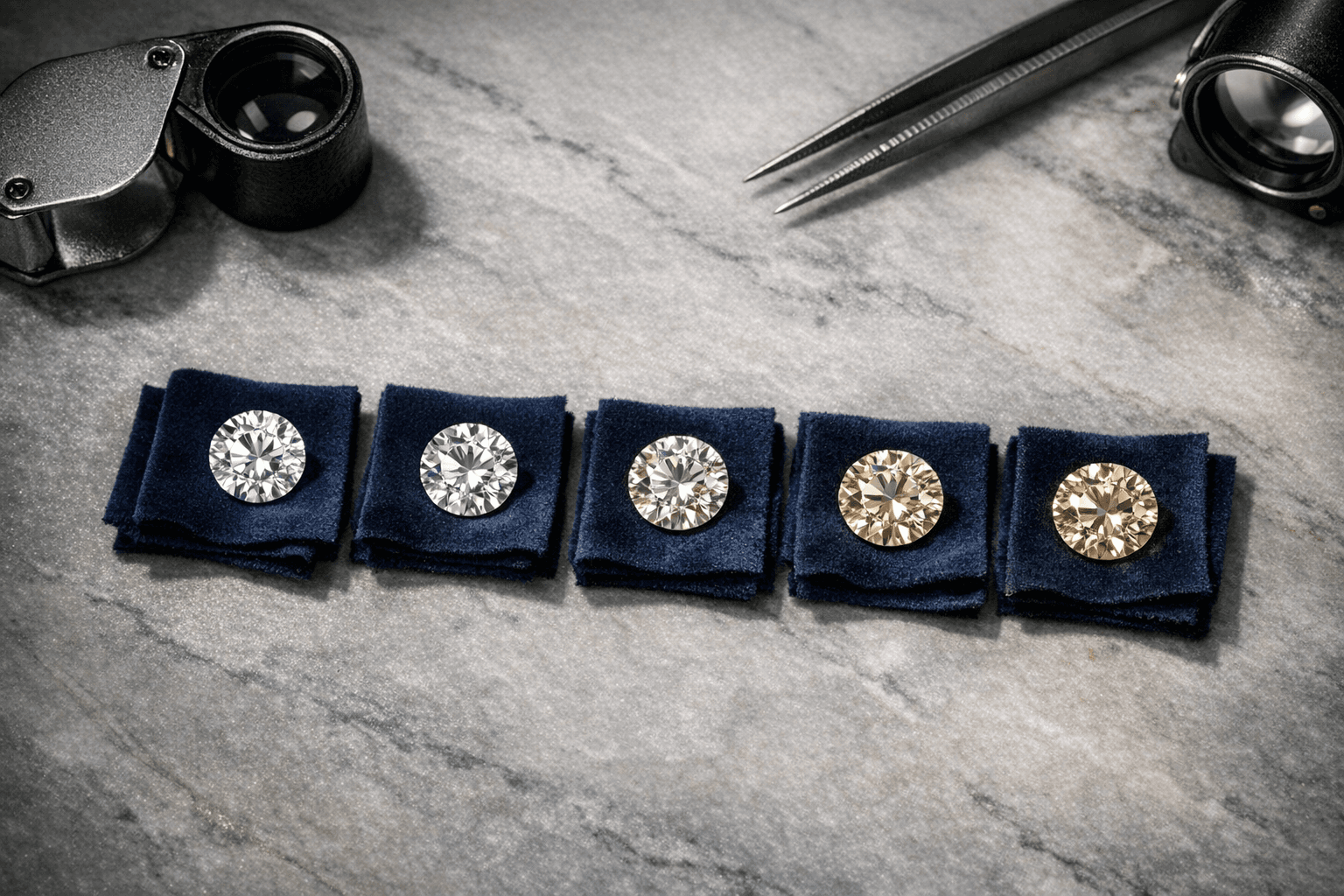
The GIA clarity scale runs as follows:
- Flawless (FL): No inclusions or blemishes visible under 10x magnification
- Internally Flawless (IF): No inclusions; minor surface blemishes only
- Very Very Slightly Included (VVS1 and VVS2): Inclusions extremely difficult to detect under magnification
- Very Slightly Included (VS1 and VS2): Inclusions minor and difficult to see under magnification
- Slightly Included (SI1 and SI2): Inclusions noticeable under magnification, typically invisible to the naked eye
- Included (I1, I2, I3): Inclusions visible to the naked eye; may affect durability in severe cases
For most buyers, the sweet spot sits at VS2 or SI1: stones in this range are eye-clean (meaning you won't see inclusions without a loupe) while costing considerably less than VVS or Flawless grades. The position of an inclusion matters as much as its size. An inclusion tucked beneath a prong or near the girdle is far less visible than one sitting dead center beneath the table facet, where light draws attention directly to it.
Carat: Weight, Not Size
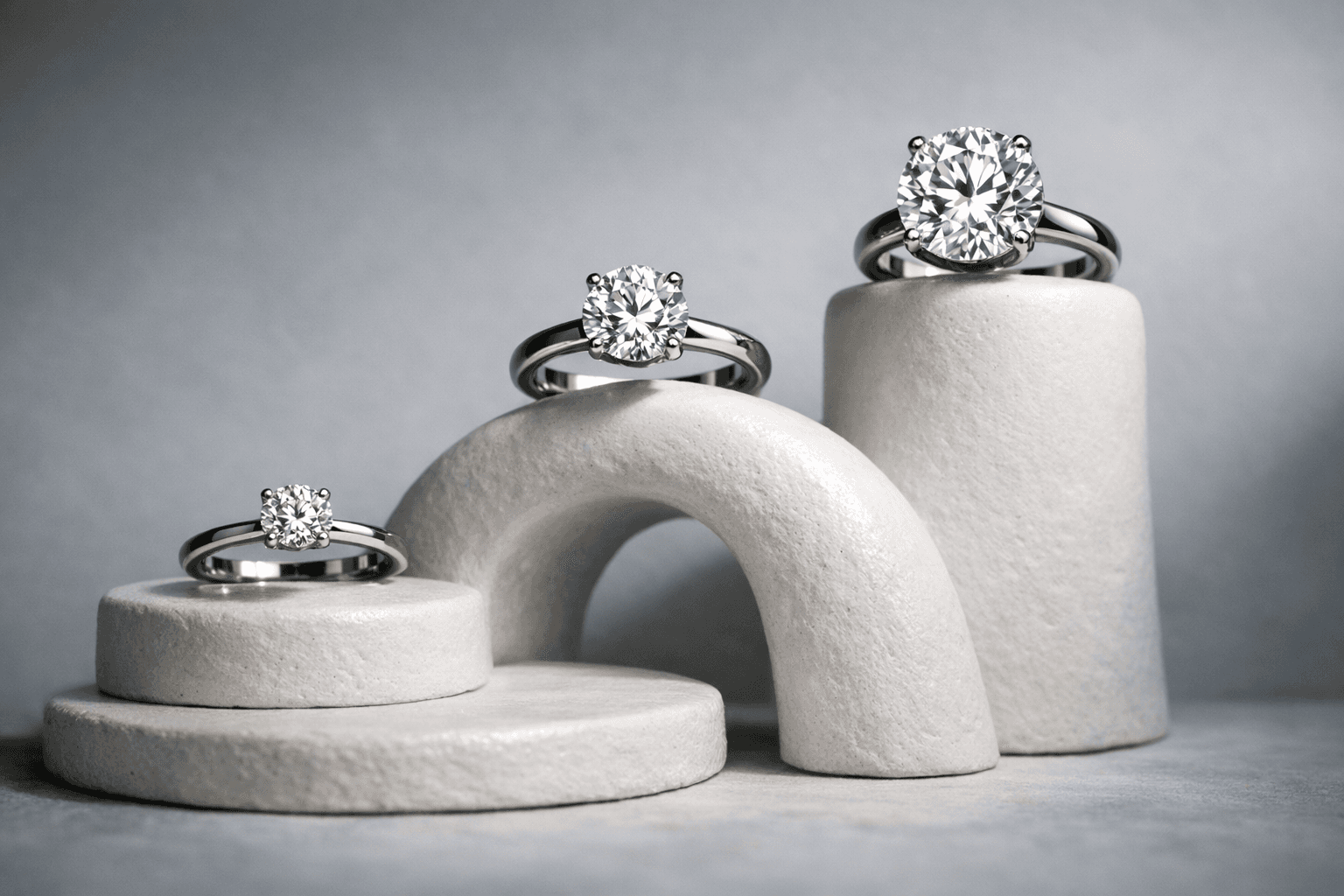
Carat is the most misunderstood of the four Cs. One carat equals exactly 200 milligrams, or 0.2 grams. It measures weight, not diameter, which means two diamonds of identical carat weight can appear noticeably different in size depending on how they're cut. A shallow-cut one-carat stone spreads its weight across a wider diameter and looks larger face-up; a deep-cut stone of the same weight concentrates mass downward and can look like a smaller diamond to the eye.

Carat weight also follows a pricing structure built around thresholds. Diamonds just under one carat (0.90ct to 0.99ct) consistently offer significantly better value than one-carat stones because demand clusters at the round number. The visual difference between a 0.95ct and a 1.00ct diamond is imperceptible; the price difference is not. The same logic applies at the 0.50ct, 1.50ct, and 2.00ct marks.
Lab-grown diamonds have introduced an important variable into carat weight considerations. Jewelers like Holden now offer lab-grown diamonds from 1.0ct to 5.0ct in multiple shapes, and because lab-grown stones cost substantially less per carat than their mined equivalents, buyers can access larger carat weights at price points previously out of reach.
How the 4Cs Work Together
The real skill in diamond buying is learning to balance the four Cs against each other within a fixed budget. Prioritizing cut above all other factors is generally wise: a well-cut diamond in the G-H color range with VS2 or SI1 clarity will look exceptional in person and hold its own visually against a higher-color, higher-clarity stone with a mediocre cut.
If size matters most, consider trading color and clarity slightly (staying within the eye-clean SI1 range and the near-colorless G-H band) to access a larger carat weight. If purity is your priority, shift toward higher clarity grades and accept a smaller stone. No single configuration is universally correct. The 4Cs framework exists precisely to make these trade-offs visible and intentional.
For personalized fine jewelry where a diamond sits alongside other stones or serves as an accent, the calculus shifts again. Theo Grace takes this approach with its birthstone pendants — each set alongside accent diamonds in 14k gold, where the smaller stones are chosen not for their investment grade but for how they frame a personally chosen birthstone, turning a technical consideration into something intimate. In those contexts, a well-matched VS1, G-color accent diamond reads better in the overall composition than a large, lower-clarity stone pulling visual attention the wrong way.
Why Certification Matters
No discussion of the 4Cs is complete without grading documentation. A diamond's 4C grades are only as meaningful as the lab that assigned them. The GIA and the International Gemological Institute (IGI) are the two most widely respected independent grading laboratories. A GIA or IGI certificate guarantees that the grades were assigned by trained gemologists using standardized equipment and criteria, not by the seller.
When a diamond lacks independent certification, you're trusting the seller's assessment of their own product. That's an unnecessary risk when the price of most gem-quality diamonds justifies the cost of proper documentation. Always ask for the grading report, verify it independently using the certificate number on each lab's online lookup tool, and treat any resistance to that request as a serious warning sign.
The 4Cs aren't a marketing invention. They're a precision instrument for describing what your eyes would tell you if you could examine every stone under magnification, in multiple lighting conditions, from every angle. Learning to use them fluently doesn't just protect your investment; it gives you a vocabulary for the specific kind of beauty you're actually looking for.
This article was produced by Prism’s automated news system from verified source data, official records, and press releases, then run through automated quality and moderation checks before publishing. The system is built and supervised by the people who set the standards it runs under. Read our full AI policy.
Did this article answer your question?