U.S. jeweler and Botswana dealer form rough-diamond partnership
A LinkedIn lab-grown debate pushed Sean Dunn into Botswana’s rough auctions, where a 5.79-carat stone became two polished diamonds and a new selling story.

Sean Dunn did not set out to become a rough-diamond buyer in Botswana. He was arguing on LinkedIn about lab-grown stones versus natural diamonds when Ada Thela, a 32-year-old Motswana who owns Zoe Diamonds, reached out and turned an online debate into a supply-chain experiment with real stakes for origin, margin and trust.
The partnership that followed moved far beyond the typical retail counter. Thela had been bidding regularly on rough tenders from Botswana’s state-owned Okavango Diamond Company, but as a smaller player she kept getting outbid. Dunn stepped in, went through ODC’s Know Your Customer process, which he said took weeks, and the pair finally secured a rough parcel after two auctions. That is the unusual part: retail jewelers generally do not insert themselves into rough buying, where mining, sorting, manufacturing and retail usually remain neatly separated.
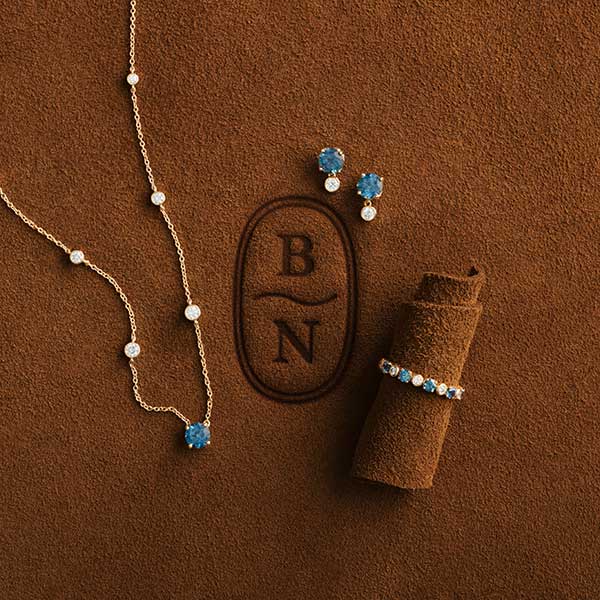
The most vivid proof of concept came from a 5.79-carat rough stone Thela won. It produced a 2.51-carat round brilliant and a 0.4-carat oval brilliant, then Dunn combined the two into a piece called Two-From-One. That kind of transformation is exactly what gives the collaboration its appeal. It is not just a sourcing story; it is a manufacturing story, one that links a stone’s origin to its final form in a way many shoppers now expect, especially in the natural-diamond category.
Botswana gives the experiment greater weight. On February 25, 2025, De Beers and the government signed a new 10-year sales agreement for Debswana rough, extendable by five years, alongside a 25-year extension of Debswana’s mining licences through 2054. ODC says it has access to 30 percent of Debswana’s run-of-mine production, holds ten sales cycles a year and sells roughly $900 million in rough diamonds annually. Debswana accounts for 98 percent of Botswana’s diamond production, which makes any shift in how that production reaches the market more than a niche trade curiosity.
The Botswana presence at JCK 2026 in Las Vegas underscored that larger ambition. The delegation was led by Minister of Minerals and Energy Bogolo Joy Kenewendo, while DTC Botswana centered its message on provenance, authenticity, sustainability and responsible sourcing. Against that backdrop, the Dunn-Thela partnership reads as both practical and symbolic: a U.S. jeweler trying to trace value back to source, and a Botswana dealer trying to move further up the chain.

Centurion Jewelry reported that Zoe Diamonds employs eight Botswana professionals and artisans, and that the first shipment under the collaboration, completed in December 2025, consisted of two polished diamonds totaling 2.91 carats, sourced through ODC, cut and polished in Botswana, then exported directly to the United States. Dunn has said blockchain-traced diamonds could become standard, and he has not made Botswana origin the centerpiece of J.R. Dunn Jewelers’ sales pitch. Still, in a market under pressure from weak rough demand, origin is becoming a form of proof, not just a label.
This article was produced by Prism’s automated news system from verified source data, official records, and press releases, then run through automated quality and moderation checks before publishing. The system is built and supervised by the people who set the standards it runs under. Read our full AI policy.
Did this article answer your question?