What diamond types reveal about a stone’s chemistry and value
FTIR can tell you whether a diamond’s chemistry points to rarity, color behavior, or lab-grown origins. Type is the quiet clue that makes two similar-looking stones very different.
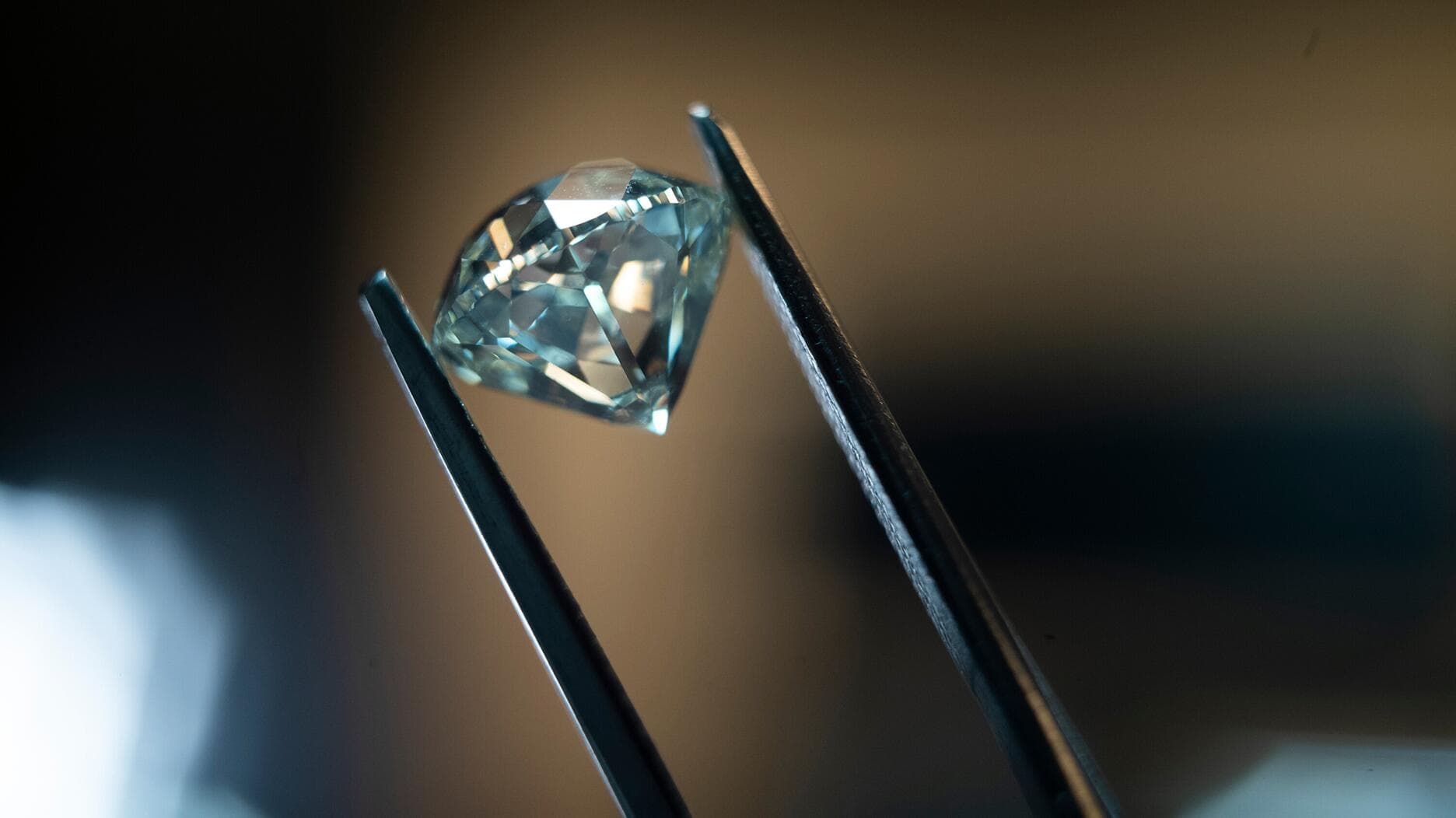
A diamond can look impeccably white and still carry a very different chemical story beneath the surface. That story is what “type” reveals: not shape, not cut style, but the stone’s internal structure, traced through trace elements such as nitrogen and boron. At the counter, that distinction can help you separate what is visible from what is measurable, and that is where the real value conversation begins.
What diamond type actually measures
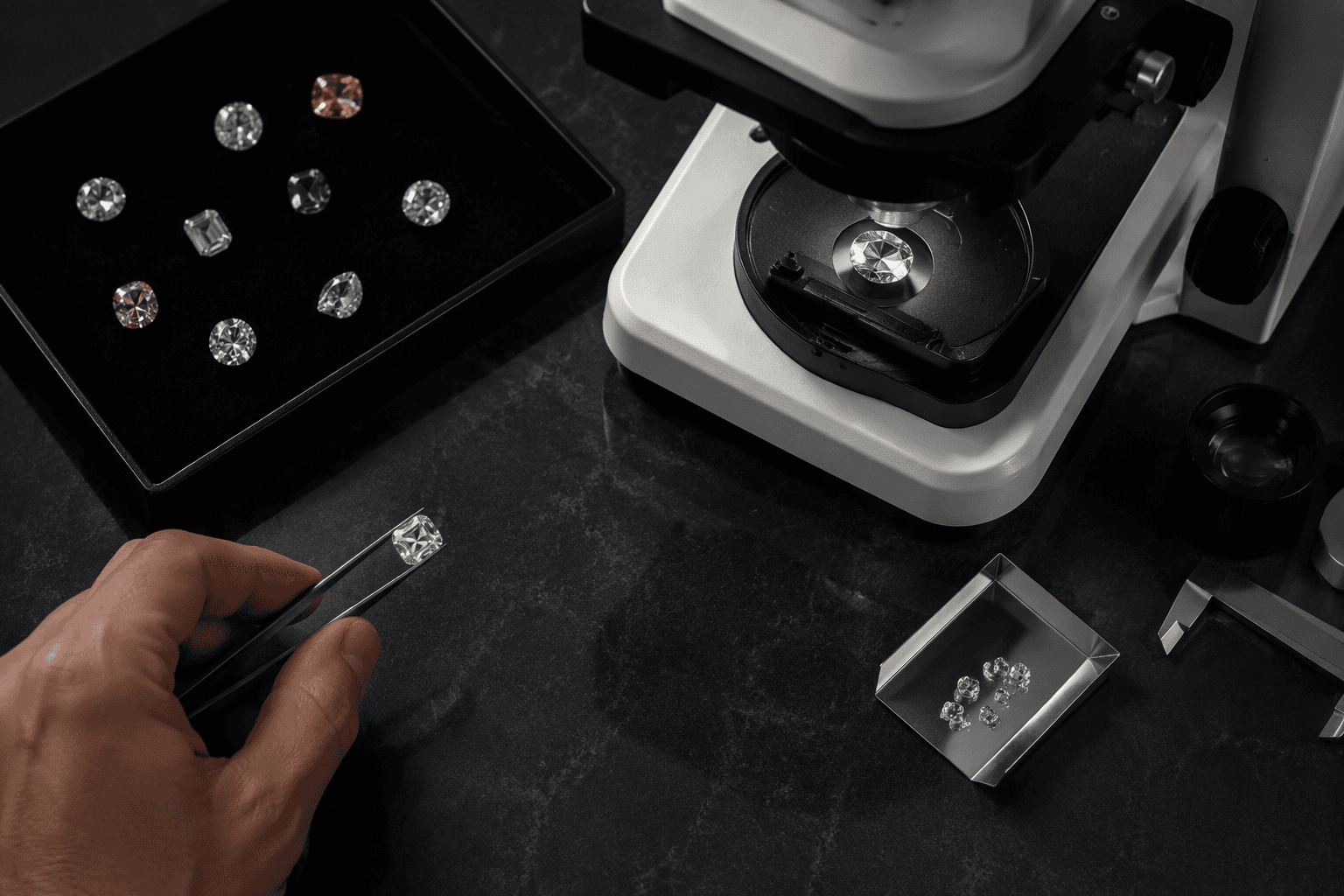
GIA determines diamond type with an FTIR spectrometer, a tool that uses Fourier-transform infrared spectroscopy to read how a diamond absorbs infrared light. In practical terms, that means the instrument can detect the signatures of impurities and structural features that the eye cannot see, including nitrogen, boron, and other subtle markers inside the crystal lattice. This is why type belongs in the realm of chemistry and identification, not marketing language.
That scientific framework matters because diamond type is not a beauty grade. It sits alongside the 4Cs rather than inside them, and it explains why two stones with similar face-up appearance can behave differently under laboratory testing, show different color tendencies, or belong to different natural and synthetic categories. GIA’s broader gemological work on infrared spectroscopy makes the same point: infrared methods are used in gemology to study how gems absorb infrared radiation, which is especially useful for spotting differences in structure and impurities.
The major diamond types, in plain language
The broadest split is between type I and type II, with the familiar subgroups type Ia, type Ib, type IIa, and type IIb. GIA’s 2014 article on diamond types noted that about 95% of natural diamonds are type Ia, and these diamonds contain nitrogen atoms clustered together inside the crystal. That makes type Ia the everyday baseline for natural diamond chemistry, even if the label itself rarely appears on a sales tag.
Type IIa sits at the opposite end of the nitrogen spectrum. These diamonds have little or no measurable nitrogen, and that absence is part of why the category is so closely associated with some of the most highly valued colorless diamonds. It is also why type IIa matters in the laboratory-grown market, where a meaningful share of stones fall into this category as well.
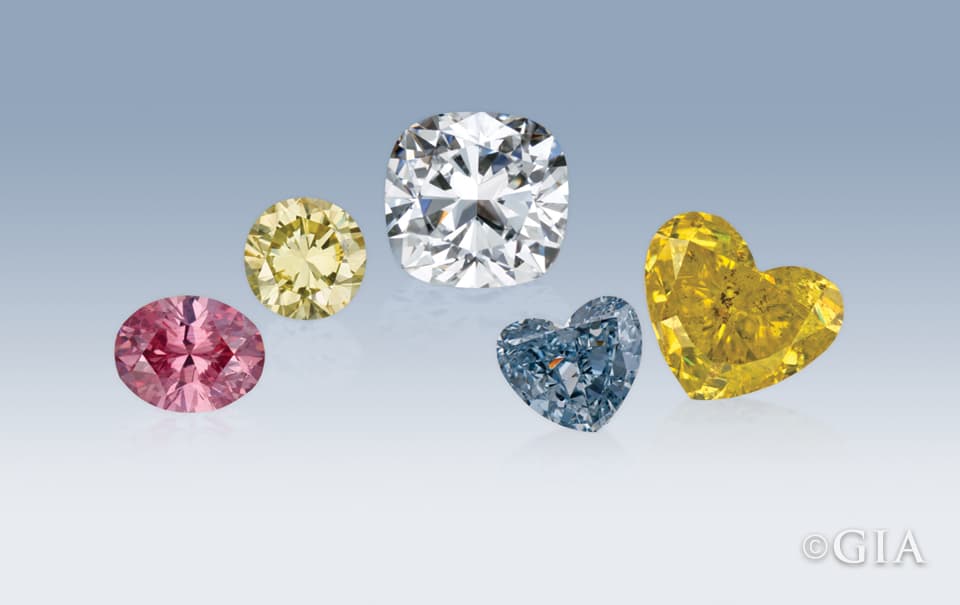
Type IIb is different again: it contains boron, is typically electrically conductive, and often shows a blue color component. That combination is memorable because it links chemistry directly to appearance and behavior, turning a lab term into a useful clue about what the stone may look like and how it may have formed.
Why type matters for value and color potential
GIA’s type-classification paper says diamond type is critical to understanding the relationships between diamond growth, color, and response to laboratory treatments. That makes type more than a bit of gemological trivia. It helps explain why certain stones are more likely to be colorless, why others lean toward blue, and why some are more revealing under advanced identification testing.
The value question is where type becomes especially useful. A type IIa diamond can sit in a very high-value category because its scarcity and chemistry often align with exceptional colorless appearance, while a type Ia diamond is far more common in nature and therefore not inherently special on chemistry alone. Type does not tell you whether a diamond is beautiful, but it does tell you something about what kind of beauty is chemically plausible.
The classification also has a long scientific pedigree. GIA’s type-classification paper cites early work by Robertson in 1934 and 1936, and by Kaiser and Bond in 1959, which shows that this is not a recent branding invention. It is a framework built over decades to make sense of how diamonds grow, how they respond to treatment, and why some stones demand closer scrutiny than others.
Where lab-grown diamonds fit into the picture
The rise of laboratory-grown diamonds makes type even more relevant for modern buyers. GIA’s summer 2024 work on lab-grown diamonds describes them as an important sector of the gem diamond market and notes the major strides made in HPHT growth technology over the past two decades. That matters because lab-grown diamonds can share type characteristics with natural stones, especially within the type IIa category, which means type alone does not tell the whole origin story.
GIA’s 2024 lab-grown research also includes very high-quality HPHT and CVD examples, underscoring how far growth technology has progressed. For a shopper comparing stones, that means a clean, colorless diamond may owe its appearance to natural rarity, to lab growth, or to a combination of chemistry and cutting. Type is one piece of the identification puzzle, not the final verdict.
How to use diamond type when you are shopping
The most useful way to think about diamond type is as a conversation starter with technical consequences. It gives you a sharper question to ask at the counter: is this stone type Ia, IIa, or IIb, and what does that mean for its chemistry, color behavior, and identification? That is a more intelligent question than simply asking whether a diamond is “better,” because type describes structure, not style.
A few points are worth keeping in mind:
- Type Ia is the most common natural category, with nitrogen atoms clustered together.
- Type IIa has little or no measurable nitrogen and can include some of the most prized colorless diamonds.
- Type IIb contains boron, is typically electrically conductive, and may show a blue component.
- FTIR is the laboratory method that makes this classification possible.
- Type is especially useful when a stone’s appearance and its underlying chemistry do not tell the same story.
Used well, this knowledge changes the way a diamond is read. A pendant stone, a pair of studs, or an engagement ring may all look like pure brilliance, but type reveals the chemistry behind that surface effect. In a market where natural and laboratory-grown diamonds can look strikingly similar, that invisible structure is often the most revealing detail in the room.
This article was produced by Prism’s automated news system from verified source data, official records, and press releases, then run through automated quality and moderation checks before publishing. The system is built and supervised by the people who set the standards it runs under. Read our full AI policy.
Did this article answer your question?