World’s Fair diamonds turned natural gems into global spectacle pieces
World’s Fairs made diamonds into theater, from the Koh-i-Noor behind a birdcage guard to Tiffany’s Empire Diamond revival.
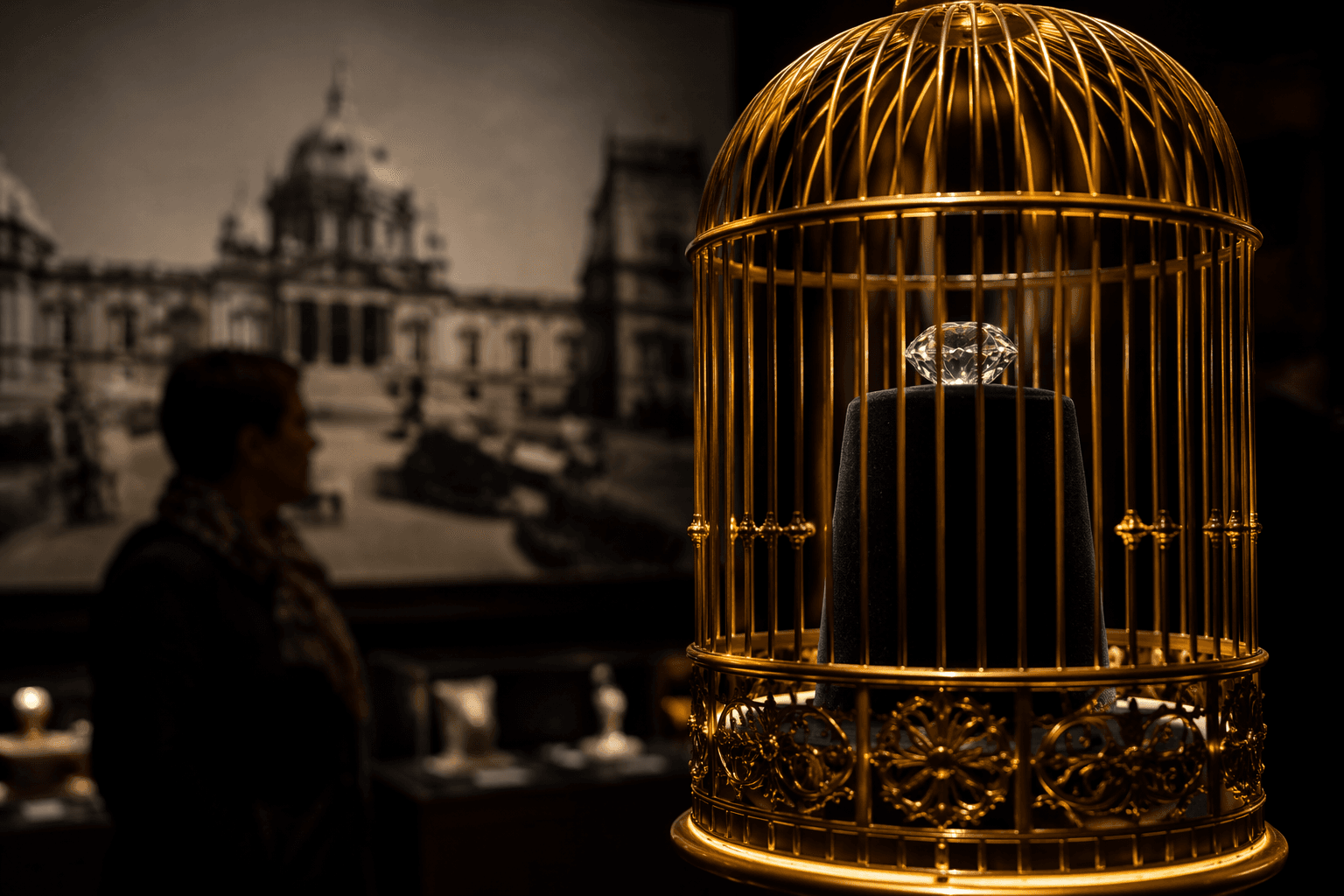
The first World’s Fair turned diamonds into public drama, not private treasure. In the Crystal Palace at Hyde Park, the Great Exhibition made a single stone feel like a national event, then set a template luxury houses still use: enlarge the setting, heighten the story, and invite the crowd to stare.
The Great Exhibition set the script
London’s Great Exhibition of 1851 was the first World’s Fair, and it drew about six million visitors into a new kind of consumer theater. The point was not only to display objects but to stage them, with architecture, security, and national pride all folded into the experience.
Diamonds fit that format perfectly. They were small enough to travel, rare enough to awe, and bright enough to survive under glass, where every glance could be counted and every rumor amplified. Long before social media, the fair turned a jewel into a public performance.
The Koh-i-Noor became the star attraction
No stone proved the formula more forcefully than the Koh-i-Noor. The British acquired it in 1849, two years before it appeared at the Great Exhibition, where it was shown as Queen Victoria’s property and was then considered the largest known diamond in the world.
About three million people reportedly filed past it. That scale mattered as much as the stone itself, because the crowd became part of the object’s meaning. The Koh-i-Noor was no longer just a diamond with a complicated history; it was a destination.
Jeremiah Chubb turned security into spectacle
The Koh-i-Noor sat inside a gilded, birdcage-like security structure designed by locksmith Jeremiah Chubb. If the glass was touched, the mechanism would drop the gem into a safe, a solution that was half protection and half theater.
That device tells you everything about the World’s Fair approach to luxury. The stone had to feel vulnerable enough to be thrilling and protected enough to be priceless. Exhibition design was doing the work of advertising: the cage, the glass, and the threat of loss all made the diamond feel more important.
Imperial power sat inside the glamour
The Koh-i-Noor’s fame was never innocent. Its public life at the Great Exhibition was tied to conquest, and later critics argued that the diamond’s renown rested less on beauty than on imperial power and spectacle. The jewel’s audience was looking at more than fire and brilliance; it was looking at Britain’s colonial reach turned into an ornament.
That is why the stone still matters in jewelry history. It shows how a diamond can be transformed by context, not only by cut or carat weight. When the setting is imperial enough, a gem becomes a symbol with political force, not just a precious object.
Tiffany’s 1939 World’s Fair necklace carried the idea forward
The World’s Fair did not end that logic. Tiffany later returned to it through a reimagined version of a necklace first shown at the 1939 World’s Fair, building a modern high-jewelry story from a piece already shaped by exhibition culture. The original necklace gave the brand a historical anchor; the later interpretation gave it a fresh stage.
That move matters because it shows how little the formula has changed. High jewelry still borrows from the fairground playbook: a landmark event, a memorable design, and a sense that the piece belongs to history as much as to the present.
The Empire Diamond made provenance part of the pitch
At the center of Tiffany’s reimagined necklace sits the Empire Diamond, an over-80-carat, D-color, internally flawless oval diamond. Tiffany said the piece was the most valuable piece of jewelry it had ever offered for sale, and it described the stone as responsibly sourced in Botswana.
Those details are the modern version of the old exhibition placard. Carat weight, color, clarity, and origin are all part of the sell, but they work best when they are wrapped in a story sturdy enough to carry them. A diamond this large and clean does not just need sparkle; it needs a narrative.
Why the fairground formula still works
What the World’s Fair invented was not simply a public display of diamonds. It was a method for turning natural gems into cultural events through scale, nationalism, controlled access, and dramatic presentation. The Koh-i-Noor, with its birdcage-like mount and millions of viewers, and Tiffany’s Empire Diamond, with its historic reference point and Botswana provenance, sit on the same line.
That is why the spectacle still holds. Luxury jewelry sells best when it looks discovered, staged, and sanctioned all at once, and the World’s Fair understood that a stone becomes unforgettable when the room around it feels just as intentional as the gem itself.
This article was produced by Prism’s automated news system from verified source data, official records, and press releases, then run through automated quality and moderation checks before publishing. The system is built and supervised by the people who set the standards it runs under. Read our full AI policy.
Did this article answer your question?