Engagement ring settings explained, from classic prongs to modern tension designs
The setting can make a diamond look larger, feel more modern, or stay more secure. The smartest choice is the one that balances silhouette, wear, and protection.
How the setting changes everything
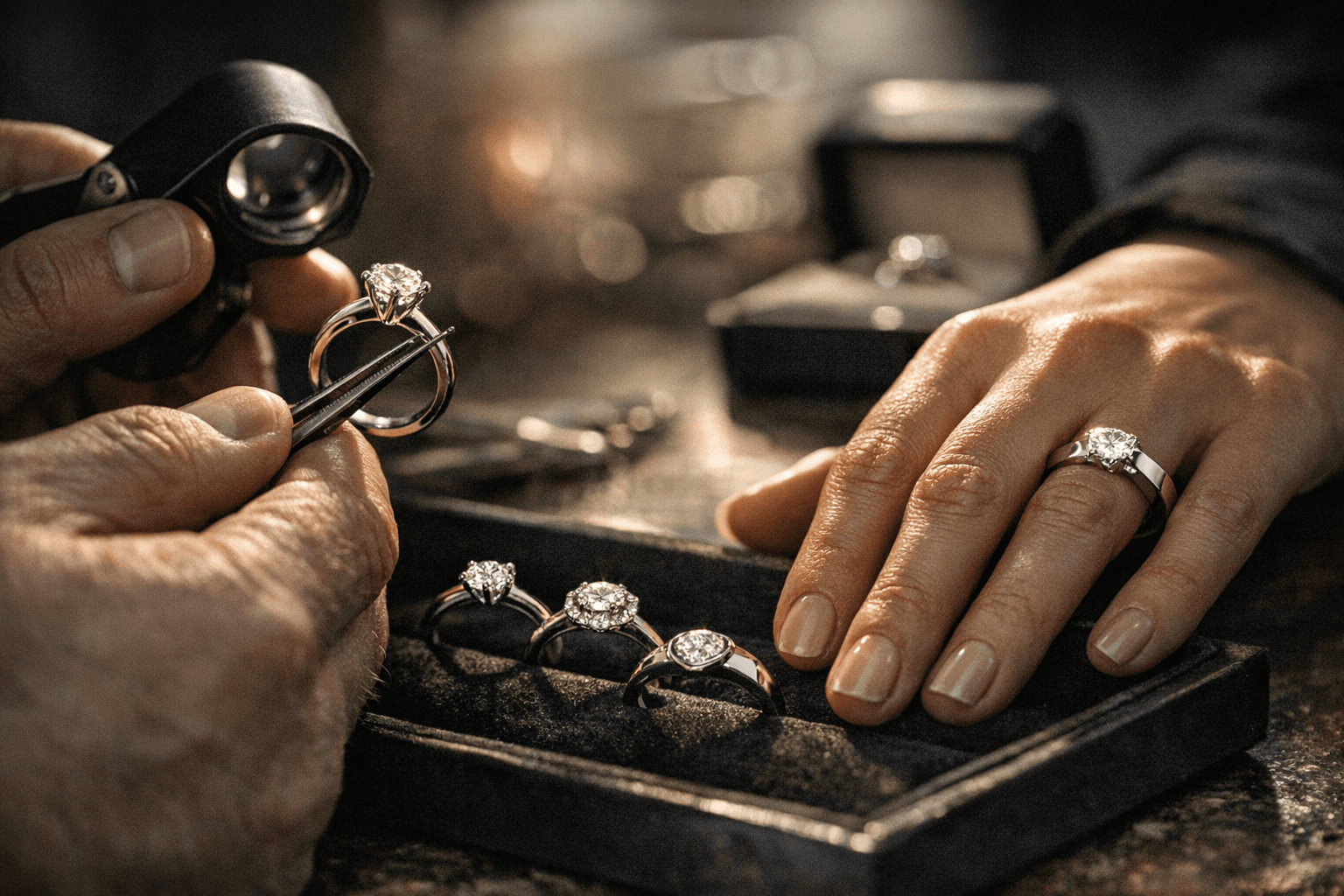
A diamond can look larger simply because of the way it is held. The setting decides how much stone you see, how high it sits above the band, how much metal frames it, and how safely it lives through daily wear. The Knot’s settings guide is useful precisely because it treats prong, Tiffany-style, and tension settings as design choices with real visual consequences, not just jewelry jargon.
That is the right lens for engagement rings. A setting can make a center stone read cleaner and more architectural, or it can soften the profile and add finger coverage. It can also determine whether a ring feels delicate, secure, or boldly modern the moment it is on the hand.
Prongs: the classic frame for light and lift
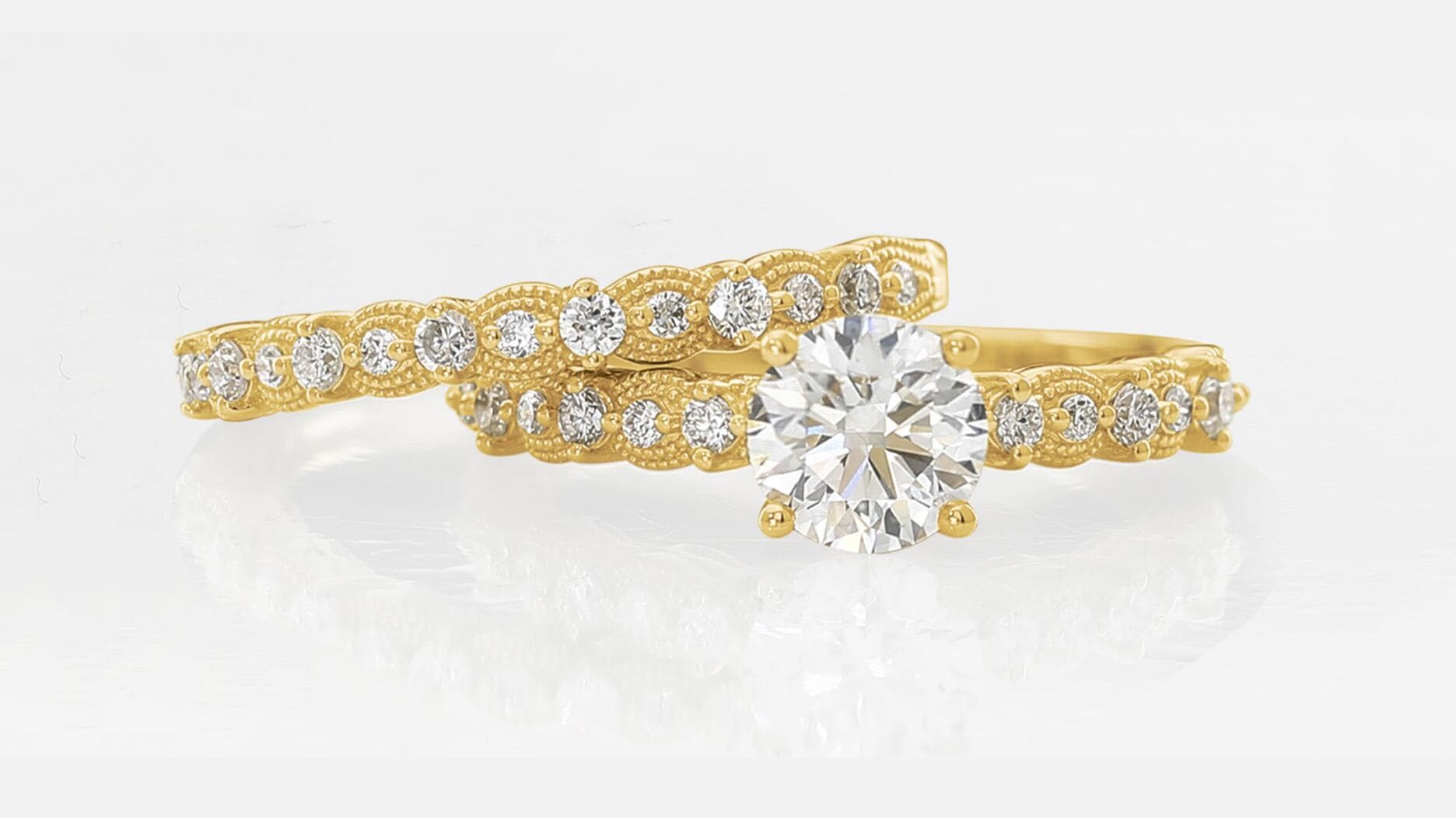
Prongs are the most familiar answer for a reason. The Gemological Institute of America says prongs play an important role in both showcasing the diamond and protecting it, which is why they remain such a central part of engagement-ring design. A prong setting gives the stone air, letting more of the diamond show and keeping the silhouette light on the finger.
The trade-off is maintenance. GIA warns that loose stones can damage both the gem and the setting, which makes inspection part of the cost of ownership, not an optional extra. If a ring will be worn every day, the quality of the prongs, the tightness of the setting, and the ease of repair matter as much as the sparkle.
Four prongs versus six prongs
If the question is which setting makes a diamond look bigger, the four-prong answer has a clear advantage. GIA notes that a four-prong setting generally shows more of the diamond, which can make it appear slightly larger. Less metal around the stone means more of the outline is visible, especially on a clean solitaire.
A six-prong setting changes that balance. It offers more security, which is why buyers often choose it when durability and peace of mind matter more than maximum exposure. The visual effect is a touch more wrapped and a little less airy, but that extra hold can be the deciding factor for someone who wants the stone protected through years of daily wear.
The Tiffany Setting and the look that defined modern engagement rings
No ring setting carries more cultural weight than the Tiffany Setting. Tiffany & Co. says Charles Lewis Tiffany introduced it in 1886, and the company describes it as the first ring design in history to lift the diamond off the band. That simple lift changed the way an engagement ring reads: the diamond became the hero, floating above the finger instead of sinking into the metal.
The effect is still striking because it is both restrained and exacting. The raised stone catches light and attention, but the design stays disciplined, which is why it continues to define the classic solitaire look. In a market crowded with ornate halos and elaborate bands, the Tiffany Setting still feels like a clean answer to the question of how to let one stone speak for itself.
Solitaire proportions, thin bands, and the power of restraint
Recent coverage from JCK suggests the market has been heavily shaped by solitaire looks, especially oval diamonds on thin yellow-gold bands, for about four years. That combination matters because it changes proportion: a slender band keeps the eye fixed on the center stone, and an oval shape stretches the visual footprint across the finger. The result is a ring that can look larger and more elegant without adding a lot of extra metal.
This is where settings and styling blur into one another. A narrow band can make the same diamond feel more prominent, while a wider band can make the ring feel more grounded and substantial. Even before you get to the stone itself, the band is already telling a story about scale, modernity, and how much presence the ring should have on the hand.
Three-stone rings and thicker bands
Designers are pushing back against the lone-solitaire formula with renewed interest in three-stone rings and thicker bands. Three-stone settings broaden the visual field, adding finger coverage and creating a more balanced, symmetrical presence. They do not just make the ring look fuller; they shift the eye across the entire composition, which can feel more tailored and more deliberate.
Thicker bands bring a different kind of confidence. They can make a ring look sturdier and more contemporary, especially after years of ultra-fine bands dominating the conversation. For buyers who want the center stone to feel anchored rather than isolated, this is one of the clearest ways to change the mood of the ring without changing the diamond itself.
Tension settings: the modern outlier
Modern tension designs sit at the more sculptural end of the spectrum. The Knot includes tension settings in its guide for exactly that reason: they represent a different philosophy of holding a stone, one that favors visible engineering and a sharper, more contemporary silhouette. Instead of a traditional prong-led frame, the metal and stone relationship itself becomes part of the design statement.
That look can be dramatic, but it also puts durability front and center. GIA says durability is the most important factor in designing, setting, repairing, or cleaning jewelry, and that principle matters even more when a setting depends on precision and structural integrity. A tension ring should look confident not because it is fragile and fashionable, but because the craftsmanship behind it is exact.
What to ask before you choose
A setting is only as good as the metalwork behind it. The American Gem Society, a nonprofit trade association focused on ethical conduct, education, accreditation, and gemological standards, is a strong reminder that trust in jewelry starts with standards, not slogans. If a seller talks about beauty but cannot speak clearly about construction, the claim is thin.
- How many prongs hold the stone, and how often should they be checked?
- Does the setting prioritize maximum visibility, or more security?
- Will the band width change how large the center stone appears?
- Is the style built for everyday wear, or does it demand more careful handling?
The practical questions are straightforward:
WeddingWire’s survey of nearly 20,000 recently engaged people is a reminder that ring preferences are shaped by real behavior, not just tradition. Buyers keep returning to the same tension at the heart of the engagement-ring decision: they want a setting that flatters the stone, suits the hand, and can survive the life they are actually going to live.
The best setting does all three. It makes the center stone look exactly as special as it should, while protecting it well enough to keep that promise for years.
This article was produced by Prism’s automated news system from verified source data, official records, and press releases, then run through automated quality and moderation checks before publishing. The system is built and supervised by the people who set the standards it runs under. Read our full AI policy.
Did this article answer your question?