GIA explains what buyers should know about yellow diamond engagement rings
Yellow diamond engagement rings can look quietly buttery or dramatically vivid, but the real decision point is whether the color is natural, treated, or lab grown.
What makes a yellow diamond different
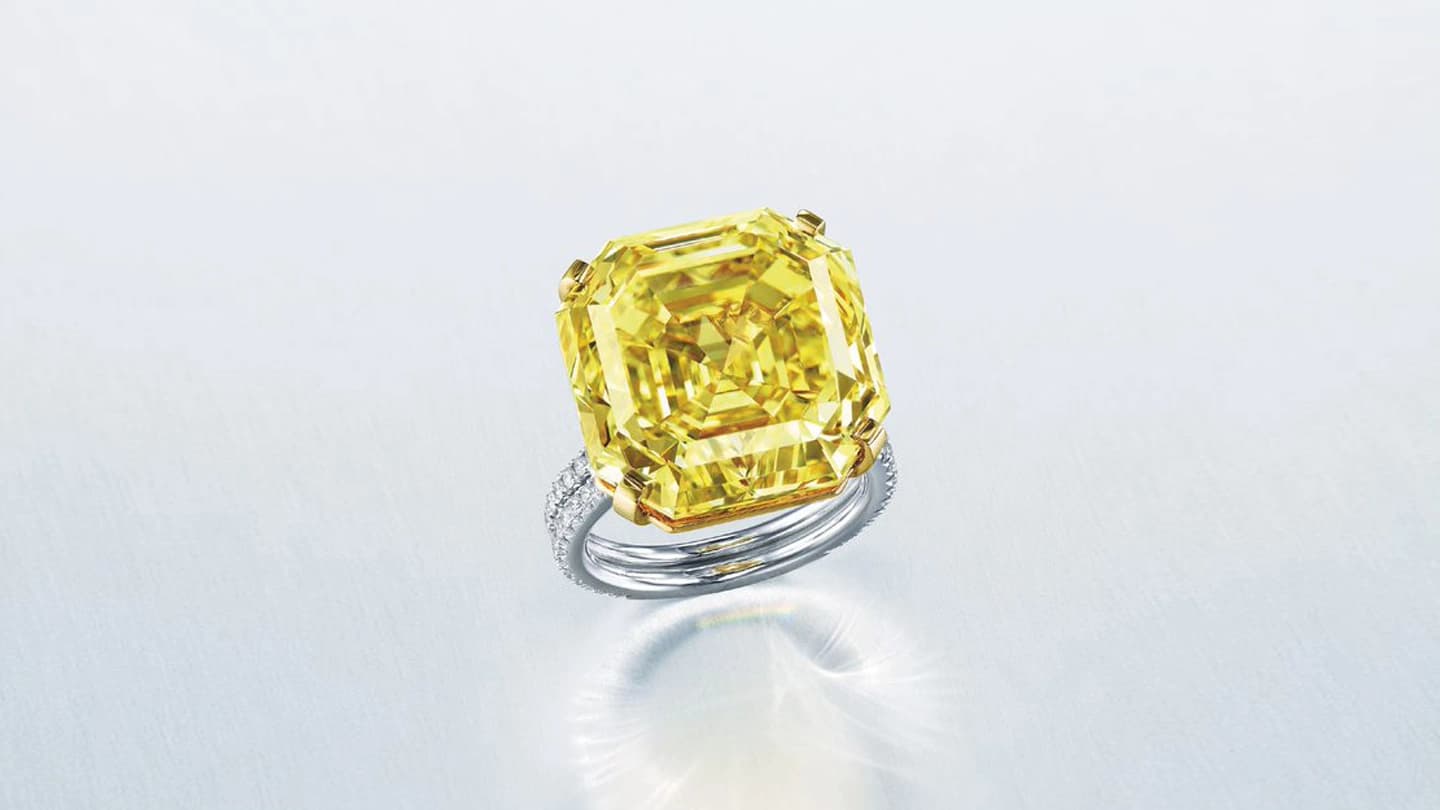
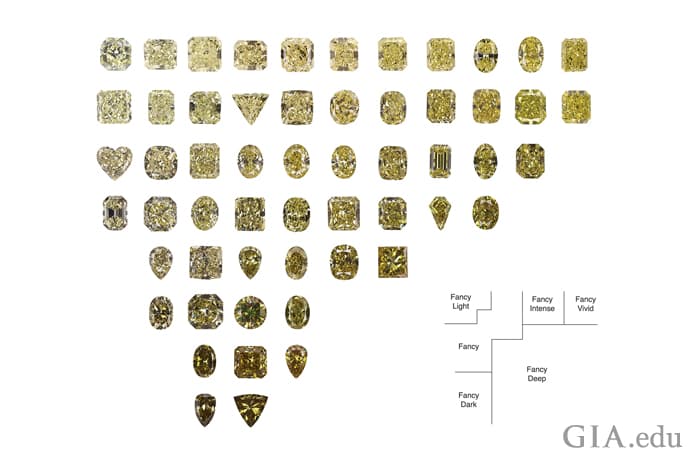
A yellow diamond engagement ring begins with a color story that is more nuanced than many buyers expect. Yellow is the most common fancy color in diamonds, yet fancy-color stones remain scarce overall: only about 1 in 10,000 carats of fashioned diamonds shows fancy color, and only about 1 in 25,000 shows intense color. That rarity is part of the appeal, but so is the spectrum itself. Yellow diamonds can range from the faint warmth of a soft champagne tint to the saturated drama of a Fancy Intense or Fancy Vivid stone.
That range matters because yellow is not a single look. In one ring, it can read as sunshine through cream, subtle and flattering against platinum or white gold. In another, it can appear electric and declarative, especially when the stone is cut and set to amplify color. GIA’s fancy-color grading system exists precisely because color in yellow diamonds lives on a continuum, not a binary.
Soft yellow versus fancy intense
For an engagement ring, the difference between a soft yellow and a fancy intense yellow is not just technical, it is visual and emotional. Softer yellow stones tend to feel airy and understated, especially in classic solitaire or three-stone settings where the diamond can sit in open light. They can look almost antique in spirit, especially when paired with yellow gold, which reinforces warmth rather than contrast.
Fancy intense yellow stones behave differently. Their color is assertive enough to become the center of the design, so even familiar settings take on more presence. In a halo, the surrounding white diamonds sharpen the yellow by contrast. In a prong setting, the stone often appears brighter and more exposed, with the color reading more vividly across the face. A bezel can pull the look in a different direction, creating a polished, contemporary frame that can make a yellow diamond feel sleek rather than ornate.
Why cut changes the color
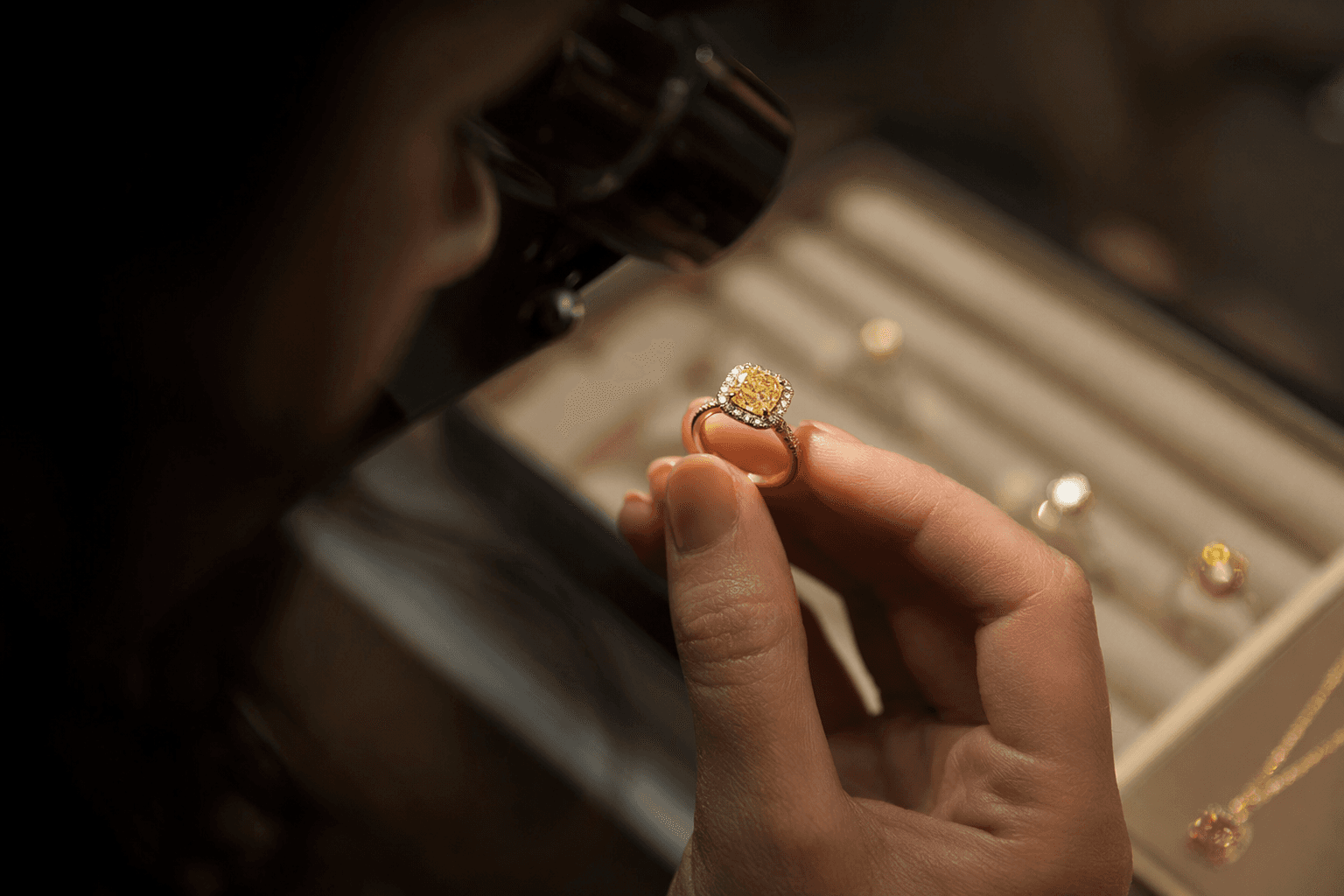
Cut is one of the most overlooked tools in yellow diamond buying. GIA notes that certain shapes, especially mixed cuts such as radiant cuts, can intensify yellow color in stones near the lower end of the D-to-Z range. In practical terms, that means a diamond that began life as a pale near-colorless stone can face up with more obvious warmth once it is shaped to return color more strongly.
This is where the line between a tinted white diamond and a true fancy yellow look can blur. A radiant cut, with its layered faceting, often makes color more visible, which is why it is so closely associated with yellow stones. Buyers drawn to a softer buttery effect may prefer a cut that preserves evenness without pushing saturation too far. Buyers who want a more vivid statement usually benefit from shapes and settings that help the stone hold color across the crown and table.
Natural color, treated color, and the trust factor
The most important checkpoint in a yellow diamond engagement ring is how the color got there. Natural yellow diamonds owe their color to atomic-level lattice defects associated with nitrogen impurities in the diamond structure. GIA’s research also identifies several defect groups responsible for yellow and orange color, which is why natural color can vary so much from one stone to another.
Treated yellow diamonds are a different category. Irradiation and annealing can produce or enhance yellow color, and GIA has noted that these treatments have been used for more than a century, with modern neutron and electron irradiation among the most common methods. That does not make a treated stone fake, but it does change its value and how it should be described. GIA reports identify whether a diamond is natural or treated, and color-treated stones are laser-inscribed on the girdle, a small but significant marker of transparency.
For buyers, this distinction is the trust anchor. A yellow diamond ring may also involve lab-grown material, or a combination of treatment and origin categories, so the grading report is not optional reading. It is the document that tells you whether the color came from nature, a treatment process, or a laboratory growth method.
Why the GIA report matters more in yellow than in white
Color grading for yellow diamonds does not follow the standard D-to-Z scale used for colorless stones. Once a diamond falls into fancy-color territory, the language changes, and so does the value structure. A report should state whether the diamond is natural, treated, or lab grown, and that distinction becomes central to both price and longevity in the market.
GIA’s own comparison of a 13.75-carat naturally colored Fancy Vivid Yellow diamond and a 59.88-carat treated Fancy Vivid Yellow diamond shows how close in appearance two stones can be while remaining materially different in origin. The visual effect may be similar, but the pedigree is not. That difference is why an engagement-ring buyer should treat documentation as part of the jewel, not an accessory to it.
Tiffany’s yellow diamond and the romance of precedent
Few yellow diamonds carry more cultural gravity than the Tiffany Diamond. Discovered as a 287.42-carat rough stone in South Africa’s Kimberley Mine in 1877, it was cut in 1878 under the guidance of Tiffany gemologist Dr. George Frederick Kunz into a 128.54-carat gem with 82 facets. Tiffany describes it as a landmark in craftsmanship and a symbol of prioritizing beauty over size, and the stone has been worn by four women and featured in five distinct designs.
That history matters because it explains why yellow diamonds feel so different from ordinary diamond fashion. They are not simply colored stones. At their highest level, they are made legible through cutting, restraint, and a clear idea of what color should do in a ring. The Tiffany Diamond remains the best-known proof that a yellow diamond can be both a jewel and a statement of design philosophy.
How to choose the right yellow diamond ring
The smartest yellow diamond ring is the one whose color intensity matches the life it will live. Soft yellow stones often suit buyers who want warmth without spectacle, especially in designs where the setting should frame rather than dominate. Fancy intense yellow stones reward buyers who want the color to be unmistakable, especially when paired with halos, open prongs, or mixed cuts that amplify saturation.
- Choose a shape that works with the color you want to see face up.
- Pay close attention to the setting, since metal color can either soften or sharpen the yellow.
- Ask for the grading report and read it for origin, treatment, and lab-grown disclosure.
- Treat a laser-inscribed girdle and a clear color designation as non-negotiable signs of transparency.
In yellow diamond engagement rings, beauty is only half the story. The other half is provenance, and the best stones make that visible without ever needing to shout.
Know something we missed? Have a correction or additional information?
Submit a Tip