GIA shares safe diamond care tips for engagement rings
The wrong cleaner can do more harm than a full day of wear. GIA says warm water, mild soap, and regular inspections keep an engagement ring bright and secure.
The cleaning mistakes that can cost you sparkle
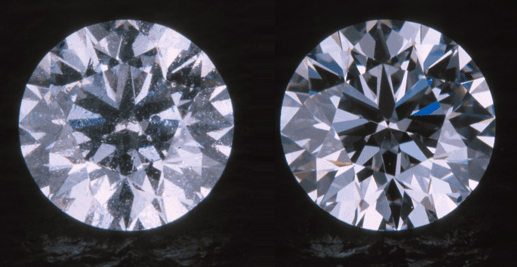
The most damaging ring-care habits are usually the most aggressive ones. GIA warns against powdered abrasive household cleansers, ultrasonic cleaners, and steam cleaners for home use, because these shortcuts can do more than brighten a diamond’s surface. Ultrasonic and steam cleaning can loosen gemstones in their settings, which turns a routine shine-up into a risk to the stone itself.
That matters because an engagement ring is not just a polished circle of metal with a diamond on top. It is a working setting, and its prongs, bezel, or other mounting have to hold steady through daily wear. If a cleaning method shakes a stone free or weakens a setting that was already worn, the damage is both visible and expensive.
Why diamond durability has three parts
Diamonds are famous for hardness, but GIA breaks durability into three separate qualities: hardness, toughness, and stability. Hardness describes how well a gemstone resists scratches and abrasion. Toughness refers to how well it resists breaking and chipping. Stability measures how well it withstands chemicals and temperature changes.
That distinction is useful because it explains why a diamond can be extraordinarily hard and still need careful handling in a ring. GIA notes that the Mohs scale dates to 1812, when German mineralogist Friedrich Mohs assigned ten minerals relative scratch-resistance values. The scale is easy to misunderstand, because its steps are not evenly spaced. Diamond sits only one number above corundum, yet it is many times harder, which is why the jump from one mineral to another is far more dramatic than the numbering suggests.
For ring wearers, the practical point is simple: a diamond may shrug off scratches, but the ring around it still collects oils, soap residue, and debris that can mute brilliance. Sparkle is not just about the stone’s intrinsic qualities. It is also about the grime that builds up on the surface and in the setting.
The safest way to clean an engagement ring at home
For routine care, GIA recommends a gentle degreasing soak in warm water with a few drops of mild dish soap, followed by a soft toothbrush. That is the kind of care that fits easily into a weekend routine and avoids the abrasiveness of stronger household cleaners. GIA also says a simple plan is to soak diamond jewelry in that gentle solution once or twice a week.
The method is effective because it targets the film that dulls a diamond without stressing the setting. A soft toothbrush can reach behind the stone and around the mount where residue accumulates, especially in a ring worn every day. This is the kind of maintenance that protects both the look of the diamond and the integrity of the mounting, which is exactly what an engagement ring needs.
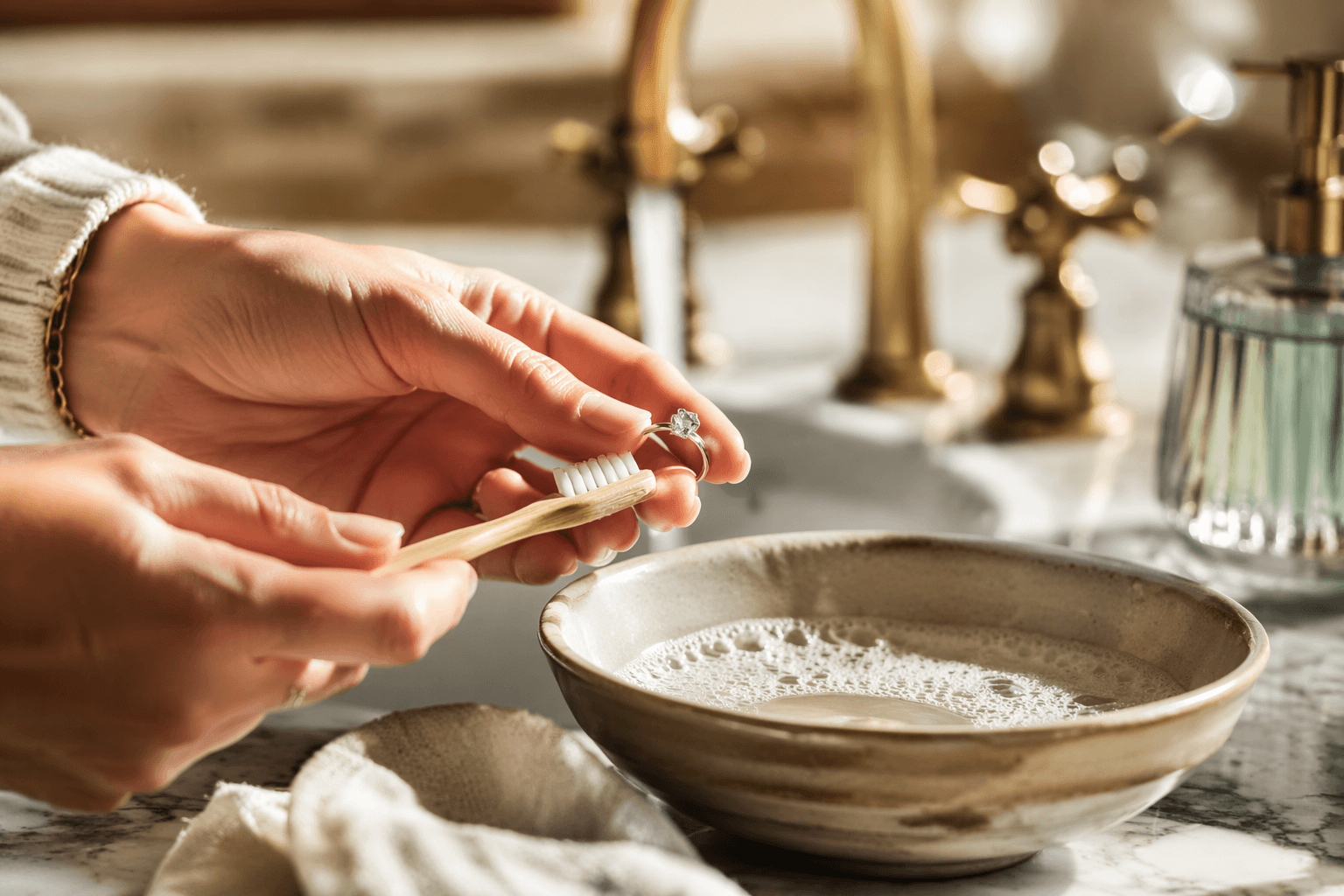
- Use warm water, not harsh chemicals.
- Choose a mild dish soap rather than an abrasive cleanser.
- Clean gently with a soft toothbrush, especially around the setting.
- Treat the ring as a piece of jewelry with moving parts, not just a stone to be polished.
A few practical principles follow naturally from that routine:
When the jeweler should take over
Home care has limits, and the most important limit is inspection. GIA says jewelry professionals should examine pieces for loose stones before using professional ultrasonic or steam equipment. That check matters because a ring can look intact while a prong has already worn thin or a stone has started to shift.
That is why professional cleaning does more than improve shine. It doubles as an inspection for loose stones and worn prongs. The Knot cites a jeweler recommending professional cleanings and inspections three to four times a year. Other jewelers advise at least annual professional maintenance, and many offer complimentary cleaning, which makes regular checkups easier to sustain. The exact cadence can vary, but the principle does not: a ring should be seen by a professional before a small repair becomes a lost stone.
This is especially important for readers who wear an engagement ring daily. Prongs can thin gradually, and a setting that feels secure by eye may not be secure under magnification. A jeweler can spot wear that at-home cleaning will never reveal.
Protecting the ring beyond the shine
An engagement ring is one of the few pieces of jewelry that may be worn nearly every day, which is why care should extend beyond cleaning. Jewelers Mutual advises insuring an engagement ring right away to protect against loss or damage, a reminder that ownership includes financial as well as emotional stewardship.
That advice belongs in the same conversation as cleaning because the risks are related. A loose stone, a bent prong, or a missed crack can lead to loss that no amount of polish can reverse. Insuring the ring, keeping to a simple at-home cleaning routine, and scheduling regular professional inspections form a practical system of protection around the piece.
For this weekend, the safest move is also the easiest: soak the ring in warm water with a few drops of mild dish soap, brush it gently with a soft toothbrush, and leave the ultrasonic and steam cleaners to a jeweler who has first checked the setting. In an engagement ring, brilliance and security are inseparable, and the best care protects both.
This article was produced by Prism’s automated news system from verified source data, official records, and press releases, then run through automated quality and moderation checks before publishing. The system is built and supervised by the people who set the standards it runs under. Read our full AI policy.
Know something we missed? Have a correction or additional information?
Submit a Tip