How to choose an engagement ring, style, budget, and the 4Cs
The smartest ring buys now are less about salary rules than about choosing the stone, setting and metal that fit real life and real budgets.
The new luxury is judgment, not excess
An engagement ring is often the third-most-expensive thing a person owns, behind a home and a car, so every choice inside that small circle of metal matters. In the United States, The Knot’s 2024 Jewelry and Engagement Study put the average engagement ring cost at $5,200, down from $5,500 in 2023, $5,800 in 2022 and $6,000 in 2021. The Knot says the old three-month salary rule can be disregarded, and the data explain why: this is less a ritual of spending than a test of judgment.
The smartest way to shop is to decide what you want the ring to do for you. Some rings need to look luminous from across a table, others need to survive a commute, a keyboard and years of daily wear. Style, lifestyle and technical details are not separate questions, they are the entire brief.
Start with the diamond category, not the display case
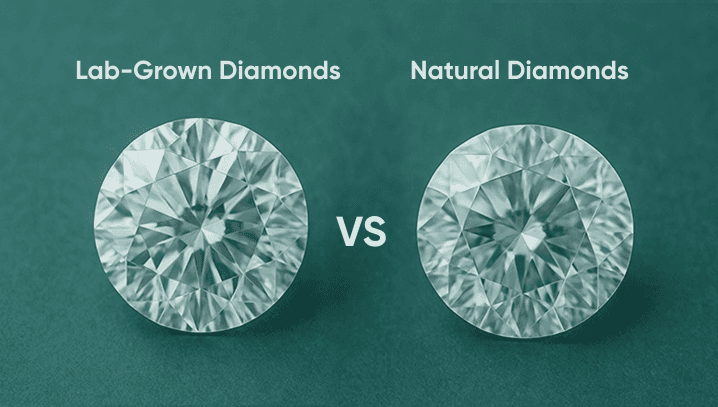
One of the biggest shifts in the market is the rise of lab-grown diamonds. The Knot says 52% of engagement rings featured a lab-grown stone in 2024, up 6 percentage points from 2023, and that movement has helped push average prices lower while average carat size has slowly increased. If your priority is visible size for the money, that change matters immediately.
Natural diamonds still carry emotional and value weight for many buyers, and the broader market shows why the category remains powerful. Jewelers Mutual’s 2024 engagement-ring study, based on more than 1,500 U.S. adults surveyed in August 2024, found the average engagement-ring value among respondents was between $2,500 and $5,000. The real decision is not only lab-grown versus natural, but what kind of beauty and long-term value you want to hold on your hand.
Know the 4Cs, but do not treat them as equal in the showroom
GIA identifies color, clarity, cut and carat weight as the global standard for judging diamond quality, and that order is useful because not every C changes the ring in the same way. Cut is the one that makes a diamond feel alive, because it governs how well the stone returns light. Carat is weight, not magic, and it is often the lever that moves the budget fastest.
Some shapes also spread more face-up than others, so a carat count is only part of the visual story. Color and clarity matter too, but they should be judged against the stone itself, the setting and the size you are considering. GIA recommends comparing diamonds under different lighting rather than trusting a single showcase, which is the easiest way to separate a brilliant stone from a merely impressive one.
The setting changes both the mood and the maintenance
GIA is right to put metal, setting, side stones and ring size into the buying conversation, because they shape daily wear as much as the diamond does. A prong setting shows more of the stone and keeps the look airy and classic, while a bezel wraps the diamond in metal and reads sleeker and more protected. If you wear your ring constantly, the setting is not decoration, it is architecture.
Low-profile settings tend to feel easier in real life, especially if your hands are always moving. Side stones can widen the silhouette without asking for a much larger center stone, which is one reason they remain such a useful design tool. The point is not to choose the most dramatic profile, but the one that suits the way you actually live.
Metal changes the look, and the upkeep
Metal choice shifts both appearance and maintenance. Platinum has a cool, dense presence and is often favored when security matters, while white gold gives a similar bright effect at a different price point but usually asks for more upkeep to keep its finish crisp. Yellow gold feels warmer and more traditional, and it can change the way a diamond reads on the hand, especially if you want contrast rather than a cool, minimal look.
Ring size matters too, because a beautiful ring that spins or pinches is not a pleasure to wear. GIA’s advice to measure size carefully sounds obvious until the first time a too-loose ring catches on a glove or a too-tight one is left in a jewelry box. Daily comfort is part of craftsmanship.
Budget should shape the design, not the romance
The most revealing number in The Knot’s study may be the distribution rather than the average. Nearly two-thirds, 64%, spent less than $6,000 on an engagement ring, one-third, 33%, spent less than $3,000, 8% spent $10,000 to $14,999, and 5% spent more than $15,000. That spread suggests a market that is not converging on a single correct price, but on rings tailored to actual circumstances.
That is where the three-month salary rule falls apart. It assumes everyone has the same income, the same obligations and the same priorities, when in reality the ring is often being chosen alongside housing, travel, student loans or a wedding budget. A tighter budget does not mean a lesser ring, especially now that lab-grown diamonds have widened the range of what a given sum can buy.
Why the broader diamond market still matters
The Natural Diamond Council partnered with Tenoris on Natural Diamond Trends, A 2024 Overview, and its reporting shows how the category is evolving, not fading. The report covers cut and shape, color, clarity, carat weight, styles and how consumers are acquiring natural diamonds today. Companion reporting says bridal diamond jewelry accounted for 33% of natural diamond jewelry sales in 2024, and the average Valentine’s Day diamond-jewelry ticket rose 2.7% to $2,066, with diamond rings the preferred choice.
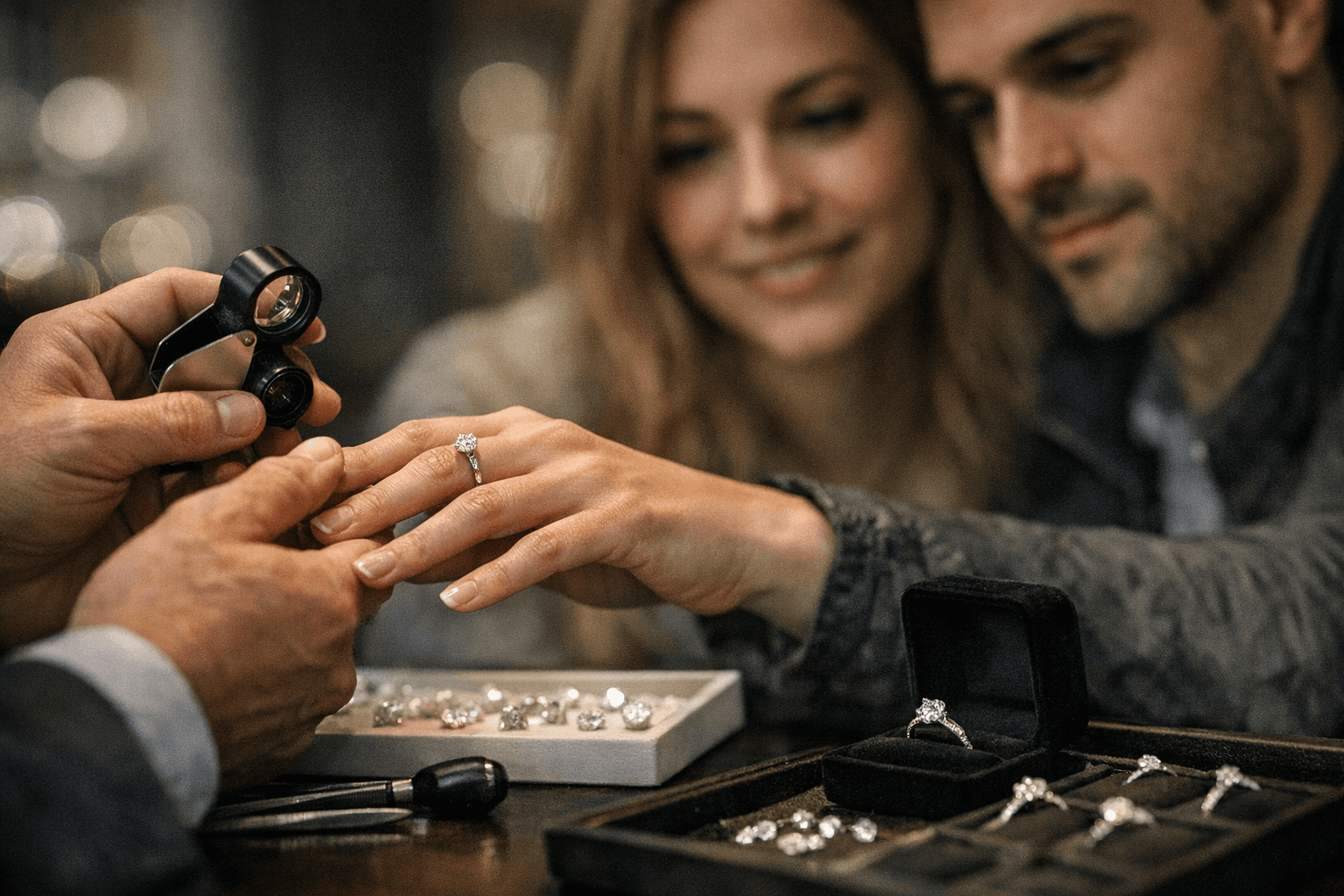
That is also why a grading report matters. GIA recommends buying with one, and that advice protects you whether you choose a natural diamond or a lab-grown one. A report gives you a language for comparison, so you can weigh quality, size and setting with less guesswork and more confidence.
The best ring is the one that will still feel right later
The right engagement ring is not the biggest stone or the loudest setting. It is the ring whose cut, metal and mounting suit the life around it, and whose price leaves room for the rest of the future you are building. In a market where average spending has fallen to $5,200, lab-grown stones are now on more than half of all rings, and diamond rings still hold their place at the center of the category, the real luxury is making a choice that remains beautiful after the proposal itself is long over.
This article was produced by Prism’s automated news system from verified source data, official records, and press releases, then run through automated quality and moderation checks before publishing. The system is built and supervised by the people who set the standards it runs under. Read our full AI policy.
Did this article answer your question?