14K vs 18K Gold in 2026: Hardness, Color, Price and Care
Choose 14K for everyday resilience, 18K for richer color and purity, know the tradeoffs in durability, hue, cost and care before you buy.
1. Composition: what 14K and 18K are made of
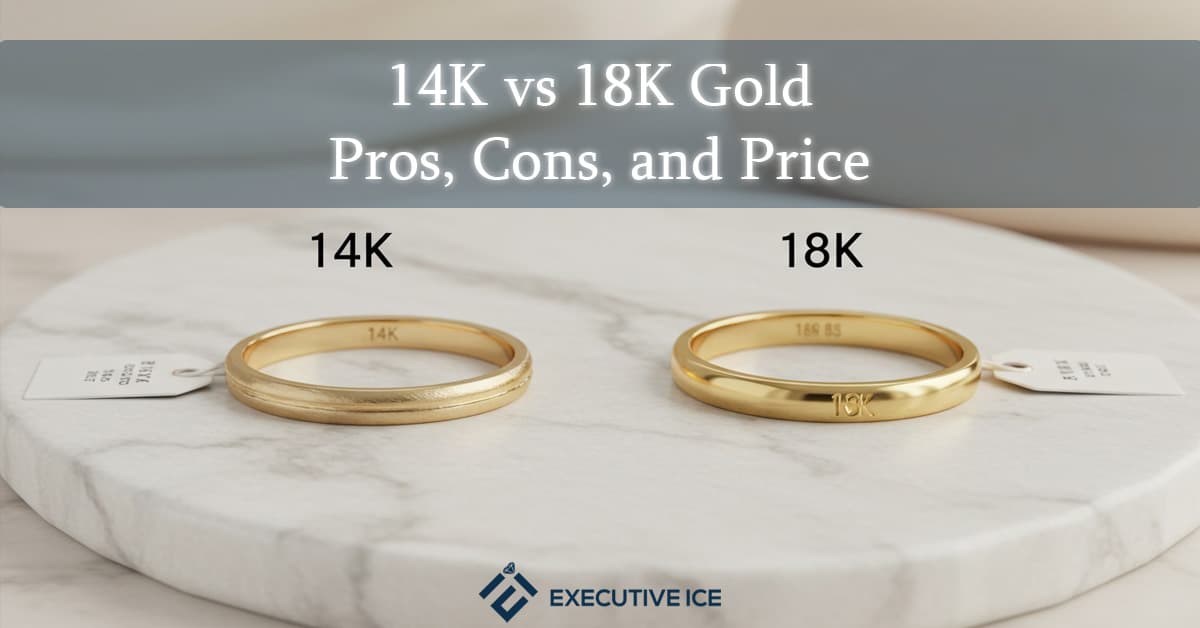
14K gold is approximately 58.3% pure gold and 41.7% alloying metals, while 18K gold is 75% pure gold with about 25% alloys. Gembreakfast sums it plainly: “14k gold is made of 58.3% pure gold,” and Brilliantearth restates the alloy split as “the higher percentage of alloying metals in 14K gold (41.7% vs 25% in 18K).” Those ratios are the single most important technical fact; they explain differences in color, price and mechanical behavior across every source.
2. Hardness and durability: which stands up to daily life
Every source in the brief describes 14K as the harder, more durable option because of its higher alloy content. Brilliantearth writes that “14K gold generally proves more durable due to its higher alloy content,” noting it is “more resistant to scratches, dents, and daily wear,” while 18K is “relatively softer and more prone to scratching.” Gembreakfast frames the choice in lifestyle terms: “If your budget is tight or you have an active lifestyle (hello gardeners, chefs, and the accident-prone among us), 14k is a savvy move.”
3. Color and appearance: hue differences, including rose gold
Color follows gold content: 18K shows a “richer, deeper yellow” closer to pure gold, while 14K appears a lighter yellow. Krkjewels describes 14K’s “Color: Lighter yellow” and 18K’s “Color: Richer, deeper yellow,” and Gembreakfast says 18K gives “that richer gold hue.” For rose gold specifically, Brilliantearth explains the chemistry in color terms: “14K rose gold exhibits a more pronounced pink color due to its higher copper content in the alloy mixture, while 18K rose gold features a softer, more subtle blush tone thanks to its higher gold percentage.”
4. Price and budgeting: why karat affects cost
Karat equals cost: with rising gold prices in 2026, sources emphasize the budget impact of choosing higher-purity metal. Gembreakfast’s buying advice is framed as “How to Stretch Your Gold Budget without Losing the Sparkle,” noting “14k gold … means more alloy metals, which = lower cost,” while “18k gold … [comes] at a higher price.” Practical suggestions include Gembreakfast’s heading to “opt for designs with less gold” and the plain tradeoff summarized by Krkjewels: “If you want durability and affordability, 14K gold is the smarter choice. If you prefer luxury, richness, and higher purity, 18K gold is worth the investment.”
5. Hypoallergenic properties: what to expect with sensitive skin
Higher gold content usually means fewer reactive alloys. Brilliantearth states that “18K gold typically offers better hypoallergenic properties than 14K gold due to its higher pure gold content and lower percentage of potentially reactive metals,” and it cautions that “the specific alloy composition in both 14K and 18K gold can vary, so it's essential to verify the exact metals used if allergies are a concern.” Giliarto’s FAQ adds balance: “Can 14k gold cause allergic reactions? Rarely, though it contains more alloy metals, reactions are uncommon with high-quality craftsmanship.”
6. Maintenance and care: polishing, scratching and longevity
Maintenance expectations differ because of softness, not because one will suddenly tarnish away. Giliarto answers the practical question bluntly: “Does 18k gold tarnish or fade? No, but it can scratch more easily than 14k gold. Regular polishing keeps it radiant.” Sources imply the corollary: 14K’s greater scratch resistance makes it lower-maintenance for everyday pieces like wedding bands, while 18K may need more frequent gentle polishing to preserve its deeper hue.
7. Use-case guidance: matching karat to real life
There is no universal right answer, the sites repeat that choice depends on lifestyle and priorities. Krkjewels states plainly, “Which Is Better: 14K or 18K Gold? There is no one-size-fits-all answer, it depends on your lifestyle and preferences.” Practical examples across the briefs: a “daily-wear wedding band might be better in 14K,” while an engagement ring chosen for “luxury and elegance” may be specified in 18K. Brilliantearth echoes the split: “14K gold demonstrates superior durability … making it the more practical choice for everyday wear pieces,” and “18K gold offering ample durability for special occasion pieces or items receiving gentler wear.”
8. Other karat options to consider
If you want to move further on the spectrum, the briefs list clear tradeoffs. Giliarto and Krkjewels note 10K as “the most affordable and durable, but with a paler color,” and 24K as “Pure gold, but too soft for most jewelry.” Giliarto also summarizes the extremes: “Someone who wants maximum durability and minimum cost will love 10K. Someone prioritizing luxury and gold purity will gravitate toward 18K.”
9. Retail examples and commerce copy to know
Retail content in the excerpts shows how vendors translate these technical differences into product positioning. Krkjewels pairs its guidance with product CTAs and names such as “Radiant Half Bezel engagement ring,” “Vanessa Hudgens Engagement Ring,” and “Toi Et Moi Cocktail Ring” followed by “Shop Now” and “View Collections.” That commercial framing underscores a practical point: retailers will market 18K as premium and 14K as practical, and product pages often emphasize the same tradeoffs outlined above.
10. What the reporting does not (yet) give you, missing data to check
The assembled sources are consistent on composition, color and durability, but they do not provide numeric hardness ratings, price-per-gram figures, incidence statistics for allergies, or retailer warranty and repair-cost specifics. The briefs explicitly lack Mohs/Vickers hardness numbers, dollar-per-gram pricing, and medical data on allergic reactions; verify those metrics if you plan to quote them. Also note the Giliarto FAQ label oddity, the FAQ is “(2025 Edition)” while surrounding posts and the buying guide text appear in 2026, a detail to confirm before attributing edition years.
11. Quick buying checklist and final recommendation
Use these facts to decide: if you prioritize everyday resilience, affordability and lower upkeep, choose 14K (58.3% gold; “more alloy metals, which = lower cost and better durability for everyday wear”). If you prioritize color depth, higher purity and lower allergy risk, choose 18K (75% gold; “giving that richer gold hue”). Keep Brilliantearth’s health note in mind, verify alloy composition if you have metal sensitivities, and follow Giliarto’s simple care cue: “Regular polishing keeps it radiant.” In short: fit the karat to how you live, not how it looks on a spec sheet, and know that in 2026 rising gold prices make these tradeoffs more relevant than ever, as Gembreakfast urges in “How to Stretch Your Gold Budget without Losing the Sparkle.”
Conclusion The technical baseline is clear and consistent across the briefs: 14K ≈ 58.3% gold (≈41.7% alloys) for toughness and value; 18K = 75% gold (≈25% alloys) for richer color and purity. Your decision should balance that chemistry against your daily habits, allergy concerns, and budget, then choose the karat that will survive your life while still making you smile.
This article was produced by Prism’s automated news system from verified source data, official records, and press releases, then run through automated quality and moderation checks before publishing. The system is built and supervised by the people who set the standards it runs under. Read our full AI policy.
Did this article answer your question?