Alternative Materials, like Wood and Leather, Gain Ground in Everyday Jewelry
Wood, leather, and other nonmetal materials are moving from fashion oddities to everyday staples, especially when the silhouette is strong and the finish is thoughtful.
Wood is no longer the punchline
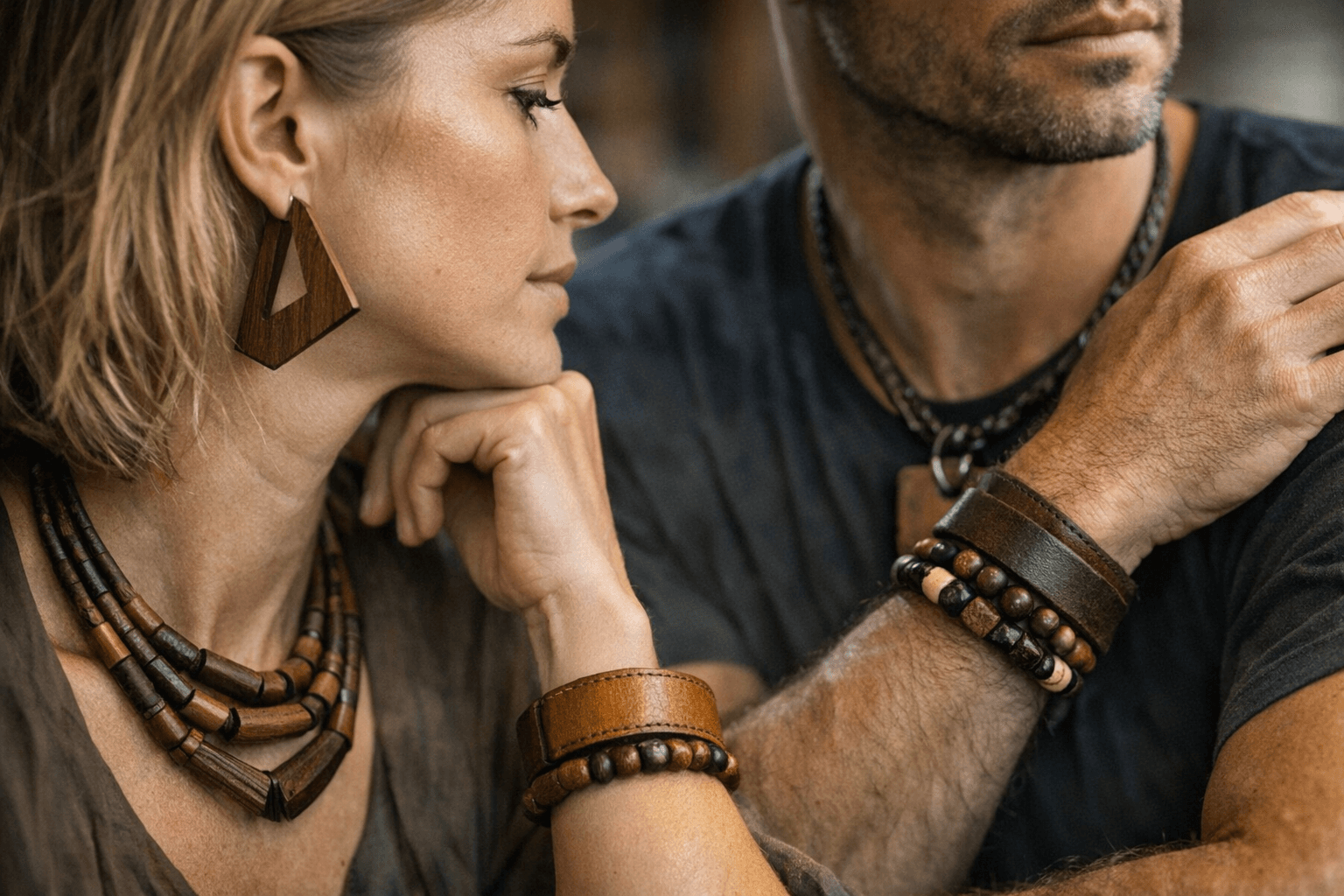
Jen Proudman’s carved wood collar lands because it does two things at once: it reads as a statement piece, and it still feels plausible for daily wear. JCK called alternative materials in jewelry “quickly shifting from novelty to mainstay,” and wood stood out as the clearest sign of that change. The appeal is practical as much as visual. When gold prices climb and shoppers want something less expected than another chain, a carved wood collar offers presence without leaning on precious-metal excess.
That is what makes this category more interesting than a passing trend note. The best alternative-material jewelry is not trying to imitate gold or diamonds. It is giving you texture, scale, and a different wearing experience, which is exactly why a bold collar can work with a plain shirt, a black knit, or a simple dress and still feel intentional rather than theatrical.
Why wood keeps coming back
Wood jewelry has been around long enough to show a cycle, not a fad. JCK was documenting wood in jewelry as far back as 2012, then described it in 2016 as “back in fine jewelry” after a long hiatus. That arc matters, because it suggests designers keep returning to wood for the same reasons: color, grain, carving potential, and a warmth that polished metal cannot duplicate.
The 2023 wood roundup sharpened that picture. JCK linked wood’s popularity to consumer demand and, in some cases, greater availability of the material. Designers were working with petrified wood, ebony, cocobolo, and walnut across earrings, cuffs, and other forms. Wood also carried an eco-conscious appeal, since shoppers often read it as less impactful on the environment. That perception is part of the draw, but it should be handled carefully. Wood does not automatically equal responsible sourcing, and the strongest pieces are the ones where the material, finish, and provenance all seem considered rather than merely implied.
For everyday wear, the sweet spot is a piece that has enough visual weight to hold its own, but not so much bulk that it becomes costume. A carved wood collar does that better than a novelty trinket because the silhouette does the styling for you.
The category is bigger than wood
Wood may be the standout, but the broader shift is happening across material families. JCK’s 2023 alternative-materials roundup cited leather, plastic, resin, and glass as part of the design vocabulary, and by 2025 the magazine was seeing leather cords, silk, and velvet enter necklace design as well. That expansion tells you something important about how people are dressing now: they want options beyond gold chains, but they do not want those options to feel fragile, precious, or overly fashion-y.
The silhouette helps. In 2025, collar, torque, and choker necklaces were showing up repeatedly during Las Vegas Jewelry Week brand visits, which makes Proudman’s carved wood collar feel especially current. Those shapes sit close to the neck, create instant structure, and work with simple basics. They are strong enough to anchor a T-shirt or collarless blouse, and restrained enough to wear under a blazer or over a fine sweater.
Leather in particular fits the everyday argument because it shifts jewelry toward tactile comfort. A leather cord can soften a pendant or replace a heavy chain entirely, which matters when the goal is a piece you can wear to work, to dinner, and on weekends without feeling overdressed. Silk and velvet do something similar, adding softness and contrast where polished metal might feel too formal.
How to wear alternative materials without overthinking it
The easiest way to wear a wood collar or leather necklace is to let it be the only loud thing in the look. Pair one statement piece with basics, not with competing embellishment. A crisp white shirt, a ribbed tank, a black crewneck, or a clean knit gives natural materials room to register as design rather than decoration overload.
A few practical rules make the difference:
- Let the necklace define the neckline. Collar and choker shapes work best when they have breathing room, whether that means an open collar, a simple scoop, or a pared-back blouse.
- Keep the rest of the jewelry restrained. If the necklace is carved wood, skip a busy stack and let the grain, color, and shape do the talking.
- Choose pieces that feel balanced on the body. A collar should sit securely and comfortably, not shift, pinch, or fight with the collarbone.
- Think about how often you will actually wear it. The best alternative-material piece should move from daytime to evening without needing a costume change.
Who suits these materials most? Anyone who likes statement jewelry but does not want the weight or shine of traditional metal. They also suit collectors who care about texture and craftsmanship, because wood, leather, and mixed materials reward close looking. These are pieces for people who want jewelry to start conversations without demanding a full wardrobe rethink.
What to ask before you buy
Alternative materials can be beautiful, but they deserve the same scrutiny you would give a diamond setting or gold hallmark. Ask what kind of wood is being used, whether it is petrified wood, ebony, cocobolo, walnut, or another species, and how the surface has been finished. Ask how the piece handles daily contact, because wearability is the whole point here. A necklace that looks compelling in a case but feels awkward after an hour will not become part of your real wardrobe.
The same goes for sustainability language. “Natural” is not the same as traceable, and “eco-friendly” is not a certification. If a brand leans on green language without naming materials, sourcing practices, or construction details, treat that claim as marketing rather than proof. The pieces worth buying are the ones that can explain themselves plainly.
Why the trade is taking this seriously
Milestones by Ashleigh Bergman helps explain why this shift is reaching a broader audience. The Los Angeles-based virtual jewelry boutique was founded in 2015 by Ashleigh Bergman and combines online and social retailing with an in-person showroom component. That mix matters because alternative materials often need to be seen in person to be understood. Grain, sheen, color variation, and scale all read differently when a piece is on the body.
JCK’s coverage of Bergman’s business, along with its reporting on designers at the 2025 show, points to a larger reality: experimental materials are no longer operating at the edge of the market. They are part of the mainstream trade conversation now. The carved wood collar is not just a clever styling moment. It is a useful sign that everyday jewelry is widening, and that durability, comfort, and individuality can come from more than gold alone.
This article was produced by Prism’s automated news system from verified source data, official records, and press releases, then run through automated quality and moderation checks before publishing. The system is built and supervised by the people who set the standards it runs under. Read our full AI policy.
Did this article answer your question?