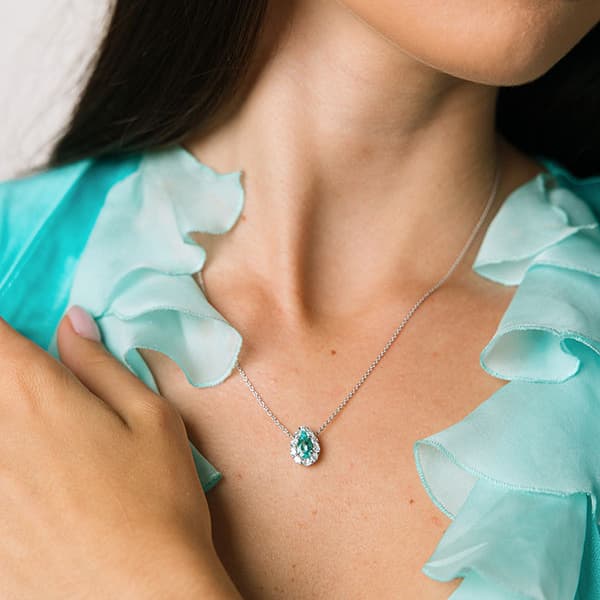
Amethyst proves durable enough for everyday rings and pendants
Amethyst brings royal-purple color to everyday jewelry, but rings only hold up when the setting protects a 7-hardness stone. Pendants and low-profile mounts make it a smarter daily buy.
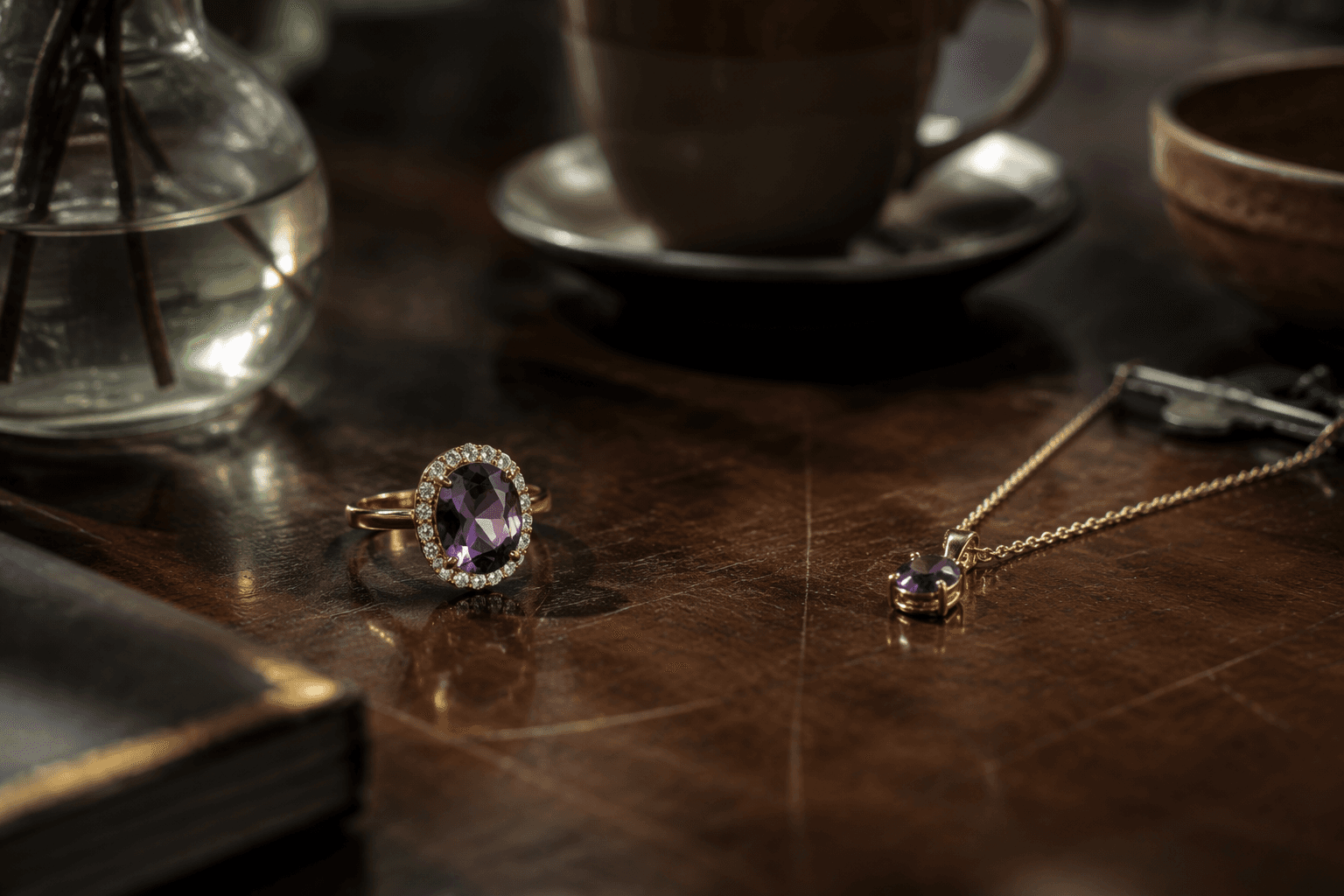
GIA rates amethyst 7 on the Mohs scale and considers it appropriate for everyday wear, but the stone can show wear over the years and may need repolishing. That makes the design decision as important as the gemstone itself, especially if you want a ring or pendant that feels polished on Monday morning and still looks composed years later. It gives you a large, saturated color hit without the price or fragility that usually comes with that kind of presence.
Why the color matters most
Amethyst’s strongest asset is its color, and that is where the stone does its most convincing work. The best stones show a rich, velvety purple or reddish purple hue, with even color and no visible color zoning when viewed from above. The palette runs from lavender to royal purple.
That range is part of the appeal for everyday wear. Amethyst is the purple variety of quartz and can be cut into many shapes and sizes, from lilac to deep purple tones. It is also one of the few gems that sits comfortably between pageantry and practicality, beautiful enough for crown jewels yet affordable enough for class rings.
What 7 on the Mohs scale really means
The Mohs scale measures scratch resistance, and its intervals are not evenly spaced. A stone can be hard enough for regular use and still show abrasion over time, especially when it is worn in a place that takes constant contact. That 7 rating puts amethyst in the usable, not untouchable, category.
In practice, that means rings need the most discipline. A ring hits desks, door frames, shopping carts, and gym equipment far more often than a pendant does, so an amethyst ring should be treated as a daily jewel with a working life, not a forever-proof object. Pendants and earrings are easier homes for the stone because they avoid the constant impact that hands endure.
The best settings for everyday wear
Daily-wear amethyst looks best when the setting respects the stone’s limits. Low-profile designs are especially smart for rings, because a stone that sits closer to the finger is less likely to snag or take a direct blow. That is especially smart if you want a ring that can move through office life, errands, and dinner without asking for constant vigilance.
Prong and bezel settings are the other practical choices that keep coming up for gemstone jewelry. Prongs can hold a faceted amethyst securely while still letting in light, which preserves the gem’s color, while a bezel wraps the edge in metal and offers extra protection. For a daily ring, the safest formula is simple: keep the stone low, protect the edges, and avoid a setting that leaves the gem tall and exposed.
For pendants, the design brief is different. You are not defending the stone from the same kind of blunt force, so you can focus more on how the purple reads against skin and fabric.
Why provenance still shapes the purchase
Until the 19th century, amethyst was as expensive as ruby and emerald. Brazil’s large deposits changed that, and Brazil is now the leader in overall amethyst production. That shift is the reason amethyst moved from elite rarity into the wide middle of the market, where it can appear in both mass-market jewelry and custom work.
Before those Brazilian deposits were found, amethyst was prized at the level of rubies, emeralds, and sapphires. Today, price should still be read through cut quality, color evenness, and setting. A pale stone in a heavy mount can be less satisfying than a richly colored gem in a cleaner design.
Mined or lab-grown: ask which one you are buying
Amethyst can be manufactured in a lab as well as mined. That means the label should be clear, because “amethyst” alone does not tell you the whole sourcing story. If provenance matters to you, the important question is whether the stone is mined from a source such as Brazil or created in a laboratory, and the seller should answer that plainly.
That disclosure matters even more in an everyday piece, because you are balancing aesthetics, price, and the story you want the jewel to carry. A mined stone may appeal if you want a natural geological history tied to Brazil or another producing region. A lab-grown amethyst may make sense if you want a vivid purple stone with a more controlled supply chain. Either way, the value comes from clear disclosure, not vague romance.
What to look for before you buy
A good amethyst daily piece does not need to be expensive, but it does need to be deliberate. The most reliable buying logic is built around color, cut, and setting, not carat weight alone.
- Favor even color when the stone is viewed from above, with no visible zoning.
- Choose low-profile rings if the piece will be worn every day.
- Look for prong or bezel protection when the gem will live in a ring rather than a pendant.
- Expect an amethyst worn hard for years to need occasional repolishing, because GIA rates it 7 on the Mohs scale: durable, not invincible.
- Ask whether the stone is mined or lab-grown.
This article was produced by Prism’s automated news system from verified source data, official records, and press releases, then run through automated quality and moderation checks before publishing. The system is built and supervised by the people who set the standards it runs under. Read our full AI policy.
Did this article answer your question?