Best Durable Jewelry Picks for Women Who Live Around Horses
Sterling silver, solid gold, and diamond-set horseshoe pieces that survive barn life without sacrificing beauty.
Life around horses is hard on everything: boots, trucks, tack, and jewelry included. The question for any horsewoman who wants to wear jewelry daily isn't just about aesthetics; it's about whether a piece can survive sweat, dust, barn doors, and long hours outdoors without losing its finish or falling apart by noon. The answer lies in material selection and construction quality, and it narrows the field considerably.
What follows is a ranked guide to the most durable jewelry choices for women who live and work around horses, grounded in the materials and pieces that genuinely hold up.
1. Solid gold pieces
Solid gold sits at the top of this list for one simple reason: it does not tarnish. Unlike gold-filled or gold-plated pieces that rely on a surface layer bonded to a base metal, solid gold is consistent throughout. Exposure to sweat, humidity, and the general grime of stable life won't strip it down to something dull and discolored. Solid gold jewelry has a reputation for lasting through years of everyday wear, which is precisely why it appeals to those who prefer to invest in fewer pieces that will last longer rather than cycling through cheaper options season after season. For a horsewoman who wants to put something on and forget about it, solid gold is the closest thing to a permanent solution.
The Horseshoe Bangle from Yearly Co. is a strong example of what solid gold looks like in practice for equestrian wear. Made entirely from solid gold and designed as a simple bracelet, it can be layered with other pieces or worn on its own. The bangle silhouette is a smart choice for barn life: no dangling chain or delicate prong to catch on tack or rope, just a clean continuous form that sits close to the wrist. If you're going to spend at the heirloom end of the jewelry spectrum, a well-constructed solid gold bangle is the kind of piece that earns its price over decades.
2. Sterling silver pieces
Sterling silver is the most accessible of the durable metals and, in well-made form, holds up admirably to daily outdoor wear. The alloy's composition (92.5% pure silver) gives it enough hardness to resist scratching under normal conditions, and quality sterling pieces resist the kind of rapid deterioration you see in thin plated jewelry exposed to moisture and physical contact. Materials like sterling silver tend to stand up better to sweat, dust, and long hours outdoors than their cheaper counterparts, and a well-made sterling necklace or bracelet can stay on through long days outside without needing to be removed every time you head to the barn.
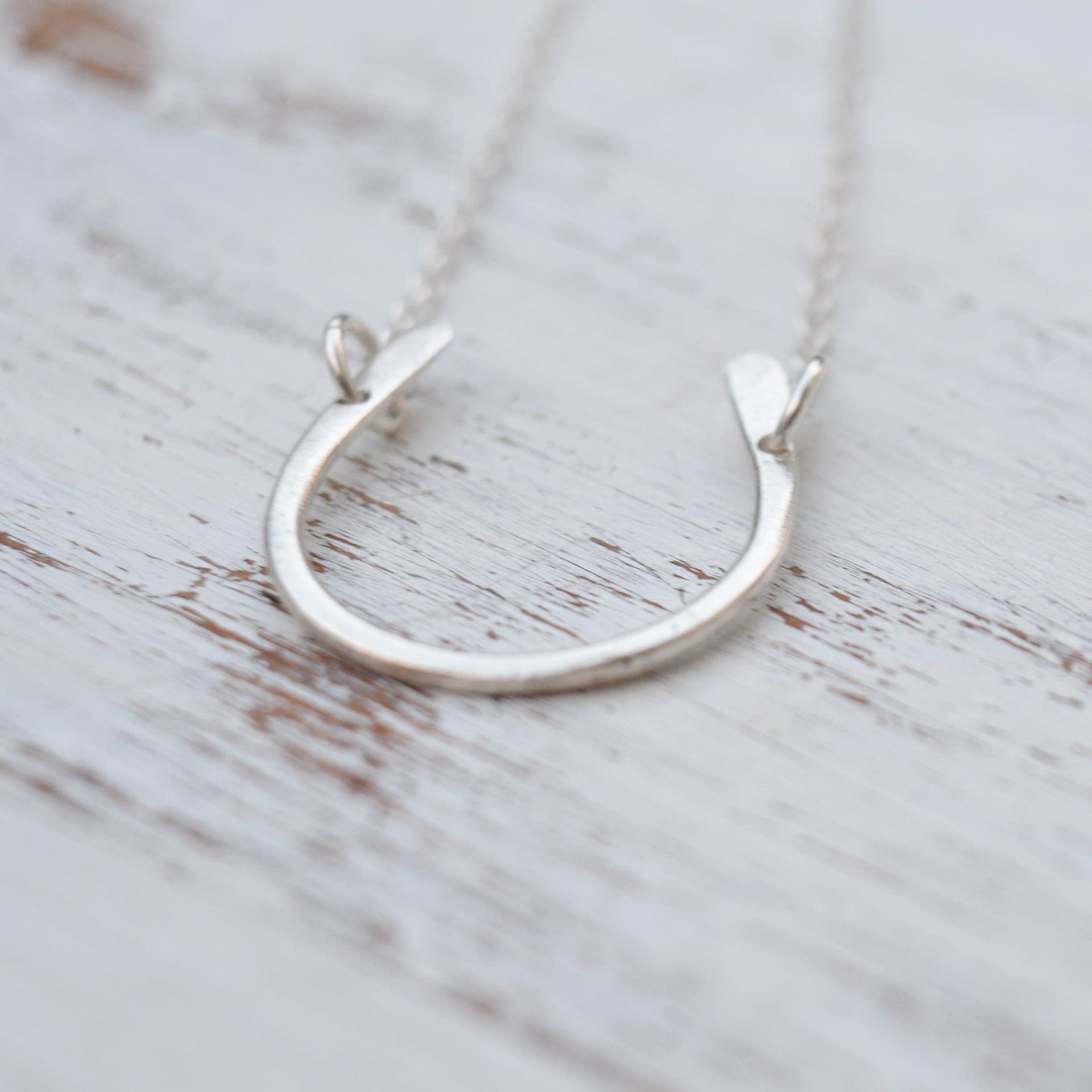
The practical edge of sterling silver is its versatility. A simple sterling horseshoe pendant or a bit-inspired sterling necklace reads as effortlessly Western without being costume-level obvious about it. Sterling also ages with some grace; a piece that develops a slight patina over years of wear tells a story rather than just looking neglected. That said, sterling does require occasional polishing if you want to maintain its brightness, so it demands slightly more attention than solid gold. The tradeoff is a meaningful reduction in price at entry.
3. Bit-inspired necklaces
The horse bit as a jewelry motif translates surprisingly well from stable to street. A bit-inspired necklace, whether rendered in sterling silver or solid gold, references the physical hardware of equestrian sport in a way that is recognizable to riders without being impenetrable to anyone else. Symbols like horseshoes and bits aren't just decorative; they're reminders of the connection riders have with their horses and the lifestyle that comes with it. Worn daily, a bit-inspired piece becomes part of the identity rather than an accessory that gets swapped out.
From a durability standpoint, the construction of a bit-inspired necklace matters as much as the material. Look for pieces where the bit motif is cast or forged rather than stamped, and where the chain is substantial enough to withstand the pulling and catching that inevitably happens around horses. A delicate box chain will not survive barn life; a heavier cable or rope chain paired with a well-made pendant will. The motif itself tends to be relatively low-profile, which reduces the risk of the pendant snagging on anything.
4. Horseshoe pendants and rings with diamonds
Moving up in refinement, the horseshoe motif has found a genuine home in fine jewelry. A horseshoe ring from Bennett Fine Jewelry incorporates diamonds into the familiar horseshoe shape, turning a symbol often seen in Western gear into a more refined piece of jewelry. This is where equestrian jewelry crosses cleanly into heirloom territory: the horseshoe form is unmistakably tied to the lifestyle, but the diamond setting elevates it well beyond barn wear into something you'd choose for a dinner out or a horse show award ceremony.
The practical consideration with a diamond-set horseshoe ring is the setting style. Prong settings, while they maximize a diamond's exposure to light and brilliance, present real risk in barn environments: a prong can catch on rope, leather, or metal hardware and bend or break, potentially losing the stone. A bezel setting, which encircles each diamond with a thin wall of metal, offers significantly more protection and is worth requesting if you plan to wear the piece in active conditions. For a horseshoe ring worn predominantly as an occasion piece rather than a daily barn ring, standard prong settings are perfectly reasonable. Know how you intend to wear it before you commit to the construction.
5. Well-made plated pieces
Not every jewelry decision needs to be a lifetime investment, and well-made plated pieces occupy a legitimate place in this category. The operative word is "well-made": a thick gold or rhodium plating over a quality base metal will perform very differently from a thin flash-plated piece picked up at a market stall. Better-quality plated jewelry tends to use thicker plating layers over sterling silver or brass bases, and those pieces can hold up reasonably well to regular wear if you keep them away from prolonged water exposure and harsh chemicals.
For the equestrian who wants to wear an equestrian motif without committing to fine jewelry prices, a well-constructed plated horseshoe bracelet or pendant is a reasonable starting point. Understand, though, that plated pieces will eventually show wear at friction points, particularly bracelets at the clasp and pendants where the bail meets the chain. Treat them as medium-term pieces rather than heirlooms, and you won't be disappointed.
The broader principle threading through all of these choices is straightforward: when jewelry is built with quality materials and thoughtful construction, it becomes something you wear every day rather than something that lives in a jewelry box. For a horsewoman, that's the whole point. The barn doesn't pause for jewelry changes, and neither should you.
This article was produced by Prism’s automated news system from verified source data, official records, and press releases, then run through automated quality and moderation checks before publishing. The system is built and supervised by the people who set the standards it runs under. Read our full AI policy.
Did this article answer your question?