Best Everyday Jewelry Materials That Stay Tarnish-Free and Durable
Not all metals age equally on your body. These six materials hold their shine through showers, sweat, and years of daily wear.
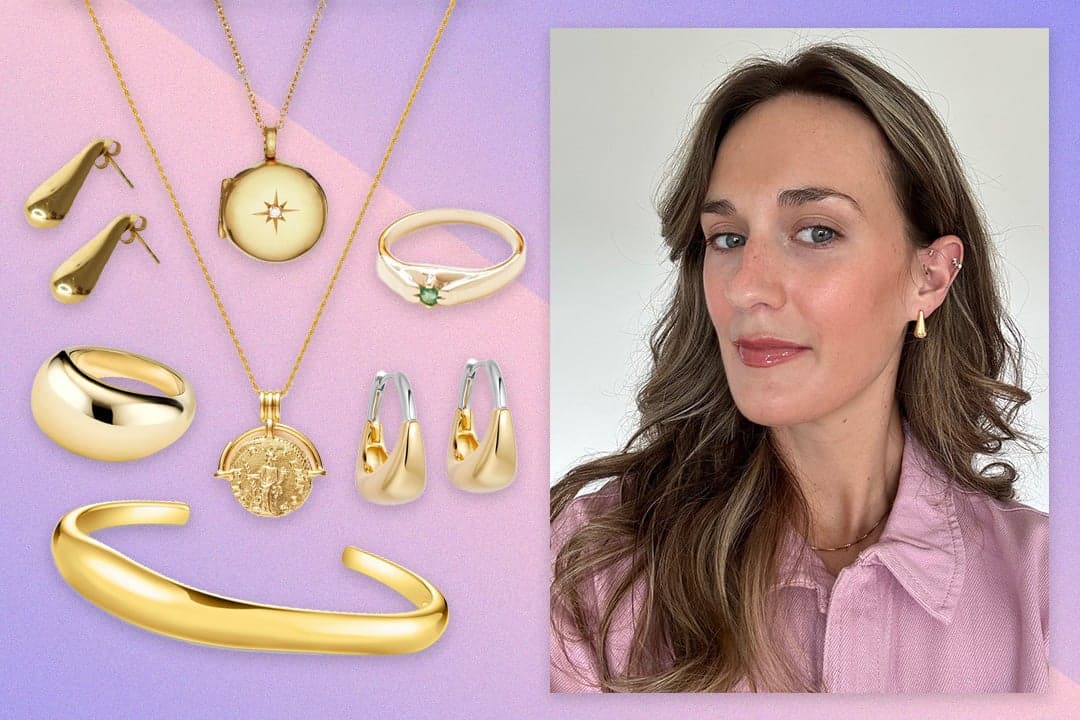
The jewelry that earns permanent residency on your wrist or ears isn't necessarily the most expensive. It's the piece made from a material that handles real life: handwashing, cooking, gym sessions, humidity, and the slow grind of skin contact day after day. Here's how the top tarnish-resistant materials actually stack up, from everyday accessible to investment-grade.
What makes everyday jewelry truly tarnish-resistant?
Tarnish happens when metal reacts with oxygen, sulfur compounds, or moisture in the air and on your skin. The materials that resist it either contain no reactive metals at all (platinum, titanium, fine gold) or are engineered to protect a reactive core behind a thick, stable outer layer (gold-filled). Understanding that distinction helps you match the material to your lifestyle and budget.
The best materials for daily wear jewelry, ranked
1. Gold-filled
Gold-filled is not gold plating. It contains a legally regulated minimum of 5% solid gold by weight, pressure-bonded in a thick outer layer to a base metal core. That physical bond, rather than an electroplated surface deposit, is what makes it durable enough to survive years of daily wear without fading, flaking, or tarnishing. For anyone who wants the warmth and look of solid gold without the price, gold-filled offers the strongest value proposition in everyday jewelry.
2. Solid 18k gold
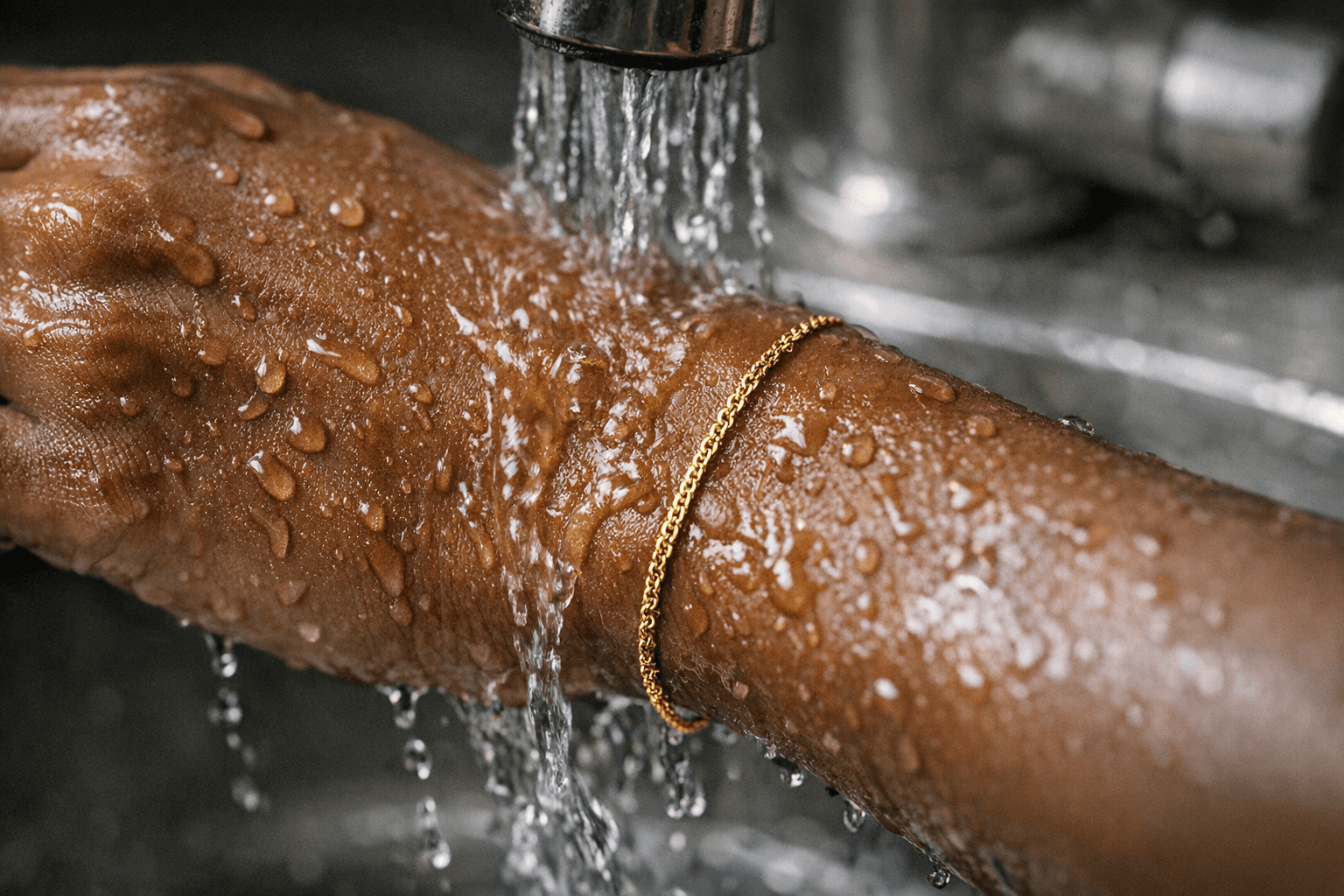
Pure 24k gold doesn't tarnish at all, but it's too soft for rings and bracelets that take daily impact. 18k gold, which is 75% pure gold alloyed with silver or copper for strength, strikes the most practical balance between tarnish resistance and wearability. It holds its color and finish through water exposure, sweat, and years of contact without the surface degradation you'd see in lower-karat pieces. Minimalist jewelry brands like Mejuri build much of their core collection around 14k and solid gold options precisely because the material performs as well as it looks.
3. Platinum
Platinum is the benchmark for durability in fine jewelry. It's naturally white, doesn't require rhodium plating to maintain its color, and its density means it doesn't wear away the way gold does. When platinum scratches, the metal displaces rather than disappears, so the volume stays intact over decades. It's the most tarnish-resistant precious metal available, genuinely maintenance-free for everyday wear, though it comes at a significant price premium over gold.
4. Titanium
Titanium is stronger than most metals used in jewelry and weighs almost nothing against the skin, which makes it particularly well-suited for earrings, rings, and bracelets worn continuously. It doesn't react with body chemistry or environmental exposure, so it stays corrosion-free and shiny without any special care. Critically, it's fully hypoallergenic, making it one of the few metals that people with nickel sensitivities or reactive skin can wear without irritation.
5. Stainless steel
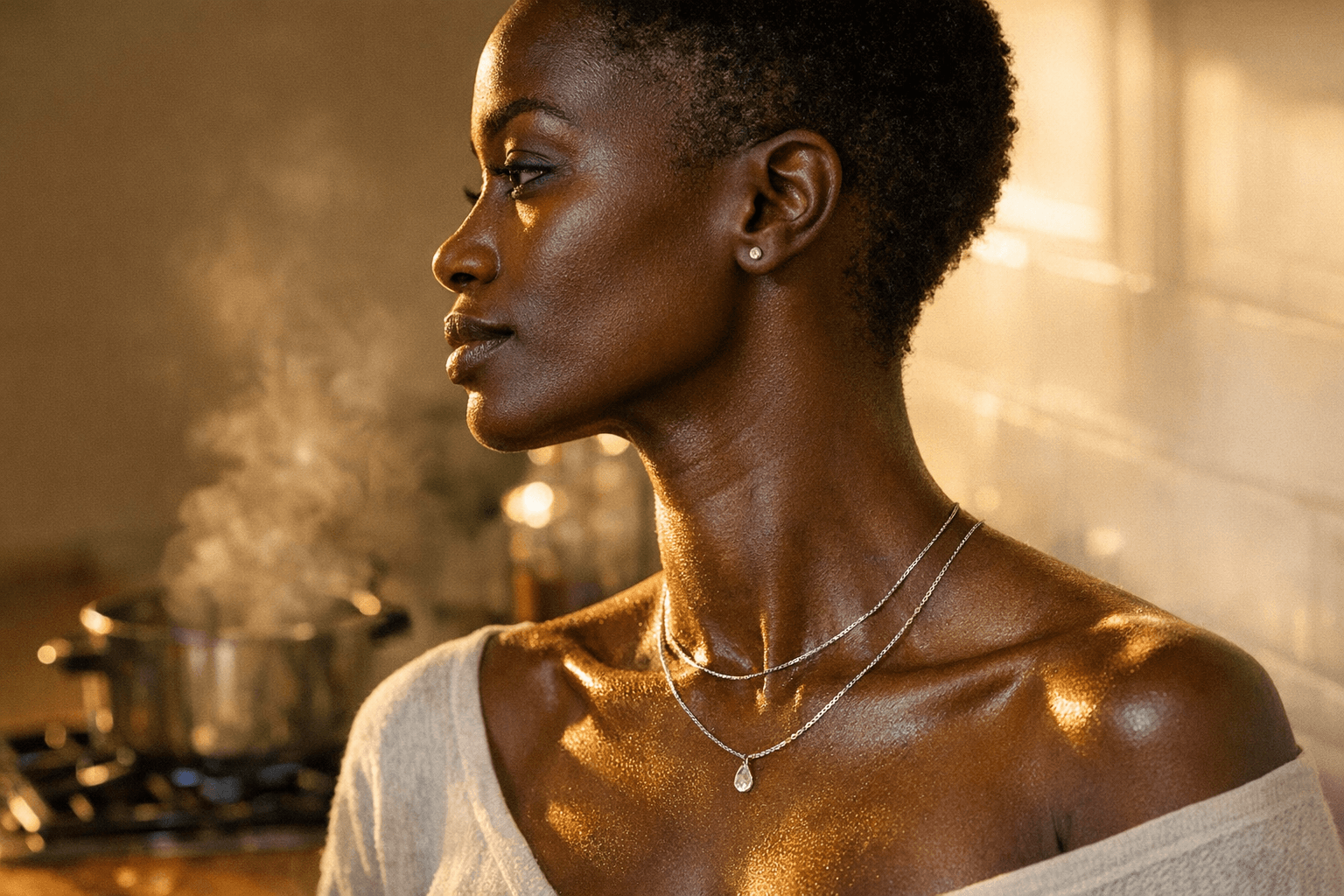
Stainless steel sits at the accessible end of the tarnish-free spectrum without compromising on durability. Its chromium content creates a passive oxide layer that resists moisture, sweat, and everyday chemical exposure. It's the material behind a lot of water-resistant jewelry designed explicitly for wear through showers, swimming, and workouts, and its cool-toned finish suits silver-adjacent aesthetics without the maintenance demands of sterling silver.
Rose Gold Variants
It is worth noting that rose gold is not a separate material class but a gold alloy — typically 75% gold and roughly 22% copper, with the balance in silver. That copper content is what gives it the distinctive pink hue, and it also makes rose gold harder and more scratch-resistant than yellow gold at equivalent karats. Rose gold resists tarnish well and develops a subtle patina over time that deepens rather than degrades its appearance. For rings and bracelets, where surface contact is constant, rose gold holds up better day-to-day than many expect.
What about sterling silver?
Sterling silver is 92.5% pure silver alloyed with copper, and that copper content is exactly what causes it to tarnish when exposed to air and sulfur compounds. It's not a tarnish-free metal; it requires regular polishing to maintain its appearance. That said, sterling silver with rhodium plating resists tarnish significantly longer, and the plating is standard across many quality jewelry brands. If you love silver tones, stainless steel or white gold are the more practical choices for genuinely low-maintenance daily wear.
How to choose the right material for your lifestyle
Your daily habits should drive the decision more than aesthetics. If you swim regularly, stainless steel and titanium are the most reliably water-resistant without any coating degradation to worry about. If you want something that feels precious and holds resale value, 18k gold or platinum is worth the investment. If you want gold-toned jewelry that performs close to solid gold at a fraction of the cost, gold-filled is the category to prioritize.
For personalized pieces like name necklaces and stackable initial rings, the base material matters especially because these are designed to be worn without removal. Top providers include Mejuri in solid 14k gold, Oak & Luna for name necklaces and stackable initial rings in 14k gold vermeil, and Monica Vinader for engraved pieces in solid gold and vermeil. Among these, gold vermeil is worth distinguishing from gold-filled: vermeil is sterling silver with a gold layer applied by electroplating, which wears faster than gold-filled's mechanically bonded layer, particularly with frequent water exposure.
The honest trade-off table
No material is perfect across every variable. Platinum and 18k gold give you the best long-term performance but cost significantly more upfront. Gold-filled closes most of that gap for everyday wear. Titanium and stainless steel win on durability and price but carry no intrinsic precious metal value. Rose gold is the most underrated option for people who want warmth and toughness in a karat gold piece.
The pieces worth buying are the ones that fit how you actually live. A platinum ring that never leaves your finger will outlast a gold vermeil one worn occasionally and stored carelessly. Material quality is only half the equation; daily commitment to wearing and caring for a piece is the other half.
This article was produced by Prism’s automated news system from verified source data, official records, and press releases, then run through automated quality and moderation checks before publishing. The system is built and supervised by the people who set the standards it runs under. Read our full AI policy.
Did this article answer your question?