Bolder engagement rings are reshaping wedding band pairings
Bolder center stones are making the wedding band the harder design problem. The right pairing now depends on geometry, not just metal color.
The straight band is no longer the default
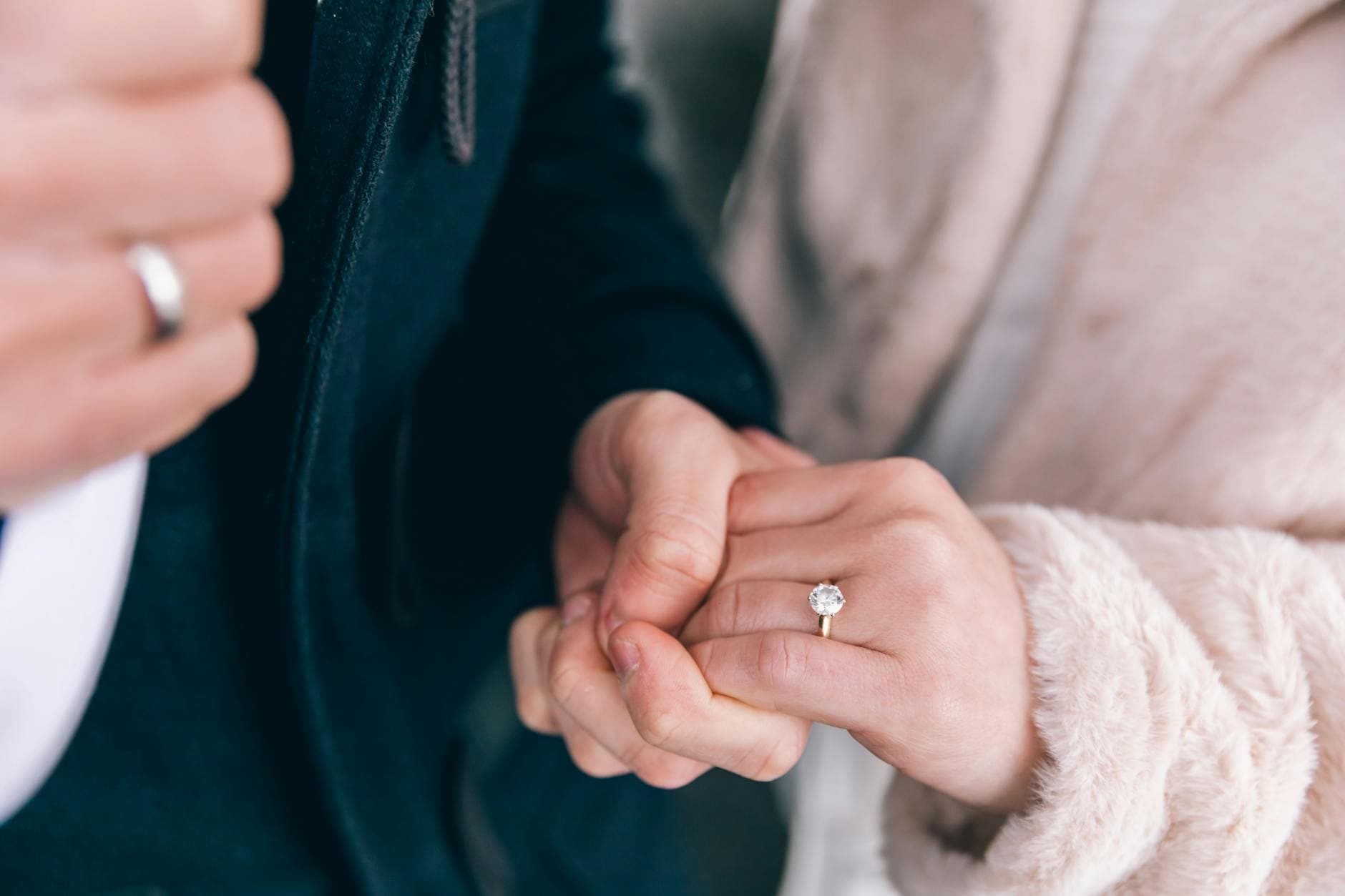
The old bridal formula was simple: a center stone, a plain band, and a flush fit. That logic is breaking down as engagement rings get more architectural, with floating diamonds, bezel settings, east-west stones, and mismatched toi-et-moi designs pushing the wedding band to do far more than sit quietly beside a solitaire.
That shift is not only aesthetic. The Knot’s 2024 Jewelry & Engagement Study found that 77% of proposees had some involvement in the ring selection process, and 57% of couples began discussing engagement more than a year before the proposal. Engagement rings are being chosen collaboratively, and that makes the band part of the design conversation from the start, not an afterthought.
Why the stack has become more complicated
The market still has room for tradition. Round solitaires made up 28% of engagement-ring designs in 2024, and 51% of rings had a clear diamond center stone with side stones and or accents. But the strongest momentum is moving toward more individualized silhouettes, where the profile of the ring matters as much as the stone itself.
National Jeweler said in February 2025 that chunky bands, vintage cuts, and bezel settings were expected to rule the bridal market. The Knot added maximalist multi-stones, half bezels, marquise shapes, east-west settings, vintage cuts, and thoughtful toi-et-mois to the list of major trends. In other words, couples are no longer shopping for a single perfect ring; they are building a composition that has to balance from every angle.
Start with the ring’s geometry, not the romance
When a ring has a strong shape, the wedding band has to respect that shape. A simple straight band can still work, but only if the engagement ring leaves room for it. Once the center stone sits lower, stretches sideways, or breaks symmetry, the band usually needs a contour, an offset, or a slimmer profile to avoid rubbing and visual crowding.
Think in terms of negative space. The goal is not always to close every gap. Sometimes the most elegant stack is the one that lets the engagement ring breathe, especially when the setting itself is the design statement.
Bezel settings ask for cleaner lines
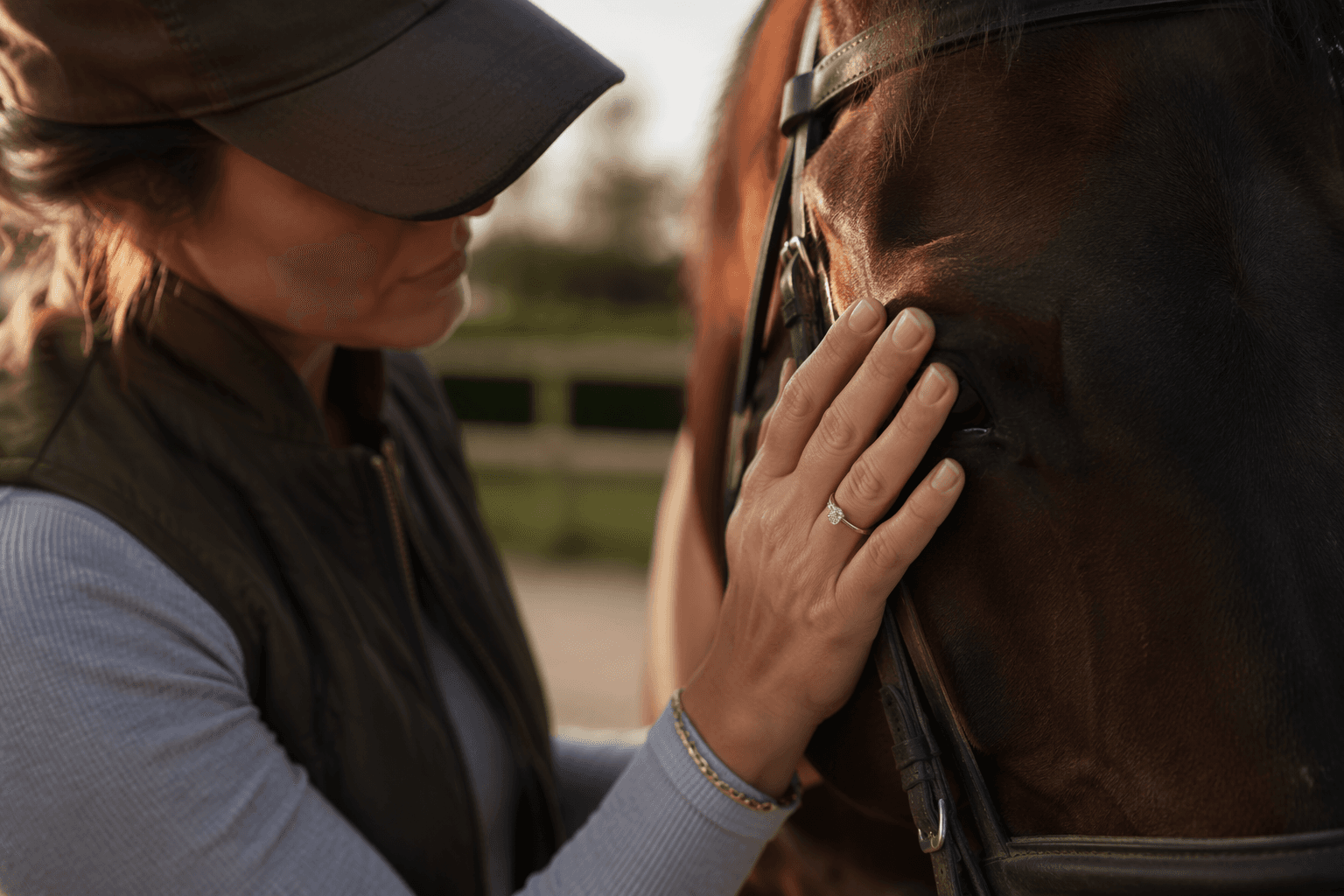
Bezel settings, including half bezels, create one of the strongest cases for a more considered band. Their metal rims already draw a hard architectural line around the stone, so a wedding band that is too bulky can make the whole stack look overbuilt. A slim straight band, a lightly curved contour band, or a band with a matching metal finish usually preserves the crispness of the bezel.
Half bezels are especially sensitive to fit because the open side creates asymmetry. A band that sits too high can interfere with the setting, while one that is too decorative can compete with the bezel’s modern simplicity. The most successful pairings keep the silhouette clean and let the metal framing do the work.
East-west stones need space to be read correctly
East-west settings, where the stone runs horizontally across the finger, change the entire rhythm of the hand. A conventional straight band can press too closely against that wide line, making the ring feel cramped. A narrow contour band, a chevron shape, or an open design often works better because it echoes the horizontal spread without crowding it.
This is one of the clearest examples of why stacking has become design-led. The band should support the eye’s movement across the ring, not interrupt it. With an east-west marquise or oval, the right band is often the one that disappears into the composition.
Toi-et-moi rings need balance, not symmetry
Toi-et-moi rings, especially those with mismatched stones, are built on intentional imbalance. That makes them exciting and tricky at once. A wedding band that mirrors both stones too literally can flatten the look, while a band that is too ornate can make the pairing feel busy.
The best approach is usually one of restraint. A slim plain band, a softly curved band, or a stacked pair of thinner bands can preserve the open, conversational quality of the toi-et-moi. The point is to frame the two-stone story, not to answer it with a third loud note.
Floating diamonds and airy settings call for lighter bands
Floating diamond styles rely on visual lift. The stone seems suspended, and the whole point is that you can see air around it. A heavy band can undermine that effect quickly, so slimmer widths, understated pavé, or polished metal bands tend to work best.
These rings often look strongest when the band repeats the same sense of lightness. A knife-edge profile, a delicate pave line, or a plain band with a refined finish can keep the stack from feeling weighted down. The more the ring appears to hover, the more the band should respect that openness.
Metal matching matters more than ever
Metal choice is no longer just about whether you prefer yellow, white, or rose gold. It affects whether the stack reads as one unified piece or as two competing objects. Matching metals creates visual calm, while contrast can be beautiful if the ring already has strong geometry and you want to underline it.
Rising gold prices are also part of the current backdrop, which makes the metal decision more than an aesthetic preference. Wider bands and more metal-heavy designs carry more cost, so some couples are balancing visual impact against the weight and price of the metal itself. That pressure is another reason cleaner, more efficient silhouettes are gaining ground.
The new bridal story is around the center stone
At the 2025 Couture Show in Las Vegas, jewelry historian Marion Fasel called independent designers the “change makers” in engagement rings. Her larger point was even sharper: the main design story now happens around the solitaire center stone, not just in the solitaire itself.
That is the real takeaway for the wedding band market. Designers and jewelers are seeing stronger demand for vintage rings and stones, alongside more personal, style-driven choices that are meant to feel current for years. Quiet luxury and the mob wife aesthetic helped widen the vocabulary in 2024, but the result is less about trend labels than about rings that can hold their own and still stack beautifully.
The old straight band is not obsolete. It is simply no longer the universal answer. In the new bridal landscape, the best band is the one that understands the ring beside it, and gives that ring enough room to be seen clearly.
This article was produced by Prism’s automated news system from verified source data, official records, and press releases, then run through automated quality and moderation checks before publishing. The system is built and supervised by the people who set the standards it runs under. Read our full AI policy.
Did this article answer your question?