Collar necklaces emerge as 2026’s bold, sculptural jewelry trend
Collar necklaces are the season’s sharpest reset: sculptural enough for a tee, polished enough for evening, and bold enough to replace a pendant.
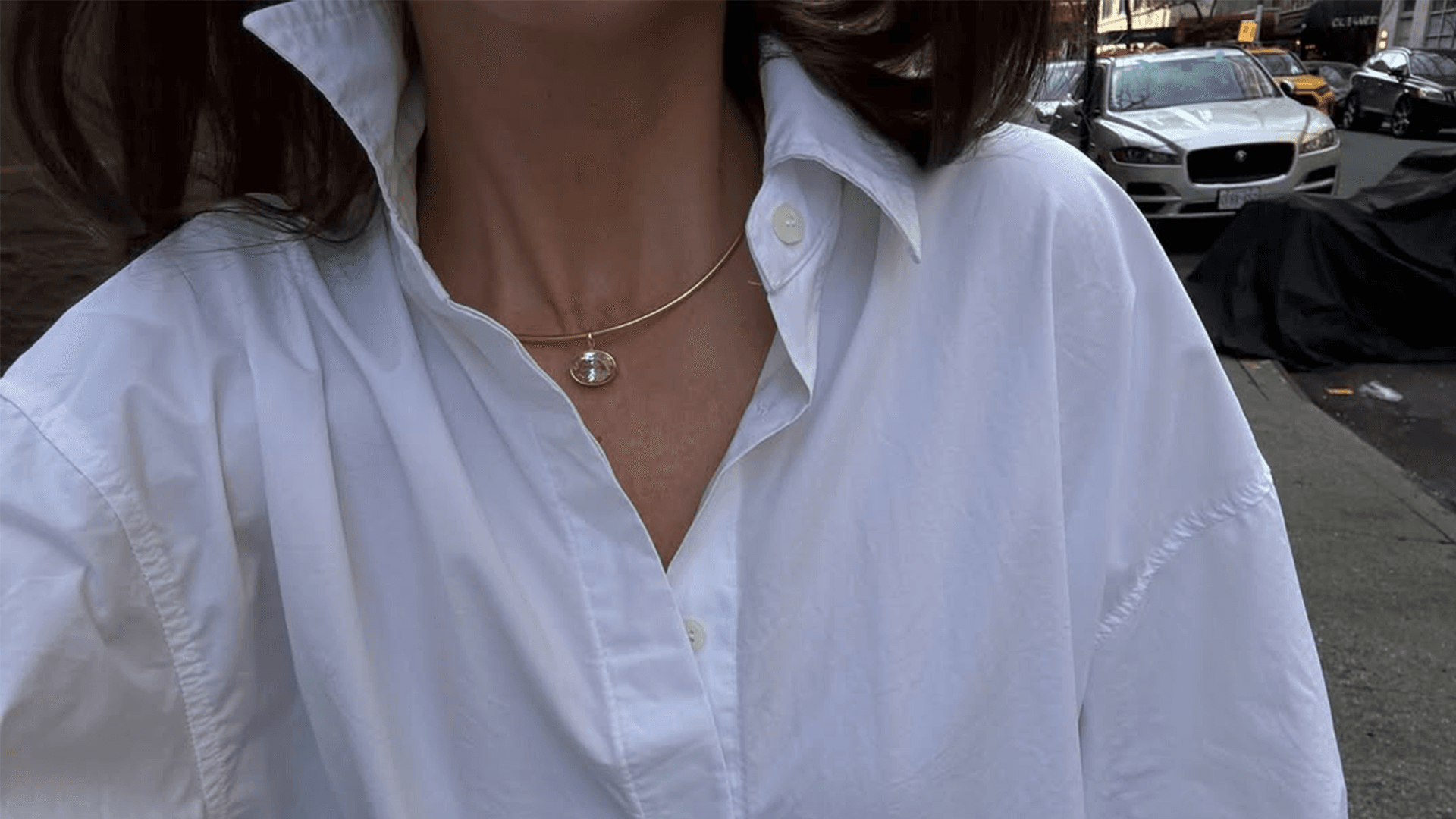
Why the collar necklace feels right now
A collar necklace changes the entire read of a neckline in a single move: instead of hanging quietly, it frames the throat with intent. That is exactly why the silhouette feels fresh against the flatness of everyday jewelry wardrobes, especially when paired with T-shirts, crisp button-downs, and simple dresses. Who What Wear describes collar necklaces as one of 2026’s most important jewelry silhouettes because they work from day to night, and that versatility is the point: they create shape without requiring a full occasion look.
The appeal is not simply that the pieces are bigger. Fashionista’s jewelry coverage says 2026 jewelry is becoming “sculptural, statement-making and personal,” a shift away from the polished minimalism that dominated for several years. As consumers look for pieces that feel collected, expressive, and unexpected, the collar necklace answers with a strong line at the base of the neck, a place where jewelry becomes part ornament, part architecture.
How the silhouette moved from quiet to assertive
WWD’s spring 2026 coverage shows how broad the turn has become. Necklaces, long treated as secondary to delicate rings and thin chains, have gone from “a whisper of a suggestion” to “bigger and bolder.” At Ralph Lauren, the look appeared in sculptural silver pendants; Tory Burch leaned into shell necklaces; Hermès showed gold coins. Sophie Buhai and Jennifer Behr have both seen a sharp uptick in interest in pendant-style necklaces, which suggests that the customer appetite is not for decoration alone, but for pieces with enough presence to alter proportion.
That appetite is also practical. Rising gold prices have nudged interest toward alternate materials, including wooden, ceramic, and glass beads, corded tassels, and weighty resins. The result is a market that feels less precious in a stiff, formal sense and more personal in a lived-in one. A collar necklace in this climate does not need to sparkle to feel expensive; it needs conviction in line, weight, and finish.
What makes a collar necklace feel modern instead of costume
The best collar necklaces for everyday wear hold tension between polish and ease. Jessica McCormack, Lié Studio, Jennifer Behr, and David Yurman all speak to different points on that spectrum, from statement versions to minimal interpretations that still have enough curve and surface to register from across a room. The pieces that feel most current in 2026 are rarely overloaded; they are clean at the edges, deliberate in scale, and specific about material.
- Choose a collar that sits close enough to the neck to read as a frame, not a choker.
- Favor sculptural metal, structured beads, or a single strong motif over fussy embellishment.
- Let the piece have one clear idea, whether that is a polished curve, a shell form, a coin-like disc, or a restrained line of texture.
- Wear it with clothing that gives it negative space, especially crewneck T-shirts, open button-downs, and plain dresses.
A useful rule of thumb:
That last point matters. Jennifer Behr has said long dramatic necklaces work especially well with monochromatic, minimal clothing because the outfit becomes a canvas. The same logic applies to collar necklaces: the flatter the base layer, the more authority the jewelry has. A white tee can suddenly look considered; a black knit dress can feel like a modern evening uniform; a sharply pressed shirt can gain just enough drama to register as styled, not accidental.
The historical weight behind a modern neckline
The collar necklace also feels fresh because it is not actually new. The Metropolitan Museum of Art notes that broad collar necklaces were among the most frequently worn jewelry forms by royalty and elites in ancient Egypt during the New Kingdom, which gives the shape a kind of inherited authority. The Met also points to torques, or neck rings, as important jewelry forms among the ancient Celts, worn by both men and women. Fashion History Timeline extends the story into sixteenth- and seventeenth-century Europe, where decorative standing collars and ruffs turned the neck into a stage.
That long lineage explains why the silhouette reads so naturally now. Jewelry that encircles the throat has always carried presence, but in 2026 it lands differently because it feels less formal and more graphic. The line around the neck is unmistakable; it turns the simplest outfit into something with structure.

Why buyers and runways are converging
Paris Fashion Week’s spring and summer 2026 presentations made the broader mood clear. Jewelry was defined by self-expression, chunky volumes, sinuous lines, geometric interplays, and modern takes on pearls. Buyers described the season as a reset centered on design, craftsmanship, and creativity, which helps explain why collar necklaces are moving from niche styling trick to central silhouette. They offer a visible point of view at a moment when the market is rewarding pieces that look designed, not merely finished.
That is also why the most compelling collars now avoid either extreme. Too little presence and the necklace disappears into the clothing. Too much embellishment and it tips into costume territory. The strongest examples are the ones that seem to belong to the body, not simply sit on top of it, giving the wearer the same kind of assurance a perfectly cut jacket does.
What to look for when choosing one
The collar necklace worth wearing often has three things in common: proportion, restraint, and material intelligence. Proportion means it sits where the eye wants to land, usually just above or at the collarbone. Restraint means there is a clear shape, even when the materials are bold. Material intelligence means the piece can take advantage of the current appetite for weight, texture, and irregularity without feeling overworked.
That is why the strongest collars today do not read as a costume borrowed from eveningwear. They have enough sculptural force to stand alone, but enough simplicity to live with denim, shirting, and dresses that were never meant to be dressed up. In that sense, the collar necklace is less a throwback than a correction: a reminder that jewelry can change the entire grammar of an outfit, one deliberate line at a time.
Know something we missed? Have a correction or additional information?
Submit a Tip
