Expert Tips for Cleaning Gold Jewellery Safely, Without Causing Damage
A thin film of sebum, cosmetics, and dust is almost always behind dull gold — not tarnish. Here's how to clean safely without causing damage.
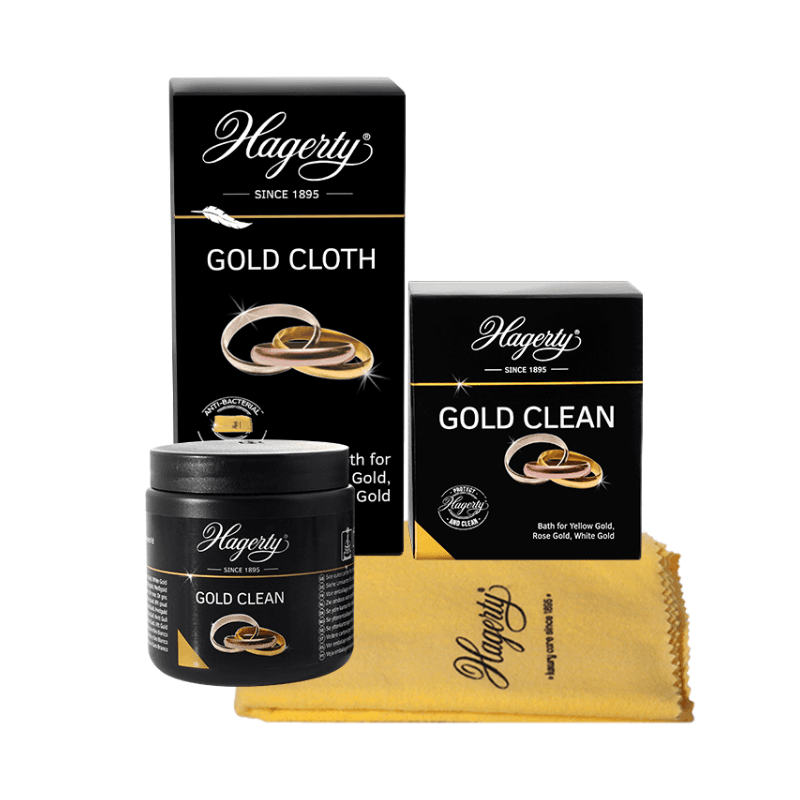
A thin film of sebum, cosmetics, and dust is almost always what stands between your gold jewellery and its original brilliance. People often assume something is chemically wrong with their piece, but the culprit is usually surface build-up and micro-scratches rather than any fundamental failure of the metal itself. Understanding exactly why gold behaves the way it does changes everything about how you clean it.
Can gold tarnish?
Contrary to popular belief, pure gold does not tarnish; it is the alloy metals mixed with it that can. Lower-karat gold, such as 10K and 14K, contains a higher percentage of metals like copper and silver, which can react with air, moisture, and chemicals over time, leading to tarnishing. The distinction matters because it determines both how urgently your piece needs attention and how aggressively you can approach cleaning it.
The simple chemistry behind it
Gold is a noble metal: like the other noble metals, gold resists corrosion from moisture as well as oxidation, which is one of the reasons it is used in jewellery. However, most pieces on the market are alloys by design. As Hagerty's evidence-based cleaning guide explains, "the metals added to the alloy, such as copper, silver or zinc, can oxidise, which may give the jewellery a dull appearance." Tarnish happens because alloy metals react with environmental elements through an electrochemical process; sulfur compounds in the air, especially hydrogen sulfide, can react with metals like copper inside a gold alloy.
Pure gold vs alloys: what it means for your jewellery box
24K gold is 100% pure gold, free from any alloyed metals; it has the most vibrant and intense golden colour, making it highly sought after for investment and decorative purposes. But that purity comes at a cost to wearability: pure gold's inherent softness creates significant challenges, particularly for pieces intended for daily wear; the malleability of pure gold means 24K gold jewellery scratches extremely easily, loses its shape under pressure, and requires constant maintenance to preserve its appearance.
This is why the vast majority of wearable gold sits at lower karat counts. 14K gold contains 58.3% pure gold mixed with 41.7% other metals, and this composition provides good durability for regular wear. 18K gold contains 75% pure gold mixed with 25% alloy metals, balancing purity and strength with higher gold content than 14K. The practical upshot: higher-karat gold, such as 18K and 24K, is much less likely to tarnish because it contains more pure gold and fewer reactive metals, but even an 18K piece can lose its lustre to everyday build-up.
The case of rhodium plating for white gold
White gold deserves its own section because it behaves quite differently from yellow or rose gold, and cleaning it incorrectly accelerates visible wear. As Hagerty's guide states: "White gold is coated with a thin layer of rhodium that gives it its bright finish. Over time, this layer wears away and the jewellery may appear slightly yellow. The solution is gentle cleaning and, if needed, re-plating by a professional." Rhodium plating covers the surface with an ultra-bright white material through an electro-plating process; the plating is only microns thick, and scratching and everyday wear will eventually wear through, allowing the original colour of the white gold alloy to show through. This means that for white gold, overly enthusiastic scrubbing does not help — it actively strips the finish you are trying to restore.
How to tell if a piece is solid gold before you clean it
Before introducing any cleaning method to a piece, it is essential to identify its nature. Treating gold-plated jewellery the same as solid gold is one of the most common mistakes people make, and one that removes the very surface you are trying to clean. Hagerty recommends four checks:
1. Test with a magnet. Gold is not magnetic.
If the jewellery is attracted to a magnet, it is probably not solid gold.
2. Check for skin reactions. Gold jewellery should not normally leave green or black marks on the skin.
If it does, this may indicate the presence of oxidising metals — a sign you may be dealing with a lower-quality alloy or plated piece.
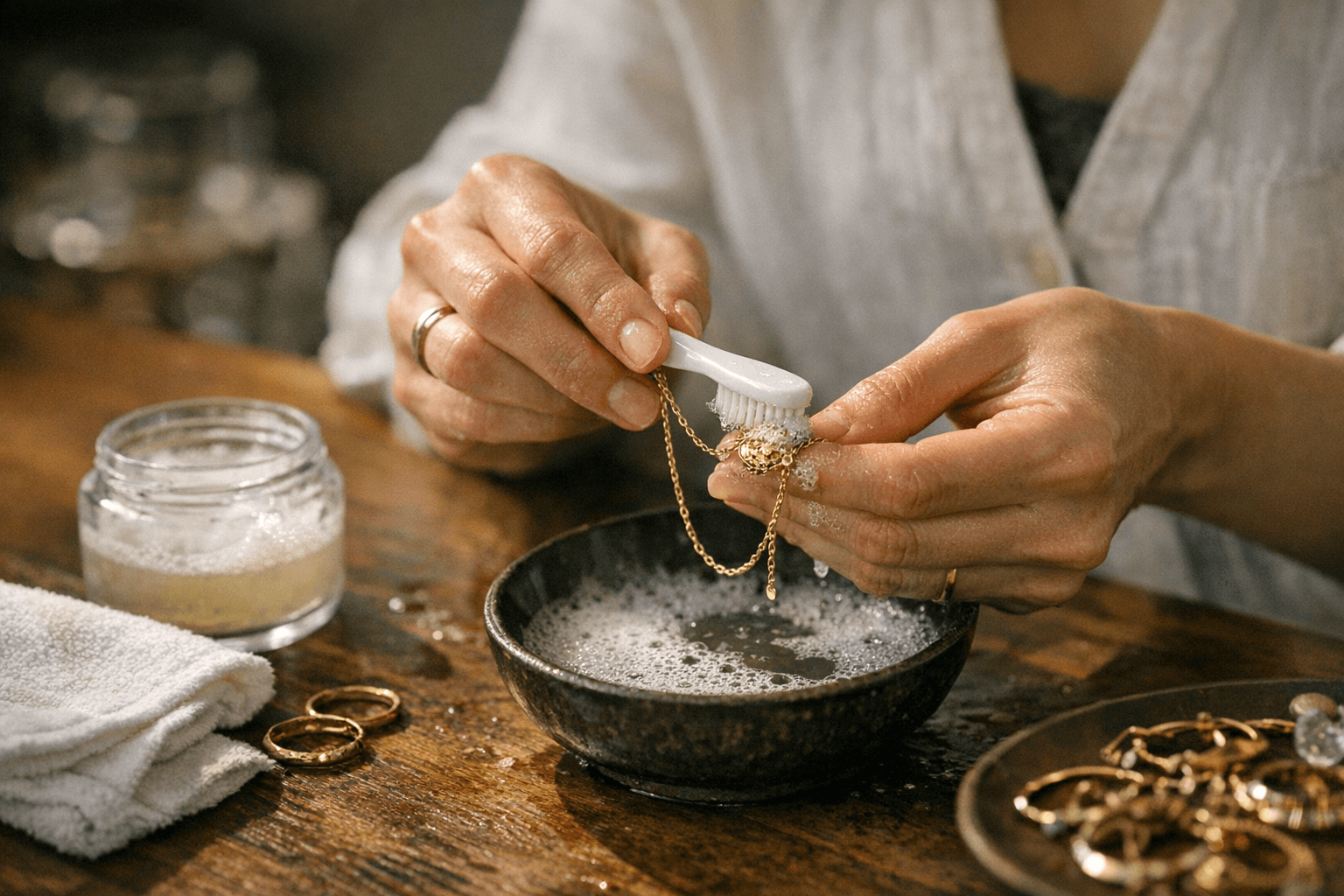
3. Use a polishing cloth. "If the colour fades during polishing, the item may be gold-plated rather than solid gold." A polishing cloth reveals this quickly and without damage.
4. Check the official hallmark. "On precious metals, the hallmark is an essential mark used to certify authenticity and indicate the gold content of the jewellery.
In the jewellery world, gold purity is expressed in carats, indicated by the letter k." Stamps like 14K or 18K are typically found on the inside of rings, the back clasps, or the backs of pendants and earrings.
These four tests are not bureaucratic formalities. They dictate everything that follows: how much pressure you apply, whether water is safe, and whether professional intervention is the wiser first step.
The cleaning philosophy: gentle, non-abrasive, deliberate
The governing principle behind safe gold cleaning is not complicated, but it demands discipline. Hagerty states it plainly: "Gentle, non-abrasive cleaning helps preserve its brilliance without damaging its surface." The objective is to clean gold jewellery effectively while avoiding scratches, material loss, or damage to gemstones — which means that aggressive methods not only fail to help, they create the very problem you are trying to solve.
Warm water, mild dish soap, and a soft toothbrush form the foundation for gentle cleaning; harsh chemicals like chlorine and abrasive products like toothpaste should be avoided, and pieces with delicate gemstones warrant consultation with a jeweller. The temperature of the water matters, too: using lukewarm water means you are not subjecting your jewellery to extreme changes in temperature, which could damage it.
Gemstone settings introduce additional complexity. If you are cleaning gold jewellery that contains a gem, do not submerge the piece under water; submerging stones may cause water to become trapped in the setting, leading to rust which could ultimately cause the gem to fall out. For pieces set with pearls, the concern is even greater: pearls are porous and can easily lose their lustre, so they should never be soaked in water.
Karat and cleaning frequency
Not all gold jewellery demands the same cleaning cadence. For 14K gold pieces, weekly cleaning with warm soapy water and a soft brush removes everyday build-up; the durability of 14K gold tolerates regular home cleaning without concern for damage. 18K gold benefits from gentler handling and more frequent professional attention; while home cleaning remains safe with proper technique, the softer nature of 18K gold requires careful inspection during cleaning to avoid applying excessive pressure to delicate areas.
There is a case to be made for removing gold jewellery before activities that accelerate build-up and micro-abrasion. Chlorine from the pool, hairspray, perfume, and certain soaps and detergents can cause serious damage to gold; removing gold jewellery before swimming or working with abrasive products is advisable. Putting on jewellery after applying perfume and lotion is a small habit change that meaningfully extends the interval between necessary cleanings.
When to hand it to a professional
Some situations simply exceed what home cleaning can address. If your white gold piece has yellowed despite regular gentle cleaning, that is the rhodium speaking — no amount of soap and water will restore a plating that has worn through. Professional re-plating is the correct intervention, not a harder scrub. The next level beyond home cleaning is machine cleaning; many jewellers have automatic equipment including ultrasonic, steam, or ionic cleaners to address pieces of all sizes and types, and they can advise whether these techniques are safe for your particular piece.
If you have gemstones, check that they are not loose before cleaning; loose stones could come free during the process, and any existing damage should prompt you to seek a jewellery professional rather than proceeding with home cleaning. The hallmark test and the polishing cloth test described above give you enough information to make that call confidently — and making it early, before a cleaning session goes wrong, is what separates informed care from accidental damage.
This article was produced by Prism’s automated news system from verified source data, official records, and press releases, then run through automated quality and moderation checks before publishing. The system is built and supervised by the people who set the standards it runs under. Read our full AI policy.
Did this article answer your question?