Global Diamond Industry Struggles as Trading Hubs Sit Empty
Surat's diamond bourse sits largely empty as lab-grown rivals, retreating Chinese buyers, and Trump tariffs drain liquidity from an $80 billion industry that may never fully recover.
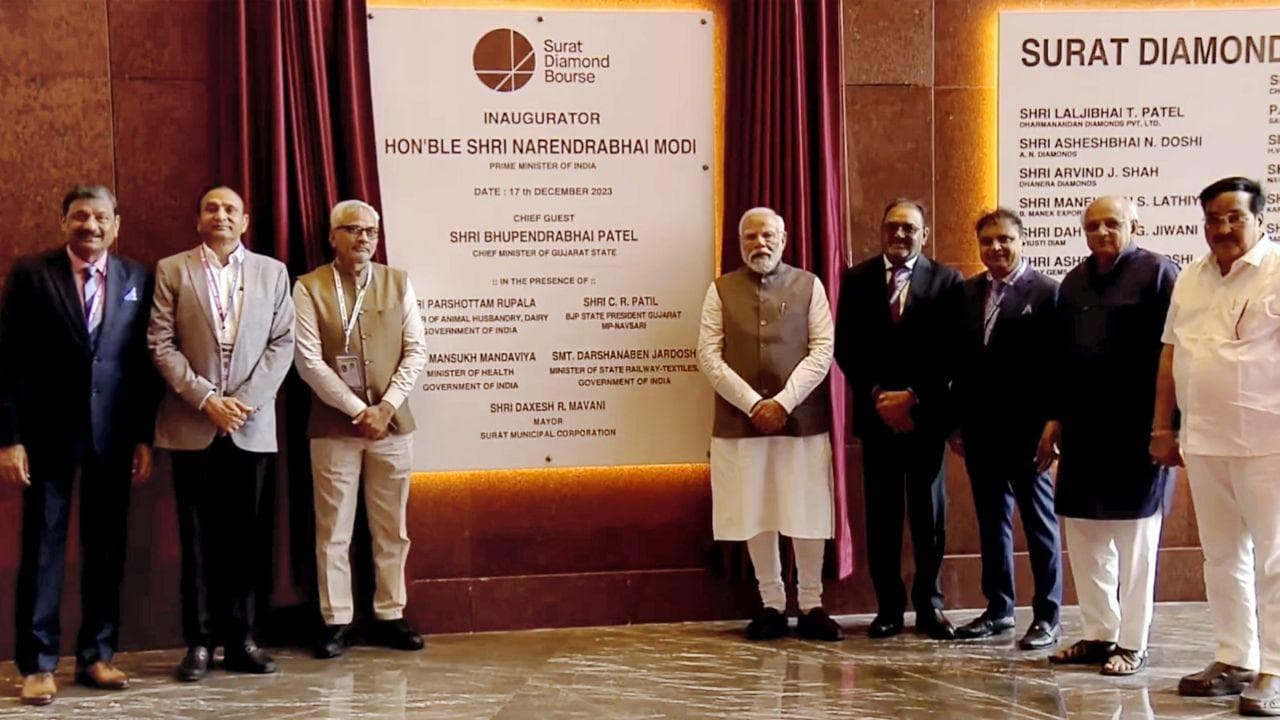
The trading floors of Surat's diamond bourse, once a nerve center of the global polished-diamond trade, have gone quiet. That silence is doing more than any market report to illustrate the pressure bearing down on an $80 billion industry.
Bloomberg News documented the structural stress converging on the polished-diamond trade, using Surat's underused bourse as its anchor image. The Indian city processes the vast majority of the world's rough diamonds, which makes its emptying halls an unusually clear signal. When Surat slows, the whole pipeline feels it.
The forces are neither new nor simple to unwind. Lab-grown diamonds have moved from novelty to genuine rival at speed, pulling buyers away from natural stones at price points the mined-diamond trade cannot easily match. Chinese demand, which drove a significant portion of global luxury jewelry sales through the previous decade, has retreated as that market cools. Trump-era tariffs and broader sanctions have added geopolitical friction to supply chains already under strain. And record gold prices have redirected some consumer and investor appetite away from diamonds entirely, toward an asset that has delivered visible returns.
Taken together, those pressures have drained liquidity from the traditional polished-diamond trade in ways that are proving difficult to absorb. "The forces battering natural gems, lab-grown rivals, retreating Chinese buyers, Trump tariffs, and record gold prices, may be too structural to reverse," Bloomberg's reporting concluded, a framing that will unsettle anyone who has built a business around natural stone.
For buyers considering a diamond purchase, the current moment raises questions worth sitting with. Lab-grown diamonds are chemically identical to mined stones and are now available at a fraction of the cost, which changes the calculus for anyone prioritizing size or sparkle on a fixed budget. Natural diamonds, by contrast, derive part of their appeal from scarcity and provenance, two qualities that only hold value if the supply chain behind them remains credible and traceable. Certifications from the Gemological Institute of America and the Responsible Jewellery Council matter more, not less, when an industry is under this kind of pressure.
The Surat bourse's empty floors are not just a trade story. They are an early indicator of where the natural diamond market may be heading, and the question of whether demand can be rebuilt, or whether the structural shift is simply too large to reverse, remains genuinely open.
This article was produced by Prism’s automated news system from verified source data, official records, and press releases, then run through automated quality and moderation checks before publishing. The system is built and supervised by the people who set the standards it runs under. Read our full AI policy.
Did this article answer your question?