Hancocks spotlights 1970s Illario bracelet with Bulgari links
Hancocks’ Illario bracelet distills the 1970s return to bold gold, lapis and turquoise into one wearable lesson in color and movement. Its Bulgari ties make the design feel newly relevant.
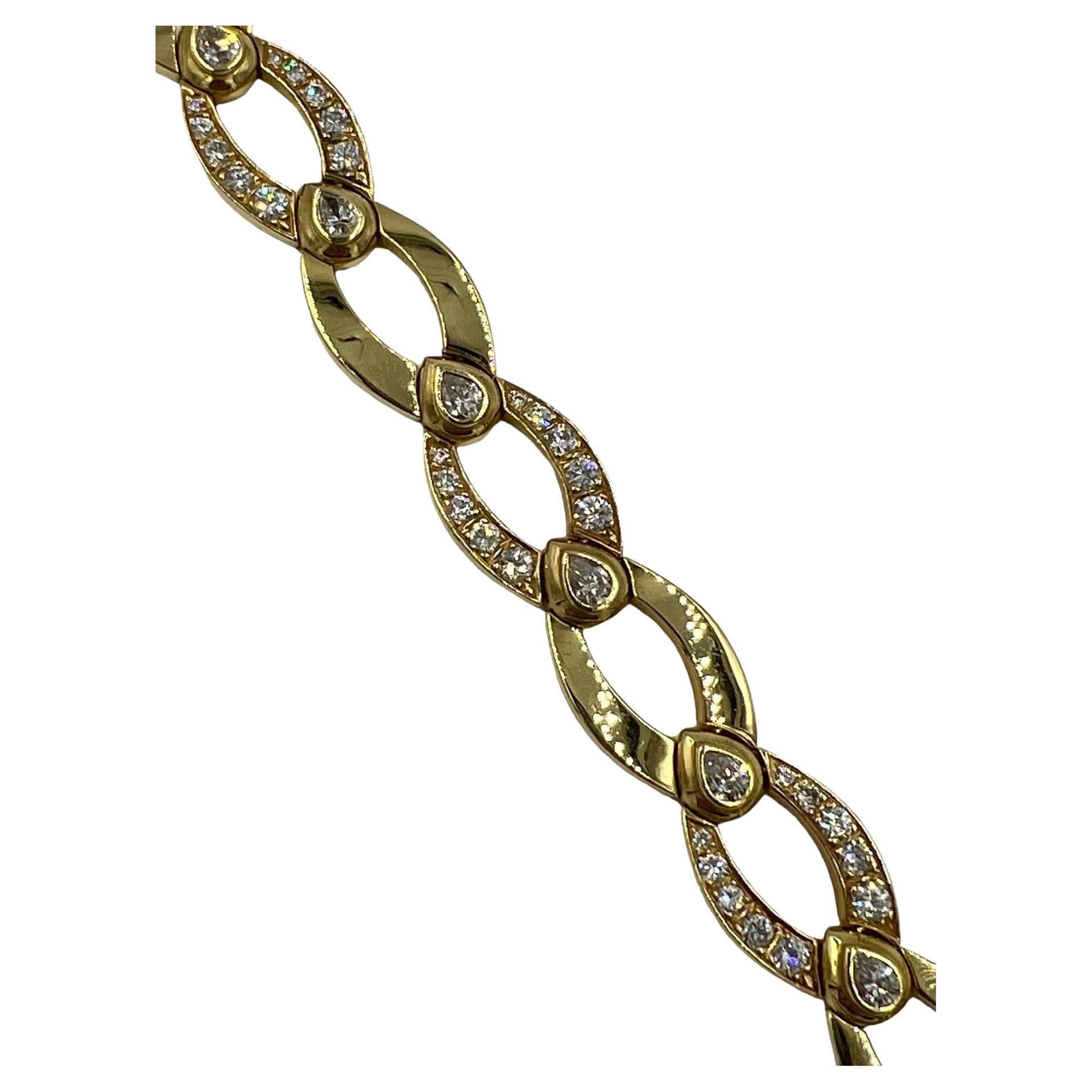
Hancocks London’s latest Jewel of the Month turns a 1970s bracelet into a clear argument for why some vintage gold still feels fresh on the wrist. The Illario piece pairs turquoise, lapis lazuli and diamond accents with an articulated 18k yellow-gold brick-link structure, so the drama lies as much in movement as in material. Its Bulgari connection gives it extra force, because this is the kind of workshop pedigree that shaped some of mid-century Italy’s most recognizable jewelry-watch language.
The 1970s look that keeps returning
What makes this bracelet feel so current is not nostalgia for its own sake, but the way it distills a 1970s jewelry formula that modern wardrobes still want: bold yellow gold, saturated hard stones and a shape that follows the body instead of resisting it. The brick-link construction gives the bracelet a graphic rhythm, while the turquoise and lapis lazuli read as deliberate slabs of color rather than ornamental afterthoughts. It is a reminder that statement jewelry does not have to be stiff to feel substantial.
That balance matters now, when everyday jewelry is often asked to do more than one job. A piece like this can sit with a crisp shirt cuff, sharpen a simple black dress, or add weight to denim without looking overworked. The appeal is not only that it is large, but that it has been engineered to move, which is what separates a jewel from a rigid ornament.
Why the Illario name matters
Illario was founded in 1920 by brothers Carlo, Vincenzo and Luigi Illario in Valenza Po, in Piedmont, a town long associated with Italian goldsmithing at its highest level. The firm built its reputation on technical precision, and that discipline drew the attention of major Italian houses. Hancocks says Illario worked with Bulgari from the 1950s through the 1970s, and the bracelet on display is one of the maker’s own signed jewels, not simply a commissioned house piece.
That distinction is important. When a workshop can create for Bulgari and still hold its own under its own name, you are looking at a maker with both range and authority. Guy Burton, Hancocks’ managing director, says vintage Illario jewels are “not always easy to find” and values them for “craftsmanship, design, and wearability.” Those three qualities are exactly what make this bracelet more than a handsome relic.
The Bulgari connection, and why it still resonates
Bulgari introduced Serpenti in 1948 as a jewelry-watch crafted with the Tubogas technique, a flexible construction that wrapped around the wrist with unusual ease. Later Serpenti versions in the 1950s and 1960s introduced gem-set eyes, enameled scales and watch heads that opened to reveal the movement, turning the bracelet watch into a piece of theatre as much as timekeeping. Bulgari’s own heritage materials also reference a Serpenti advertising campaign from 1970 to 1978, which helps explain why the decade’s visual codes still feel so bound to the house.
Illario’s role sits right inside that lineage. The workshop helped produce some of Bulgari’s most recognizable Serpenti watch bracelets, so the Hancocks bracelet belongs to a broader design history in which flexibility, sensuality and geometry were all part of the same idea. That is the deeper reason the piece matters to everyday jewelry now: it shows how a bracelet can be bold without being bulky, luxurious without looking precious, and sculptural without sacrificing comfort.
How to read the modern version
If you want the same feeling in contemporary jewelry, look for the following elements:
- An articulated structure that bends naturally with the wrist, rather than a rigid cuff profile.
- Yellow gold with clear geometry, especially links or segments that create a strong visual rhythm.
- Hard stones used as blocks of color, not as delicate accents, with turquoise, lapis, onyx or other opaque materials doing the heavy lifting.
- Diamond details that punctuate the design instead of overwhelming it, so the color still leads.
- A finish that feels engineered for movement, because the most convincing statement bracelets are the ones you forget you are wearing until they catch the light.
This is where vintage inspiration becomes useful rather than merely decorative. The best modern interpretations do not copy Serpenti or Illario literally; they borrow the logic of the design. They make color bolder, gold warmer and construction more flexible, then leave enough restraint for the piece to work in a real wardrobe.
What the price tells you
Hancocks has priced the bracelet at £27,500, about $37,000, and it is on display at 62 St James’s Street in London. At that level, you are paying for far more than metal weight. You are paying for a signed vintage jewel, rare materials, workshop pedigree and a design that still reads cleanly half a century later.
That is why the bracelet feels instructive rather than merely collectible. It captures a moment when Italian jewelry was willing to be architectural, colorful and sensuous all at once, and it translates easily into today’s taste for pieces that can live in daily rotation. The lesson is simple: when the gold is bold, the stones are vivid and the construction is intelligent, a bracelet can feel as modern as anything made yesterday.
This article was produced by Prism’s automated news system from verified source data, official records, and press releases, then run through automated quality and moderation checks before publishing. The system is built and supervised by the people who set the standards it runs under. Read our full AI policy.
Know something we missed? Have a correction or additional information?
Submit a Tip