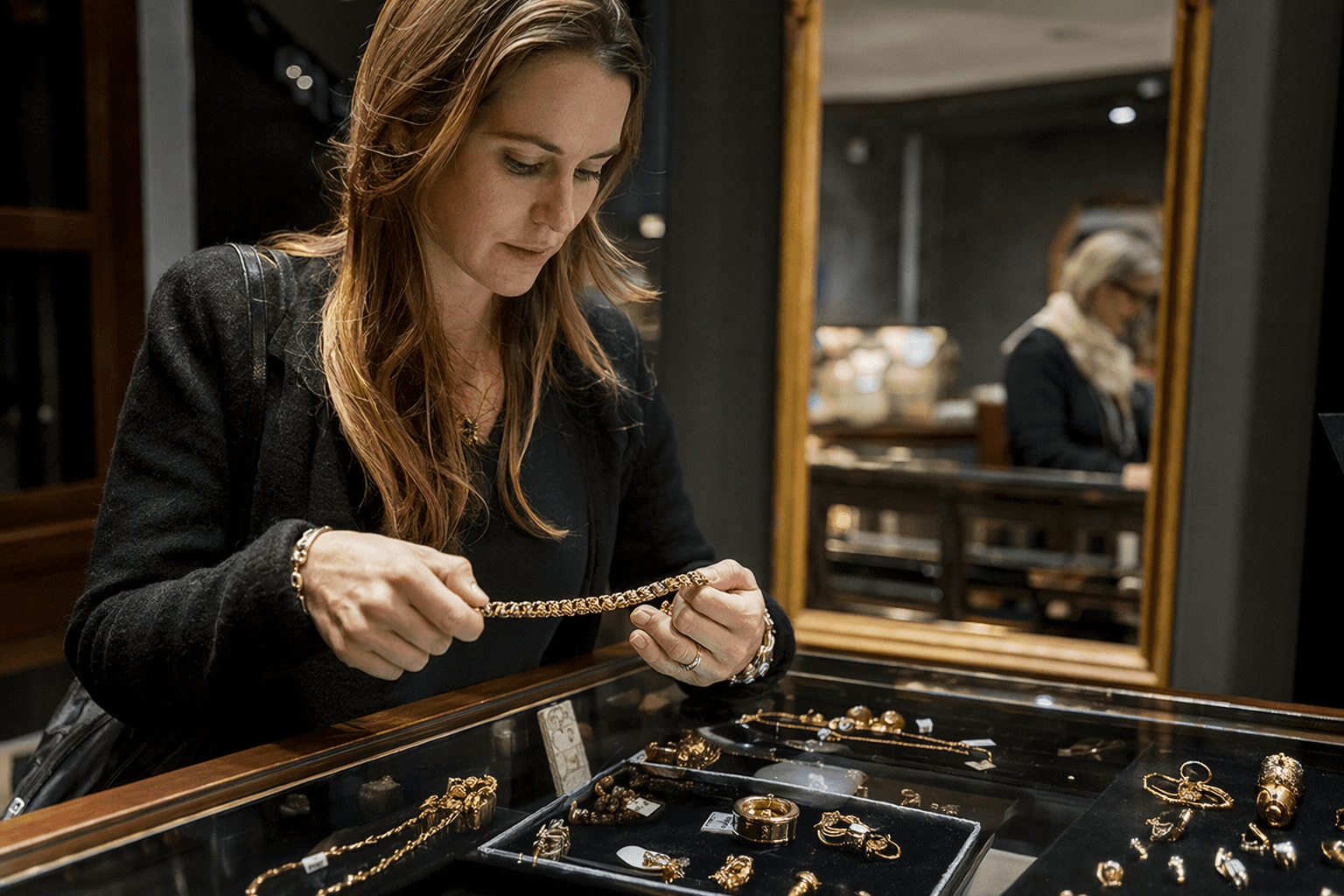
How families can divide heirloom jewelry without conflict
Heirloom jewelry breaks families when silence leaves room for assumptions. A clear inventory, written wishes, and early mediation can protect both the pieces and the people.

When the fight starts long before the will is read
The hardest inheritance battles rarely begin with a six-figure account. They begin with the little things that feel enormous in a family: the vintage malachite earrings, the pair of Murano sconces, the Chanel flats no one remembers who bought first, the ring a mother wore every day and the granddaughter assumed would be hers. Jewelry sits at the center of those disputes because it carries memory, identity, and status in one small object.
That is why heirloom jewelry needs a different kind of planning. The real flashpoint is often not the appraised value of the piece but the story attached to it, and the story almost never belongs to just one person. When families wait until grief is already raw, every decision starts to feel like a judgment on who mattered most.
Why the smallest belongings can cause the biggest wounds
The emotional logic of inheritance is not always the financial logic. The Allianz American Legacies Study found that fulfilling last wishes and distributing personal possessions are five times more likely to be the greatest source of family conflict during a legacy transfer than the distribution of finances. That gap explains why a bracelet or recipe book can spark more resentment than a bank account ever could.
The same research points to another pressure point: the “alpha child,” the family member elders turn to first. That pattern can seem practical in the moment, but it can also plant a lasting suspicion of favoritism. If one child is the default decision-maker, siblings may later read every choice about jewelry, keepsakes, and household objects as proof that the deck was stacked long before anyone gathered around the table.
Treat jewelry like property, not just memory
Sentiment does not remove a piece from an estate. Jewelry may be emotionally priceless to heirs, but it still has market value, and that value matters during estate administration. A diamond ring, a gold chain, or a set of pearl earrings should be handled with the same seriousness as any other property that must be divided cleanly and fairly.
The first practical step is a detailed inventory. Write down what exists, where it is stored, and any identifying details that matter, including metal type, gemstones, maker’s marks, and whether a piece appears to have retail or secondary-market value. For items with possible market value, get professional appraisals so there is no argument later about whether a piece is costume jewelry, fine jewelry, or something in between.
This matters even more because families often end up fighting over items with relatively low monetary value. A handwritten recipe book, a watch, a silver charm bracelet, or a pair of earrings may be worth very little on paper and feel irreplaceable in practice. Once the emotional meaning outweighs the dollars involved, families can spend far more fighting than the object would ever fetch.
Put wishes in writing while everyone can still talk
Unclear instructions are where private grief turns into public conflict. Without explicit directions, sentimental items can become probate disputes, and those disputes can spiral into legal battles, tax issues, and family discord that outlast the estate itself. A clear will, trust, or personal property memorandum gives heirs something concrete to follow when memory and emotion start competing.
A personal property memorandum can be especially useful for jewelry because it allows specific bequests without rewriting an entire estate plan every time a relationship changes. It also gives the owner a chance to be precise about the things that matter most, whether that means a wedding band for one child, a strand of pearls for a niece, or a brooch for the person who always admired it and never said so out loud.
The key is specificity. Vague promises create the very confusion families later regret.
- Identify each important piece as clearly as possible.
- Record who should receive it, and why, if the owner wants that reason preserved.
- Update the list when pieces are sold, gifted, or reset.
- Keep the document with the rest of the estate plan, not tucked away in a drawer no one can find.
Bring in a neutral third party before resentment hardens
When families are already tense, a neutral third party can stop a disagreement from becoming a permanent split. Emily Raxenberg, founder of Professional Mediation Solutions, works in exactly that space, where transparency and planning ahead matter as much as the objects themselves. Her approach is simple in theory and hard in practice: surface sentimental attachments early, involve heirs when appropriate, and make decisions before people start assuming the worst about one another.
That early conversation is especially important when an elder relies heavily on one child to manage practical matters. The “alpha child” may be trusted with logistics, but siblings need to know that trust is not the same as ownership. A mediator can help balance those expectations before the family starts dividing itself into camps.
The best time for that conversation is while the owner is still alive and able to explain intentions in plain language. Once the pieces are being sorted after a death, even a modest necklace can become a symbol of exclusion, favoritism, or old grievances that have nothing to do with jewelry at all.
The value that matters most is often the one that cannot be appraised
Jewelry is one of the few inheritances that can be emotionally priceless and financially modest at the same time. That is exactly why families need to handle it carefully. The diamonds, gold, and gemstones may carry a market price, but the deeper value is often relational: who wore it, who noticed it, who was promised it, and who believes they were forgotten.
Families that talk early, write clearly, and invite a neutral voice before the first argument usually preserve more than property. They preserve the relationship around the property. And in the end, that is the inheritance that cannot be replaced.
Know something we missed? Have a correction or additional information?
Submit a Tip