How Gemstone Hardness, Toughness and Settings Affect Everyday Wear
Hardness alone does not guarantee a gemstone will survive daily life: wearability depends on Mohs rating, toughness, cleavage, stability and the setting you choose.
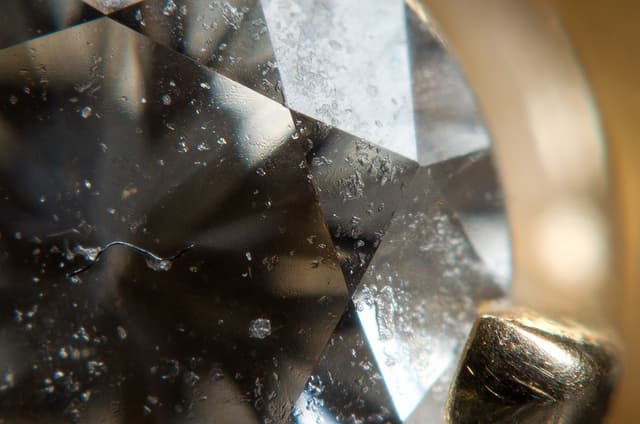
In the captivating world of fine jewelry, where beauty and value intertwine, few factors are as critically misunderstood as gemstone hardness. This is not a matter of aesthetics; it is a matter of physics." That framing sets the stage: hardness measures scratch resistance, but whether a gem lives on your hand is a broader question. "Hardness refers specifically to a gemstone's resistance to scratching, as measured on the Mohs scale. Wearability, however, is a broader term that considers several additional factors such as tenacity, cleavage, environmental sensitivities, and jewelry settings. A gem might be very hard but still unsuitable for everyday wear if it's brittle or prone to chipping." Those sentences define the problem you face when choosing everyday jewelry.
What the Mohs scale actually measures
The Mohs scale is a simple, comparative ladder from 1 to 10 that ranks minerals by scratch resistance: 1 is the softest, 10 is the hardest. Use the scale to understand one axis of durability: diamond, at 10, will not be scratched by any other natural mineral; sapphire and ruby sit at 9 and are excellent scratch-resistant choices. Jenvolkodav’s primer repeats this central point: "The Mohs scale is a widely used measure of a mineral's resistance to scratching. It ranges from 1 (being the softest and most vulnerable) to 10 (being the hardest and most durable)."
- Toughness, sometimes called tenacity, which is a gem's resistance to breaking or chipping.
- Cleavage, the tendency of a crystal to split along defined planes, which can make otherwise hard gems fragile.
- Stability, resistance to heat, light and chemicals, which affects long-term color and surface integrity.
Hardness, toughness, cleavage and stability: the four-way test
Hardness is only one property. The other attributes you must weigh are:
This distinction matters in practice: emeralds, for example, are relatively hard at about 7.5–8 but "can still fracture easily due to inclusions." Pearls sit at roughly 2.5–4.5: soft, yet prized for their luster and symbolism despite poor hardness.
Why dust and abrasion are decisive for everyday pieces
Practical jewelers use a blunt, persuasive image: "Everyday life is an assault course for a ring or bracelet. Dust is ubiquitous, and dust is primarily composed of quartz particles (hardness 7). Any gemstone with a hardness below 7 will inevitably become scratched and dulled over time simply from being wiped with a cloth or coming into contact with airborne dust. This abrasion gradually erodes the polish and facets, diminishing the gem's brilliance and clarity permanently." That is the technical rationale behind a common rule of thumb: keep frequently worn rings and bracelets at or above Mohs 7, and preferably at 8 or higher.
Practical thresholds and the Sosnagems wearability tiers
Practical guidance aligns across sources. One jeweler’s handbook recommends "For Rings & Everyday Bracelets (Recommended: Hardness 8+)." Sosnagems codifies this into an easy rubric:
"Tier 1 (Mohs 8–10): Diamond, Sapphire, Ruby, Spinel, Alexandrite, Topaz → perfect for engagement rings & investments.
Tier 2 (Mohs 7–7.5): Tourmaline, Garnet, Quartz, Morganite → durable daily jewelry, some collector value.
Tier 3 (Mohs 6–6.5): Tanzanite, Zircon, Kunzite → best for earrings & pendants.
Tier 4 (≤5.5): Opal, Pearl, Fluorite, Apatite → statement or collector’s gems; require protective settings."
Use this tiered logic to match the stone to the piece: engagement rings and everyday bracelets belong in Tier 1 where scratch resistance and market liquidity intersect; delicate pendants and occasional-wear statement rings are better homes for Tier 3 and 4 stones.
Gem-by-gem considerations you can use now
Diamond, Mohs 10, remains "the hardest natural substance" and the obvious choice where perpetual wear is required. Sapphire and ruby, Mohs 9, combine hardness with excellent toughness and are ideal for engagement rings. Alexandrite at about 8.5 and spinel at 8 join topaz at 8 in Tier 1, but topaz carries a caveat in the technical literature: it is "hard but cleavage fragile," meaning a sharp knock can split the crystal despite its surface hardness. Emeralds fall in the 7.5–8 range yet are often included and brittle, reinforcing that a numerical hardness is not a promise of indestructibility. Morganite and aquamarine at 7.5–8 are workhorse colored stones, wearable with appropriate protection. At the other end, tanzanite, zircon and kunzite between 6 and 6.5 require careful settings or limited wear because they are prone to chipping; kunzite also figures in stability notes as susceptible to fading with light exposure. Opal, pearl, fluorite and apatite at or below 5.5 are best seen as statement gems or collectors' pieces that "require protective settings."
Settings, protection and the real mechanics of longevity
When sources advise "protective settings" they mean design choices that reduce exposure to knocks, abrasion and chemical contact. For stones in Tier 3 and Tier 4, a low bezel or partial bezel that cups the gem can keep the crown and girdle from catching on surfaces; a smooth bezel also reduces contact with dust and detergents. For Tier 1 stones, prong settings are acceptable and allow more light, but remember the topaz cleavage warning: even hard stones can split if struck on a cleavage plane. Use settings to match the gem’s mechanical profile, not just its color or fashionability.
Stability: light, heat and chemicals you cannot ignore
Stability is the silent factor that can ruin a stone over months rather than minutes. Some gems "can fade in sunlight, for example Amethyst and Kunzite," and others are sensitive to sudden temperature changes or common chemicals such as acids and perfumes. Consider where you wear the piece: a ring exposed to kitchen acids, hand sanitizer and sunlight will demand both higher hardness and higher stability than a necklace stored under clothes for most of the day.
The investment lens
If part of the purchase calculus is capital preservation, Sosnagems offers a direct observation: "For investors, certified untreated gems are hard assets—tangible stores of value in uncertain times." Tier 1 stones, particularly diamonds, ruby and sapphire, are routinely singled out as both wear-ready and liquid in the marketplace. That does not replace careful provenance, certification and condition checks, but it explains why many buyers prioritize hard, stable stones when buying for both beauty and value.
Final prescription
As a rule, treat Mohs numbers as a starting point and settings as your main tool: prefer Mohs 8 and above for everyday rings and bracelets, use bezels or protective crowns for softer stones, and remember that "a gem might be very hard but still unsuitable for everyday wear if it's brittle or prone to chipping." Everyday jewelry survives on intention—match the stone, the setting and the life you lead, and the piece will reward you with years of wear rather than a quick trip to the polisher.
This article was produced by Prism’s automated news system from verified source data, official records, and press releases, then run through automated quality and moderation checks before publishing. The system is built and supervised by the people who set the standards it runs under. Read our full AI policy.
Did this article answer your question?