How to Clean and Care for Every Type of Jewelry You Own
Most jewelry doesn't lose its sparkle because it's old — it loses it because skin oils, lotion, and daily residue build up faster than you'd expect.

Jewelry sits close to your skin, which means it's exposed to oils, sweat, lotions, perfume, dust, and pollution every single day. Over time, those small exposures add up, dulling shine and weakening settings in ways that have nothing to do with age or quality. The good news: keeping your pieces brilliant doesn't require complicated routines or expensive tools. What it requires is knowing what each material actually needs — because a cleaning method that's perfect for a diamond ring can ruin an emerald.
Why daily habits matter more than occasional deep cleans
The most effective jewelry care happens before you even pick up a cleaning cloth. Bremer Jewelry's guidance is direct on this point: take off your jewelry before cleaning, swimming, exercising, or any task involving chemicals or physical impact. Chlorine and saltwater can weaken metals; household cleaners can damage gemstones. Neither threat is dramatic or immediate, but both are cumulative.
Equally important is the order in which you put things on. Oils, lotions, and skincare residue dull jewelry surfaces faster than almost anything else. Allowing skincare products to fully absorb before putting jewelry on is a small shift that pays off noticeably over months. And at the end of each day, a quick wipe with a lint-free cloth removes the oils and buildup that would otherwise bond to the surface overnight. As Bremer Jewelry notes, this step also gives you a chance to notice any emerging issues: a stone that looks slightly loose, a prong that catches the cloth.
Gold: durable, but not indestructible
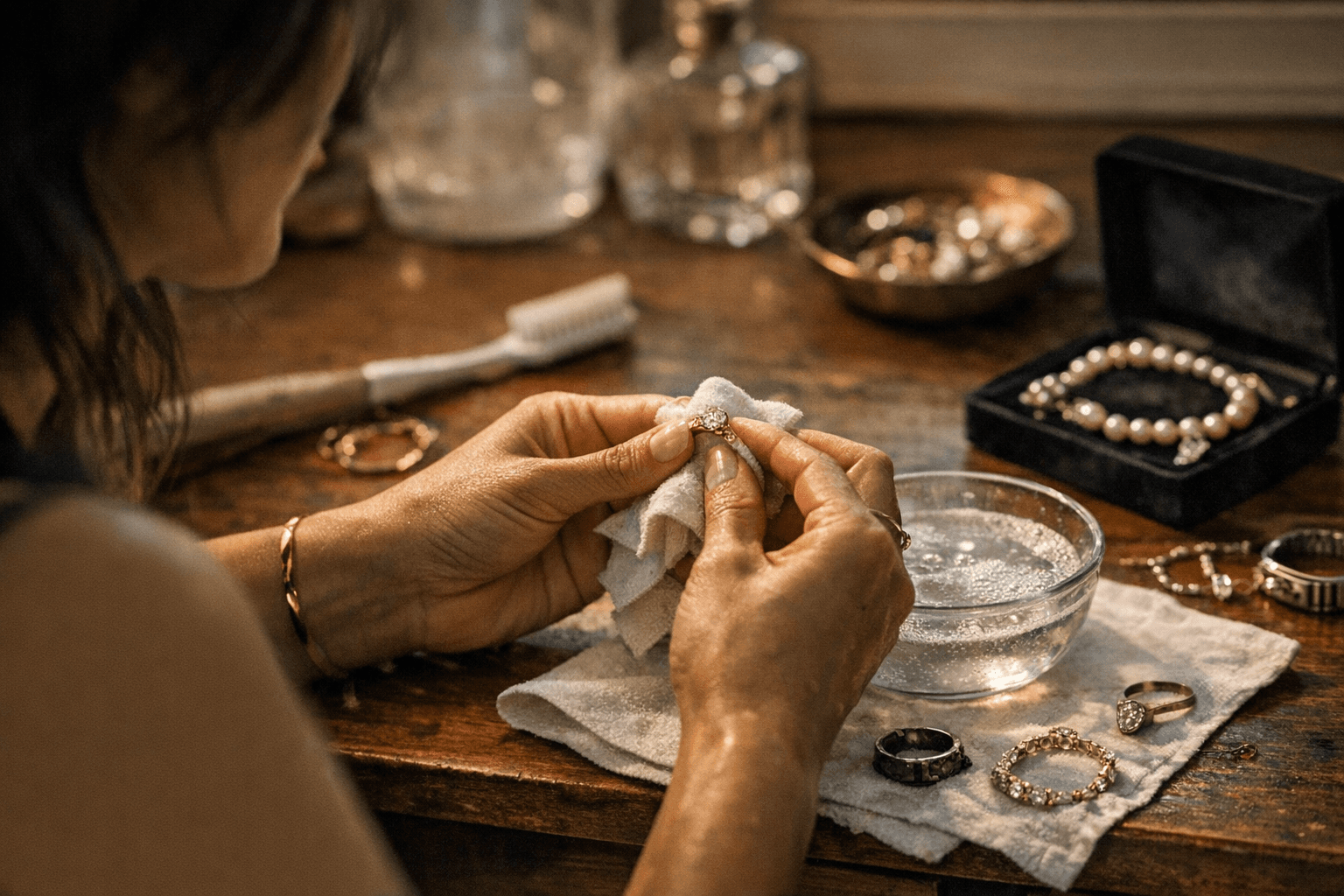
Gold, whether 14K, 18K, or 24K, is more resilient than most metals, but it's not impervious to damage from the wrong cleaning approach. Abrasive materials wear down the surface over time, which is why the standard recommendation across jewelers is consistent: warm water, mild dish soap, and a soft-bristled toothbrush. Gently scrub to remove dirt and oils, then rinse thoroughly and pat dry with a soft cloth to prevent water spots and dullness.
The critical caveat applies when gemstones are set in gold. Some stones are sensitive to water or soap, and softer or treated stones often require professional cleaning to prevent damage. Nelson Coleman Jewelers puts it plainly: when in doubt, consult a jeweler to ensure both the gold and gemstones are cleaned safely.
White gold: the rhodium question
White gold has one maintenance consideration that yellow gold doesn't: rhodium plating. The bright white finish on most white gold jewelry comes from a thin rhodium coating that wears down over time with daily contact. When that coating thins, the piece can take on a slightly yellowish cast. Rhodium re-plating is a professional service, not something done at home, and the frequency depends on how often the piece is worn and where on the body. If you notice your white gold losing its cool brightness, that's the signal to bring it in.
Sterling silver: the tiered approach to tarnish
Silver tarnishes. That's not a flaw; it's chemistry. But the right response to tarnish depends on how heavy it is, and treating light tarnish with a heavy-handed product can scratch a surface that only needed a gentle buff.
For light tarnish, a silver polishing cloth is all you need. For a more thorough clean without heavy tarnish present, a mild soap solution with warm water works well. When tarnish has built up significantly, a silver-specific cleaner is appropriate, but follow the manufacturer's instructions precisely. Throughout all of this, avoid abrasive materials that can scratch the surface. And if gemstones are present in the piece, research their care needs separately or consult a jeweler before proceeding.
Nelson Coleman Jewelers recommends professional cleaning every six months for silver jewelry specifically. Jewelers use specialized methods to restore luster and inspect for loose stones or structural wear, catching problems that at-home cleaning won't reveal.
Platinum: gentle cleaning and the patina question
Platinum is exceptionally durable, but it develops a patina over time as the metal surface is gently displaced rather than worn away. Some owners appreciate this soft, matte character; others prefer the original bright finish. Gentle polishing can restore that brightness. For routine cleaning, a gentle cleaner designed for jewelry, followed by a thorough rinse and a dry with a soft cloth, prevents water spots and keeps the metal looking its best. If you want to remove established patina, that's a job best handled by a professional jeweler with the right buffing tools.
Gemstone care: the rules change by stone
This is where the most consequential differences lie, and where well-intentioned cleaning can cause real damage.
Diamonds are among the most forgiving stones to clean. Warm water and mild soap, with a soft toothbrush worked gently around prongs and settings to reach hidden buildup, is the standard approach. Sapphires and rubies respond well to exactly the same method.
Emeralds are a different matter entirely. They should be wiped with a damp cloth only. Emeralds are commonly treated with oils or resins to improve clarity, and immersing them in soapy water or scrubbing them can strip those treatments and damage the stone's appearance permanently. This distinction, between stones that tolerate water-based cleaning and those that don't, is one of the most important things to understand before cleaning any piece with a colored gemstone.
As a general rule: if you don't know whether a stone is treated or how it was treated, consult a jeweler before cleaning it at home.
Restoring lost sparkle
Sometimes a piece looks dull even after cleaning, not because it's dirty but because microscopic residue has bonded to the surface or because the finish has lost its polish. Restoring shine comes down to removing that residue and polishing gently. A microfiber or jewelry polishing cloth works without stripping finishes. The consistent advice from jewelers is patience and light pressure: if you've ever assumed that aggressive scrubbing would solve the problem faster, it won't. It will scratch.
When to bring it to a professional
Even with consistent at-home care, professional attention matters. Nelson Coleman Jewelers offers complimentary basic cleanings and inspections every six months, a cadence that's become a benchmark in the industry. Those visits serve two purposes: restoring luster through specialized cleaning methods, and catching structural issues, loose stones, worn prongs, weakened settings, before they become costly repairs.
The tools for a good at-home routine are modest: a microfiber or polishing cloth, a soft-bristled toothbrush, mild dish soap, a silver polishing cloth, and a silver-specific cleaner for heavier tarnish. What makes the difference is using each one correctly, knowing which stone or metal you're dealing with, and building the habit of a quick wipe and a careful look every day. A piece that's worn often and cared for consistently will outlast one that's stored carefully but cleaned wrong.
This article was produced by Prism’s automated news system from verified source data, official records, and press releases, then run through automated quality and moderation checks before publishing. The system is built and supervised by the people who set the standards it runs under. Read our full AI policy.
Did this article answer your question?