How to Repair and Care for Your Everyday Jewelry
A 15-minute soak and a soft-bristled toothbrush can restore a diamond's sparkle — here's how to protect every piece you wear daily.
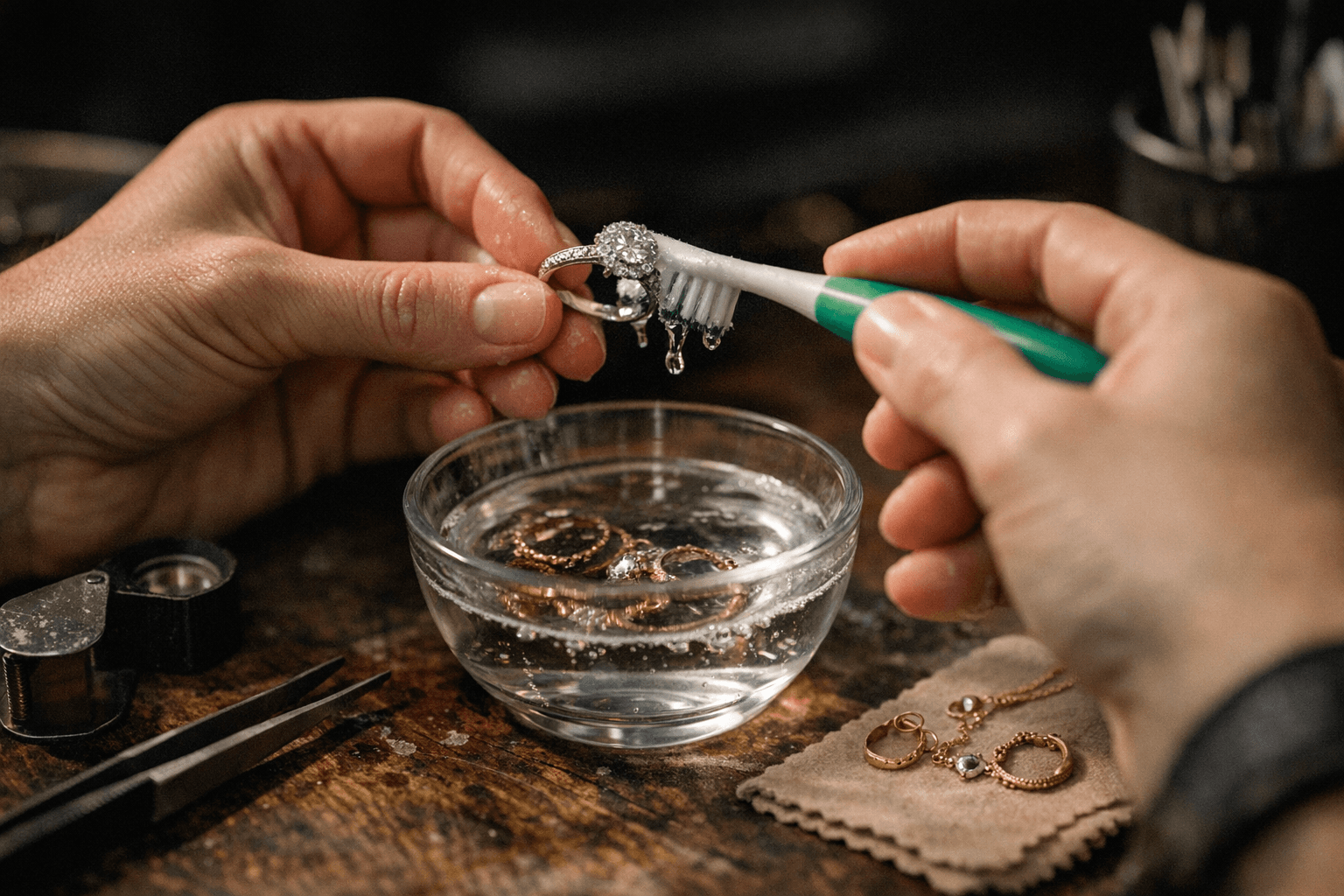
The jewelry you reach for every morning takes a quiet beating. Chemicals from hand soap, the impact of a door frame, the slow accumulation of perspiration against a prong setting — these are the everyday forces that Jewelers of America, the industry's foremost consumer resource on jewelry repair and care, identifies as the most common culprits behind wear and damage. None of them are dramatic. That's precisely why they're so easy to underestimate.
The good news is that protecting your pieces doesn't require a jeweler's bench in your kitchen. "Proper care is essential for keeping your jewelry both beautiful and safe," as Nelson Coleman Jewelers puts it, and "maintaining most jewelry requires just a bit of mindful attention." The framework is simple: clean regularly, store thoughtfully, wear carefully, and know when to hand a piece to a professional.
Why Regular Cleaning Matters More Than You Think
Dirt, body oils, and sweat don't just sit on the surface of your jewelry. Over time, they work into settings, dull stone surfaces, and degrade metal components at a molecular level. Regular cleaning prevents this kind of slow deterioration. The practical consequence of skipping it isn't just a ring that looks a little cloudy — it's a prong that weakens unnoticed until a stone is already gone.
The frequency and method of cleaning depend on the material, and this is where vague advice fails most jewelry owners. Not everything responds well to soap and water, and not everything needs the same approach.
Material-by-Material Cleaning Guide
For pieces with a case and crystal, the gentlest option is a soft, damp cloth. When grime has built up more stubbornly, a mild soap solution applied with a soft brush will handle the job without risk of scratching. Metal bracelets can take slightly more vigorous treatment: scrub them with soapy water and dry thoroughly with a lint-free cloth to prevent water spots or residue. Leather straps require a different kind of care entirely — wipe them dry rather than soaking them, and condition them occasionally to keep the leather from cracking or stiffening over time.
The category that demands the most attention, and the most caution, is delicate materials and specialty coatings. Rhodium-plated pieces, enamel work, PVD-coated metals, and similar finishes can be irreversibly damaged by the wrong cleaning agent. The explicit guidance from Nelson Coleman Jewelers on this point is unambiguous: consult a professional to avoid accidental damage. There is no shame in not knowing which finishes are vulnerable — the finishes themselves rarely come with warning labels.
Cleaning Diamonds: A Step-by-Step Process
Diamonds accumulate oil and dirt faster than most people realize, particularly on the underside of the setting where lotions and soaps collect and harden. This buildup doesn't diminish the stone itself, but it creates a layer that blocks light from entering the facets, which is what gives a diamond its brilliance. Cleaning it away is straightforward:
1. Soak the piece in warm water with a small amount of mild dish soap for 15 to 20 minutes. This loosens the accumulated grime without any mechanical force.
2. Using a soft-bristled toothbrush, gently scrub the stone, paying particular attention to the edges of the setting and the underside, where deposits concentrate most heavily.
3. Rinse the piece thoroughly under clean water to remove all soap residue.
4. Pat dry with a lint-free cloth. Avoid rubbing, which can leave micro-abrasions on metal surfaces.
One tool worth addressing separately is the ultrasonic cleaner. These devices use high-frequency sound waves to dislodge debris and are genuinely effective — but they carry a critical condition. They should only be used on untreated stones, and even then, ideally with professional guidance. Treated stones, which include a significant portion of the colored gemstones on the market (heat treatment, fracture filling, surface coating), can be damaged or stripped of their treatment by ultrasonic vibration. If you're unsure whether your stone has been treated, the safest assumption is that it has been.
What to Avoid
Across both materials and methods, two categories of products appear on every no-go list: harsh chemicals and abrasives. This means bleach, ammonia-based cleaners, acetone, and most commercial household cleaning sprays are off the table for any jewelry. Abrasive cloths, scouring pads, or toothpaste — despite the persistent myth that toothpaste cleans jewelry effectively — can scratch metal surfaces and damage stone girdles. The instruction from Nelson Coleman Jewelers is stated plainly: "Always avoid harsh chemicals or abrasives."
Daily Habits That Extend a Piece's Life
Beyond cleaning, the way you wear and store jewelry has a significant effect on how it ages. Three habits cover most of the risk: wearing carefully, storing properly, and cleaning occasionally at home. In practice, this means removing rings before handling cleaning products or working with your hands, keeping pieces in separate compartments or soft pouches to prevent them from scratching each other, and not leaving jewelry in places where it's exposed to temperature extremes or direct sunlight for extended periods.
Jewelers of America's consumer guidance reinforces the importance of regular setting inspections as part of this routine. Prongs wear down, bezels loosen, and pavé stones shift, often in ways that aren't visible to the naked eye without close examination. Building a habit of checking your most-worn pieces, particularly rings with raised prong settings, helps catch these changes before a stone is at risk.
When to See a Professional
Semiannual professional cleanings are the single most underutilized tool in jewelry maintenance. Nelson Coleman Jewelers offers complimentary basic cleanings and inspections every six months, with a specific and practical goal: "These quick services can catch potential issues, such as loose stones or worn prongs, before they require costly repairs." The logic is the same as a dental checkup. The cleaning itself is valuable, but the inspection is the real return on the visit.
For pieces with delicate materials, coatings, or significant sentimental or monetary value, this professional oversight is not optional — it's the responsible baseline. A jeweler can spot a hairline fracture in a prong, a stone that has shifted in its seat, or a clasp that is one snag away from failure. Catching any of these early is almost always less expensive than addressing them after the fact.
"Simple habits like careful wearing, proper storage, and occasional at-home cleaning can go a long way toward preserving your treasured pieces." That framing from Nelson Coleman Jewelers is accurate, and it's worth internalizing not as a minimum standard but as a genuine practice. The pieces you wear every day deserve the same considered attention you give to what you choose to put on — because the difference between a ring that lasts a lifetime and one that loses a stone on a Tuesday morning often comes down to a 20-minute soak and one professional visit per year.
This article was produced by Prism’s automated news system from verified source data, official records, and press releases, then run through automated quality and moderation checks before publishing. The system is built and supervised by the people who set the standards it runs under. Read our full AI policy.
Did this article answer your question?