JCK Agenda Highlights Vintage Shopping, Smart Collecting, and Everyday Wearability
JCK's March trade calendar puts vintage collecting and everyday wearability front and center, with OMBAS and a smart-collecting education session shaping what retailers stock next.
Picture a rose-cut diamond ring, mid-century in origin and Georgian in spirit, slipped onto a finger on a Tuesday morning and worn straight through to dinner. That kind of living-with-it collecting is precisely what the JCK weekly agenda was mapping when it flagged the Original Miami Beach Antique Show and a consumer-focused collecting session as the week's most significant events. What retailers and buyers absorb at these trade-level gatherings has a direct shelf-life consequence: the pieces discovered at OMBAS and the acquisition vocabulary sharpened in education sessions shape what lands in display cases within the next four to eight weeks.
The Original Miami Beach Antique Show: Scale, Scope, and Sourcing Power
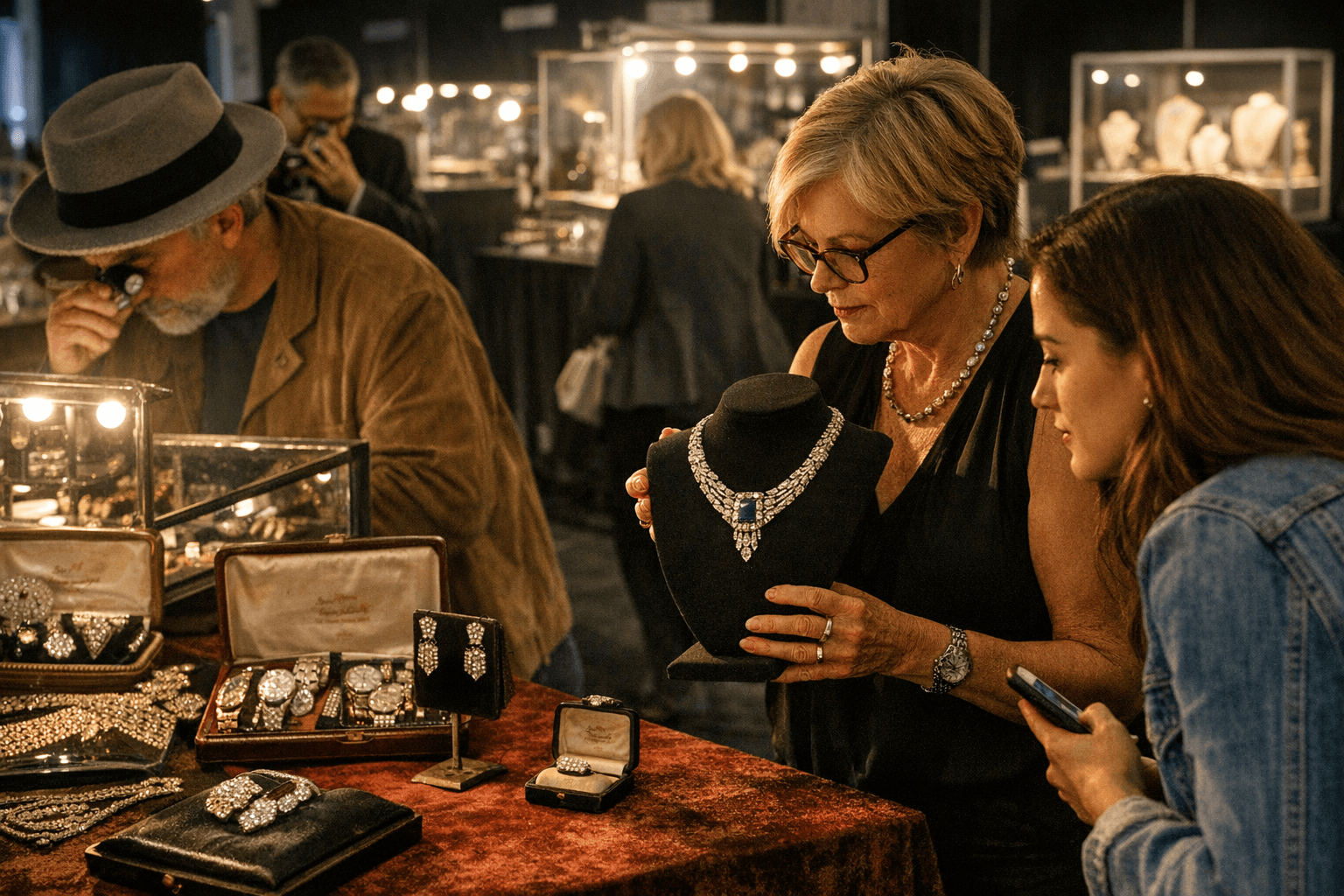
Running March 26 through 30 at the Miami Beach Convention Center, the Original Miami Beach Antique Show is one of the most concentrated sources of wearable vintage and estate jewelry anywhere in the spring calendar. With nearly 600 dealers from approximately 30 countries, OMBAS operates at a scale that few antique events can match. The show floor spans jewelry from the Georgian through Retro eras, including signed pieces from houses such as Tiffany & Co., Cartier, Van Cleef & Arpels, and Boucheron, alongside pre-owned timepieces and accessories from Rolex, Patek Philippe, and Hermès.
"We are delighted to present long-time and new attendees alike with a vast selection of unique, one-of-a-kind pieces that cannot be sourced anywhere else," said Andrea Canady, show manager for U.S. Antique Shows. That exclusivity is a meaningful retail proposition. In a market where consumers increasingly seek pieces with provenance and personality, vintage inventory operates by different rules: once a retailer's find sells, it cannot be reordered.
Admission tickets cover the full five-day run, which matters for serious buyers who need more than one pass through the floor to assess condition, negotiate, and commit. Advance tickets were available online at $30 per person through March 25; onsite tickets run $50. Jewelry and watch trade members were eligible for complimentary access with proof of required credentials, a signal that OMBAS positions itself as seriously as a wholesale buying event as a consumer fair.
Reading the Floor: Education Sessions That Sharpen the Eye
The show's programming calendar is where OMBAS earns a reputation that extends well beyond its buying floor, and the 2026 schedule is among the most practically calibrated in recent memory.
On Friday at 1 p.m., the session "Is it Authentic?" instructs attendees on reading jewelry hallmarks as a first line of authentication. Hallmarks, the tiny stamped marks indicating metal content, assay office, and maker, are the fastest way to date a piece and verify its materials. Knowing the difference between a British lion passant and a French owl mark can be the difference between a smart buy and an expensive mistake. For retailers who source vintage regularly, this kind of literacy is foundational.
Pop-up education sessions focusing on topics such as watch collecting, the history of jewelry, and how to weave antique pieces into contemporary spaces are led by experts in their fields. On Saturday, March 28, at 3 p.m., the panel "The New Vintage Timepiece Frontier," moderated by Tony Traina and joined by Tania Edwards, Morgan Cardet, and Mike Nouveau, examines how trends, social media, and market shifts are reshaping vintage watch collecting and value discovery. This is not theoretical: the panel maps where collector demand is actually moving, which is intelligence that translates directly to buying decisions.
The Sunday, March 29 "Tales from the Trade: An OMBAS Tell All" panel, featuring dealers Laurie Geller of Geller & Co., Kurt Rothner, and Frank Kravitz, promises candid stories from the trade, including trend forecasts, bidding wars, and unusual real-world experiences on the show floor. These sessions are unusually valuable for retailers because trend intelligence in the vintage space doesn't come from runway analysis. It comes from dealers who've watched collector appetites shift over decades, and who know whether demand for Art Nouveau enamel is softening or whether mid-century Italian coral is in sudden demand.
On Saturday, March 28, from 11 a.m. to 5 p.m., Bonhams expert appraisers offer one complimentary verbal valuation per ticket holder on a first-come, first-served basis in the Ocean Drive Ballroom. For anyone who has ever wondered whether the brooch found at an estate sale has genuine market value, this is a rare direct line to auction-house expertise without a consignment conversation attached.
"The Art of Collecting": Everyday Wearability as a Curatorial Skill
The JCK agenda spotlighted "The Art of Collecting: How to Shop Smart and Style Your Life to Elevate the Everyday," a session aimed at translating collecting instincts into practical daily-wear decisions. The word "everyday" is doing significant work in that title. The session isn't oriented toward building an archive of pieces too precious to touch; it's about selecting jewelry that integrates into actual life, from morning to evening, without anxiety about damage or mismatch.
That philosophy carries direct inventory implications. Retailers who internalize it return from education sessions with a different eye for what to stock: less emphasis on occasion-only statement pieces and more attention to wearable scale, durable settings, and versatile metal choices. A bezel-set Art Deco ring, for instance, offers the provenance collectors want alongside the stone-protection that makes daily wear practical. A fine-gauge chain with a period pendant layers cleanly with contemporary pieces without looking costumed. These are the practical outcomes of a session framed around elevation of the everyday.
WJA Foundation: The Pipeline Behind the Craft
The JCK agenda also directed readers toward scholarship and professional-development opportunities through the WJA Foundation, the philanthropic arm of the Women's Jewelry Association. The organization's student scholarships award up to $7,000 across multiple female or female-identifying recipients currently enrolled in jewelry, metalsmithing, or watch programs. Member grants, open to professional-level WJA members in good standing with at least one year of membership, cover educational costs incurred throughout 2026, excluding raw production materials.
These aren't simply feel-good industry signals. The pipeline of trained jewelers, setters, and watch specialists that WJA Foundation supports is directly relevant to the quality and craft available to consumers. A shortage of skilled bench jewelers affects repair wait times, custom-order feasibility, and the standard of finished goods at every price point. Scholarships in this space are, in practical terms, an investment in the craftsmanship chain from bench to counter.
What to Ask Your Jeweler: A Smart Collector's Script
If your local jeweler attends trade events or sources vintage inventory, the conversations happening right now at events like OMBAS will shape what arrives in their cases over the next several weeks. A few questions worth raising:
- "Are you sourcing any estate or vintage pieces from the current show season?" Dealers who attend OMBAS often return with Georgian, Victorian, Art Nouveau, and Art Deco pieces that won't surface in the case for another two to four weeks.
- "Can you show me the hallmarks on this piece?" Any retailer paying attention to authentication education knows this question is coming. If they can't read the marks, that tells you something too.
- "What era does this setting style come from?" Vintage-informed retailers will know the difference between an Edwardian milgrain bezel and a Retro-era wide-band mounting. The answer tells you whether they've done their homework.
- "Is this stone original to the setting?" In estate jewelry, replaced stones are common. Knowing whether a diamond is period-correct to its mounting affects both value and wearability.
Trend Watchlist: What to Look for in Upcoming Retail
Based on what the OMBAS floor and the collecting education session signal, watch for these shifts in jewelry retail over the next four to twelve weeks:
- Victorian and Edwardian everyday pieces: Delicate rose-cut diamond rings and enamel lockets sourced from shows like OMBAS will surface in estate-focused boutiques and vintage-forward retailers in mid-April.
- Wearable scale over statement scale: The "everyday" framing in collecting sessions signals retailers curating toward pieces that, in terms of size and weight, can be worn continuously rather than reserved for occasion.
- Bezel and closed-back settings in vintage inventory: These protect stones in daily wear and will be favored over open-claw Victorian settings for retailers positioning vintage as livable rather than fragile.
- Signed vintage from major houses: Exhibitors include renowned dealers specializing in antique and signed jewelry, with Art Nouveau, Art Deco, and mid-century creations from houses such as Tiffany & Co., Cartier, Van Cleef & Arpels, and Boucheron creating strong downstream demand for pieces with house attribution and documentation.
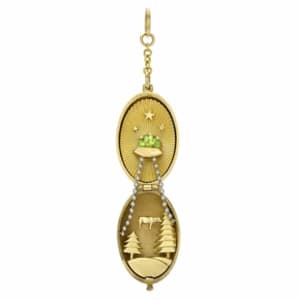
- Layering-ready pendants and chains: Period pendants on contemporary-gauge fine chains are appearing as a crossover format satisfying both vintage collectors and everyday-wear buyers simultaneously.
The trade calendar, read carefully, is always a forward-looking document. What retailers study and source in late March arrives in cases by mid-April, and the intelligence absorbed in education sessions shapes how they describe and contextualize those pieces to customers. The collecting conversation happening right now in Miami Beach has a longer shelf life than the show's five-day run.
This article was produced by Prism’s automated news system from verified source data, official records, and press releases, then run through automated quality and moderation checks before publishing. The system is built and supervised by the people who set the standards it runs under. Read our full AI policy.
Did this article answer your question?