Lab-Grown Diamonds Reshape Jewelry Market Amid Shifting Consumer Values
Lab-grown diamonds are reshaping jewelry buying, driven by tech advances and post-pandemic economics, per a new BriteCo report.
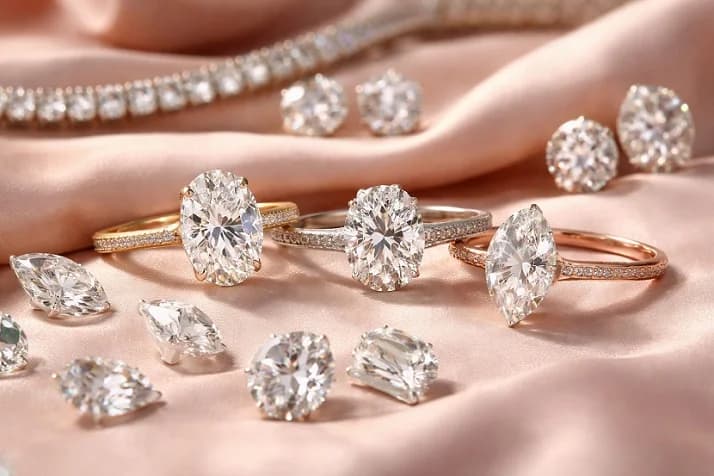
The ring on your finger may have never touched the earth. That shift, once fringe, is now central to how jewelry is bought, sold, and insured, according to a report released this week by BriteCo, one of the jewelry industry's leading specialty insurers.
BriteCo's analysis identified three interlocking forces behind the accelerating adoption of lab-grown diamonds: technological progress in diamond synthesis, changing consumer attitudes toward provenance and value, and the economic recalibration that followed the pandemic. Together, these pressures have moved lab-grown stones from a niche alternative into a mainstream market force.
The timing of the report matters. Post-pandemic inflation reshaped discretionary spending across luxury categories, and fine jewelry was no exception. Buyers who might once have stretched for a mined stone found lab-grown diamonds offered comparable optical and chemical properties at a fraction of the price. A lab-grown diamond is chemically identical to a mined one, composed of the same carbon crystal structure, graded by the same 4Cs framework used by gemologists worldwide.
What the BriteCo report underscores, though, is that price alone does not explain the shift. Consumer attitudes have moved in parallel. Younger buyers in particular have grown skeptical of the mined diamond supply chain, raising questions about traceability and the reliability of conflict-free certifications. Lab-grown stones sidestep some of those concerns by design, though it is worth noting that the energy intensity of the growth process, which typically uses either Chemical Vapor Deposition or High Pressure High Temperature methods, carries its own environmental footprint depending on the power source involved.

For the industry, the implications run deeper than consumer preference. Insurers like BriteCo are now actively tracking lab-grown diamonds as a distinct and growing segment of the jewelry market, which signals that these stones have crossed a threshold: they are no longer a curiosity but a category requiring their own valuation frameworks and coverage policies. Appraisal standards for lab-grown stones differ from mined diamonds because resale values have followed a different trajectory, generally declining faster as production scales up.
The broader question the BriteCo report raises is whether lab-grown diamonds represent a permanent restructuring of the market or a cycle tied to current economic conditions. As synthesis technology continues to improve and production costs fall further, the distinction between "affordable alternative" and "preferred choice" may increasingly collapse for a generation of buyers who never attached the same symbolic weight to geological origin that previous generations did.
This article was produced by Prism’s automated news system from verified source data, official records, and press releases, then run through automated quality and moderation checks before publishing. The system is built and supervised by the people who set the standards it runs under. Read our full AI policy.
Did this article answer your question?