Laopu Gold boom drives rivals’ mall expansion across China
Laopu Gold turned heritage-style 24K gold into a mall craze, and rivals are racing into the same shopping centers. For buyers, the giveaway is weight, purity, and craft.
The Laopu effect is now a mall strategy
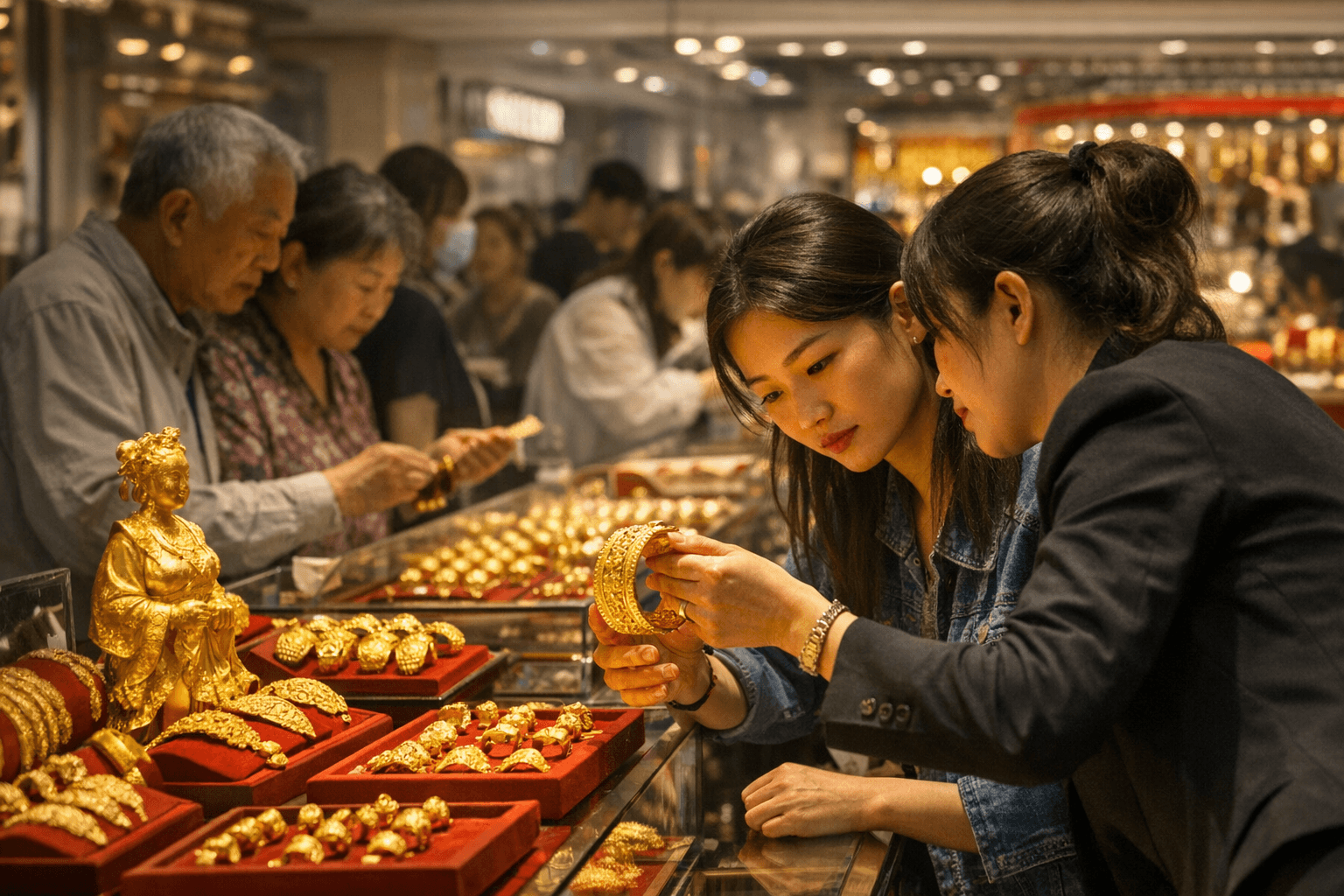
Walk into a luxury mall in China and the new gold fight is hard to miss. Jemper, Lamchiu, Baowangfu, Linchao, and the Kering-backed Borland are all opening stores to catch the same shopper Laopu Gold attracted first, and at least 19 of the 32 mainland malls where Laopu operates now host competing brands.
That rush says more than “gold is hot.” It shows that 24K-inspired, heritage-look jewelry has moved from a niche cultural preference into a luxury format with real selling power. Laopu’s breakout has made the category feel less like a seasonal trend and more like a permanent fixture in premium retail, where brands now need a physical presence just to be taken seriously.
Why Laopu became the reference point
Laopu’s scale explains why rivals are crowding the same corridors. Annual sales approached 10 billion yuan in 2024, up from 3.18 billion yuan the year before, and average store revenue was nearly 300 million yuan, far above the roughly 100 million to 200 million yuan a year that most international jewelry brands in China typically generate.
The company has also acted like a luxury house, not a mass-market gold chain. Its share price surged ten-fold after its Hong Kong IPO in June 2024, and it has raised prices twice as gold climbed. Many popular pieces sit in the 10,000 yuan to 50,000 yuan range, which puts the brand squarely in the same conversation as Tiffany and Cartier rather than in the realm of commodity bullion jewelry.
What the look actually is
The appeal is not just that the pieces are gold. It is how they look and feel: fuller silhouettes, strong yellow color, cultural motifs, and a finish that reads as heirloom rather than disposable fashion. Think sculpted bangles, medallions, lock motifs, floral relief, and traditional forms that feel rooted in Chinese visual language rather than in Western minimalism.
Xu Gaoming started his first gold jewelry business in 2009 and launched Laopu Gold in 2016, and that timeline matters. The brand did not win by copying the usual luxury playbook. It built a premium position by making cultural identity part of the value proposition, turning gold into a status object that feels both modern and deeply local.
For shoppers, this is the key distinction: heritage-look gold is usually about solid metal presence, visible weight, and a high-purity yellow tone. That is very different from a trendier plated piece, which only carries a thin surface layer of gold color over another base metal. A plated bracelet can scratch, fade, or wear through; a solid gold piece carries its value in the material itself.
Why rivals are flooding the same malls
The timing is not accidental. Gold jewelry sales in China fell 24.69% to 532.02 tons in 2024, so the category is not broad-based and healthy across the board. Instead, the gains are concentrated in a few brands that have learned how to package gold as aspiration, identity, and luxury.
That is why the challengers are leaning so hard on store openings. Linchao, for example, predates Laopu Gold by three years, while Baowangfu has trained intangible cultural heritage artisans since 2018. Those claims matter because they help brands defend their own version of authenticity, which is now part of the selling point as much as the karat weight.
Borland is the most interesting outsider in the group. It raised more than RMB 100 million in a December 2025 Series A round with Kering Ventures, Shunwei Capital, and Challenjers Venture Capital participating, and it now runs three boutiques in China, including in Hangzhou and Shenzhen’s top-tier luxury malls. Some of its pieces are priced above RMB 120,000 online, which shows how quickly the category is moving from “pretty gold” to high-ticket luxury.
What this means for styles and prices you will actually see
Expect more heritage-coded designs, more mall-based launches, and more gold pieces priced like luxury accessories rather than simple gifting items. The winner’s playbook is clear: use cultural symbolism, keep the construction substantial, and position the piece as something you wear, inherit, and talk about.
That also means shoppers should shop with a sharper eye. The visual language may look similar across brands, but the materials and construction can be very different.
What to check before buying into the craze
- Ask what the metal actually is: solid gold, hollow gold, or gold-plated over another base metal.
- Check the purity stamp and the weight, because a heavy feel is part of what you are paying for in this category.
- Compare the price to the metal content, not just to the design. A sculpted heritage piece can justify a premium, but the premium should be explainable.
- Look closely at the finish. A good piece should show clean edges, secure clasps, and careful soldering, not just a shiny surface.
- If a brand leans on artisan or heritage language, ask what that means in practice: which parts are handmade, which are machine-finished, and how the design connects to a real craft tradition.
- If you are buying plated jewelry for style, treat it as a fashion purchase, not a value-preserving one.
Laopu’s rise has changed the way gold is sold in China, but the bigger shift is cultural: buyers are now rewarding jewelry that feels rooted, substantial, and unmistakably golden. The mall boom is less a fad than a signal that heritage style, when paired with hard material value, can command luxury pricing for a long time to come.
This article was produced by Prism’s automated news system from verified source data, official records, and press releases, then run through automated quality and moderation checks before publishing. The system is built and supervised by the people who set the standards it runs under. Read our full AI policy.
Did this article answer your question?