Meaning-driven jewelry rises, with layering, mixed metals, custom rings
Jewelry is turning quieter and more personal, with mixed metals, layered pieces, and custom rings replacing matched sets and status signals.
A ring is no longer just a status marker. For many buyers, it is becoming a daily signature, and one survey found that 65% now see engagement rings as financial pressure rather than pure romance. That pressure is helping push jewelry away from polished sameness and toward pieces that feel chosen, layered, and deeply personal.
The new jewelry mood
The clearest shift is emotional: jewelry is moving from display to story. Over the past decade, consumers have increasingly gravitated toward pieces that say something about identity rather than simply signaling wealth, and Bella Neyman of NYC Jewelry Week says designers are now openly calling themselves “storytellers” as they build meaning into their work. The look that once leaned on minimalism, thin chains, small studs, and barely-there rings in the mid-2010s has matured into something more expressive, with layers, contrast, and custom details taking the lead.
You can see that change everywhere. It shows up in social media posts, street style, and on red-carpet and purple-carpet moments, where the strongest jewelry choices rarely look overworked. The pieces that stand out now are often the ones that appear collected over time, not bought as a matched set in one transaction.
Layering that looks intentional
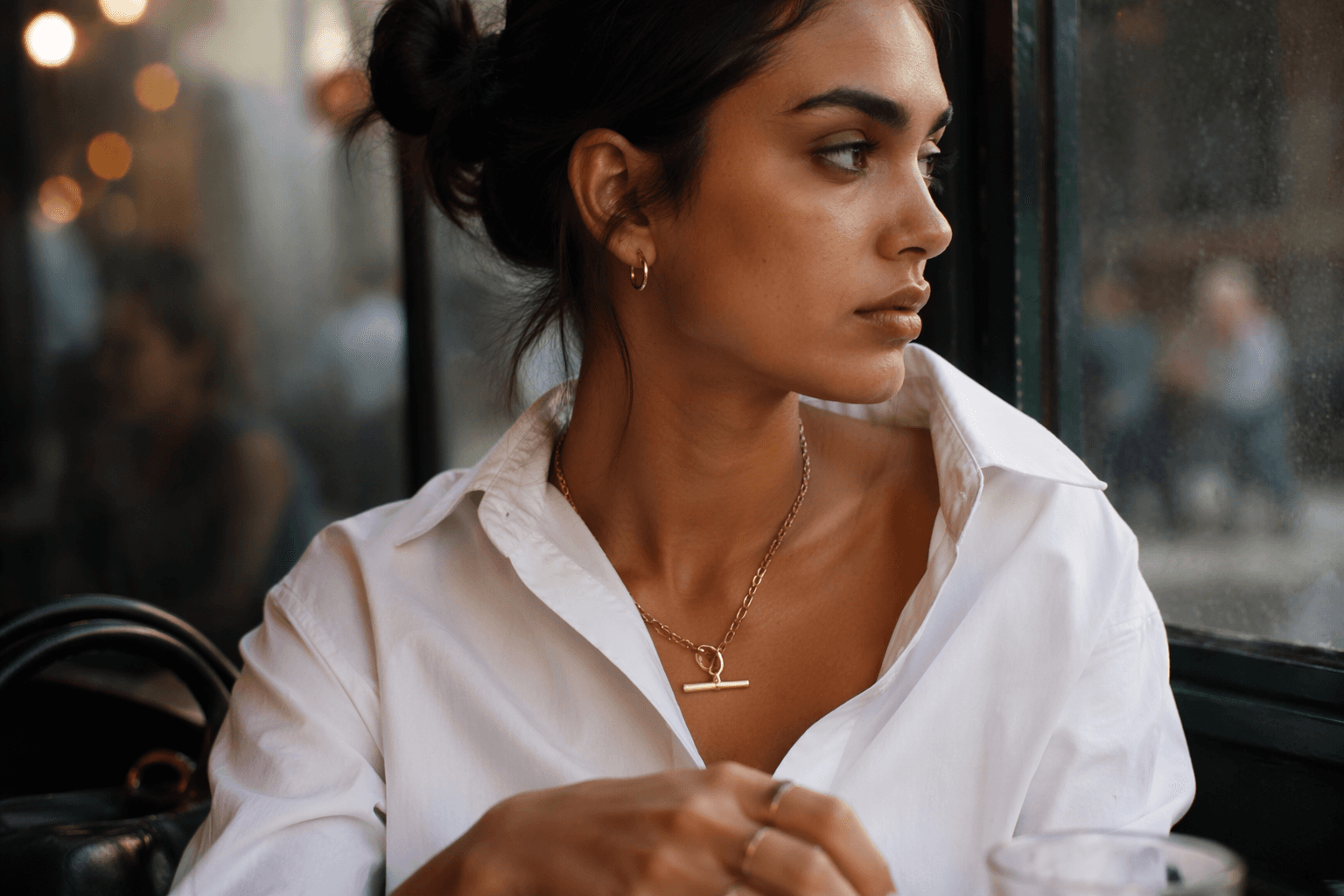
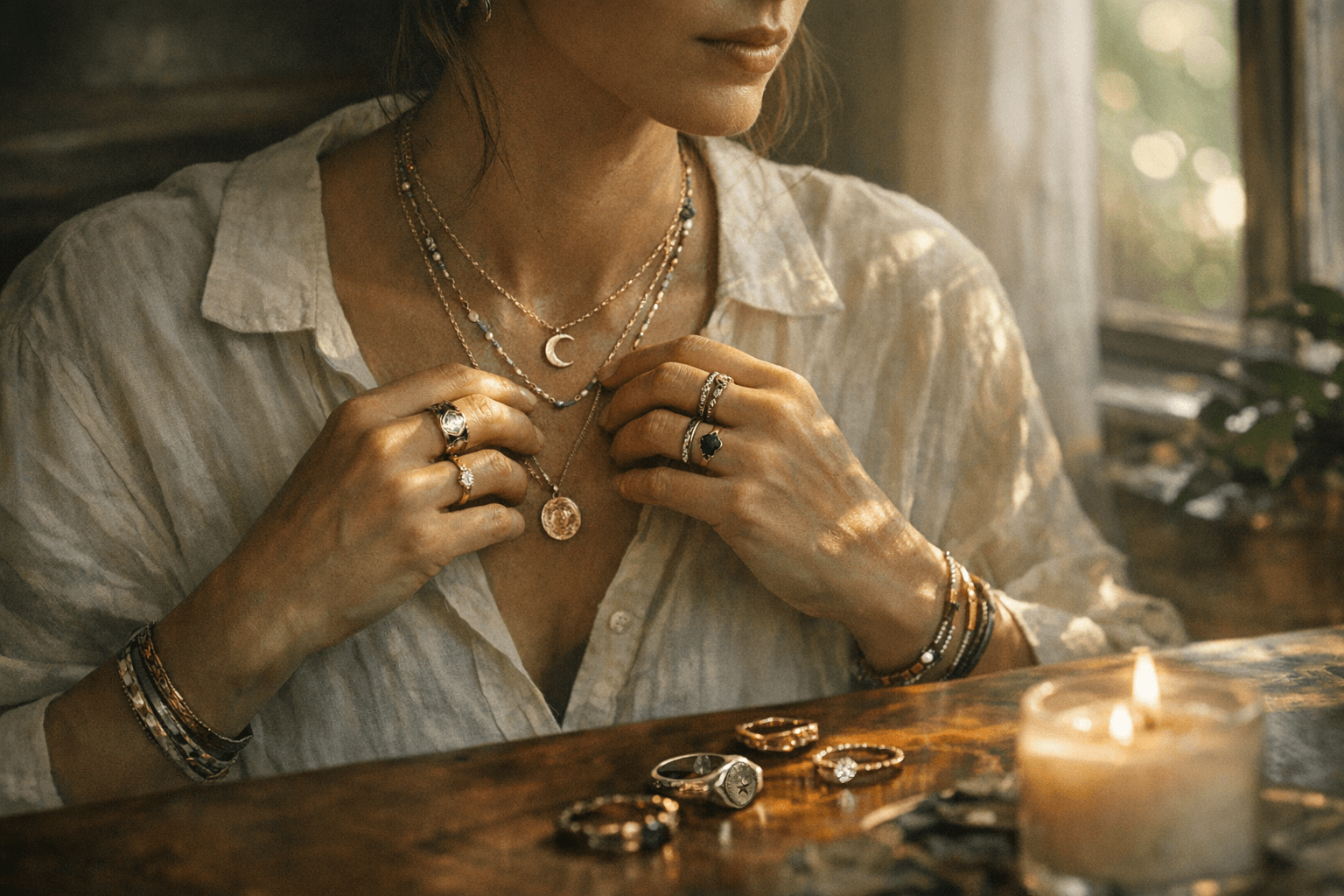
The easiest way to wear the shift is to stop thinking in terms of perfect symmetry. Layering works best when each piece has a role: one chain anchors the look, one shorter piece adds brightness near the face, and one ring or pendant carries the strongest personal note. Rather than wearing jewelry that all belongs to the same set, the newer approach is to let pieces differ slightly in scale, finish, and meaning.
That is what gives the look its quiet confidence. A delicate chain worn with a more substantial link, or a small stud paired with a ring that has a distinctive profile, feels considered without looking formal. The trick is restraint, not excess: one detail should lead, and the others should support it.
Mixed metals, made wearable
Mixed metals have become one of the most useful tools in this shift because they make a collection feel lived-in instead of coordinated. Mejuri’s Puzzle collection is a good example of how that idea has moved from styling advice into actual product strategy. The collection debuted in August 2025, and the brand says 60% of customers own three or more pieces from it, which says a lot about how strongly stacking is driving repeat wear.
Mejuri also added sterling silver to expand mixed-metal ring stacks and give shoppers more room for personalization. Nicole Ghosn, the brand’s senior jewelry design director, framed that move as a way to lean into the continued momentum around mixed metals while keeping the result modern and wearable. In practice, that means the best mixed-metal look is not random contrast, but a deliberate conversation between warm and cool tones.
Why custom rings are winning
The engagement-ring market is where the meaning-first shift becomes easiest to see. Instead of defaulting to classic matched bridal logic, more couples are reaching for vintage-inspired rings, unique diamond cuts, and custom settings that feel specific to their relationship. The appeal is not just aesthetic; it is psychological. A ring that looks tailored reads less like a purchase and more like an object with a point of view.
Eddie LeVian put the mood plainly, saying buyers are gravitating toward intentional, heirloom-worthy pieces that reflect craftsmanship and personal significance. That is a sharp break from the old idea that bigger or more uniform automatically meant better. The new value lies in the details that make a ring feel as if it could belong to only one person, even if it is worn every day.
The market is already there
This is not a fringe styling idea, and the numbers make that clear. Statista projects worldwide jewelry revenue will reach US$408.64 billion in 2026, with a 5.10% annual growth rate forecast from 2026 to 2031. It also says 75% of jewelry sales by 2026 will be non-luxury, which underlines how much of this trend lives in accessible, everyday pieces rather than in rarefied high jewelry.
The U.S. market alone was about US$63 billion in 2023, and Signet Jewelers posted more than US$7.1 billion in U.S. retail sales in 2024. That scale matters because it shows the quiet-jewelry shift is not a niche mood among collectors; it is being driven by the mainstream. Pinterest’s 2026 trend forecast, built from a year of user search data, adds another clue with jewelry-specific brooches and broader self-expression themes, proof that people want pieces that say something before they ever sparkle loudly.
A practical way to refresh your rotation
The update does not require a full reset. Start by keeping the jewelry you already reach for most, then add one new piece that changes the way the rest works. A sterling silver ring can loosen up a gold stack. A custom setting can turn a simple stone into a signature. A layered chain can make even the plainest neckline feel finished without becoming fussy.
- Keep one base metal you wear constantly, then introduce a second tone as an accent rather than a theme.
- Replace one matched set with pieces that differ slightly in length, texture, or shape.
- If you are buying one ring with meaning, prioritize the setting and cut over automatic symmetry.
- Let one piece tell the story while the others stay quieter, so the overall effect feels personal rather than styled to the point of stiffness.
That is the real shift: jewelry is becoming less about looking complete and more about looking like yourself. The strongest pieces now do more than decorate, they map identity, memory, and taste onto the body in a way that feels modern because it feels lived in.
This article was produced by Prism’s automated news system from verified source data, official records, and press releases, then run through automated quality and moderation checks before publishing. The system is built and supervised by the people who set the standards it runs under. Read our full AI policy.
Did this article answer your question?