Mother's Day engagement ring deals spotlight value, customization, lab-grown diamonds
Mother's Day promotions are making engagement-ring budgets feel tighter, but lab-grown stones, custom builds and strong return policies can change the math.
The new engagement-ring budget squeeze
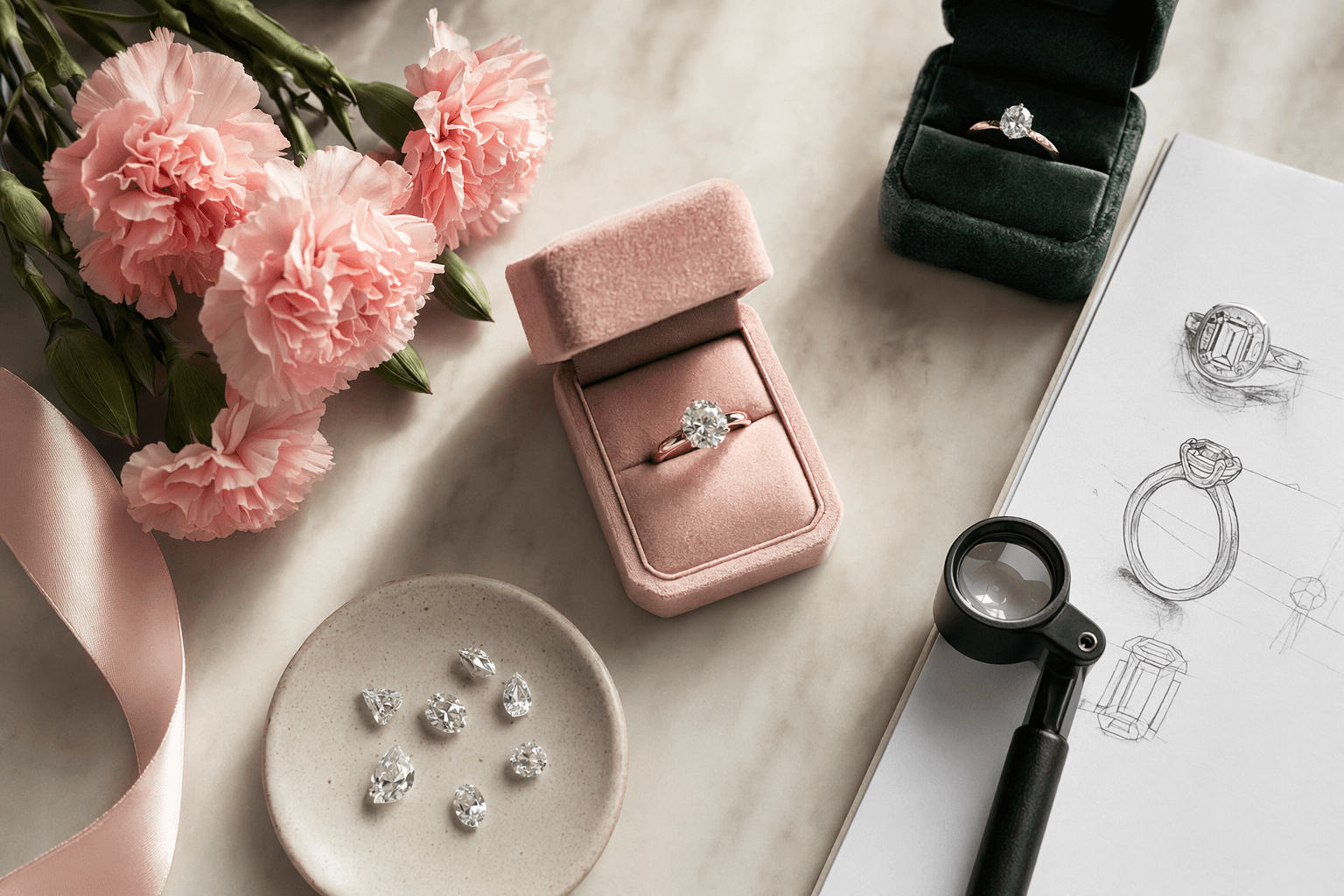
Engagement-ring shopping is feeling more strategic than sentimental right now. The Knot’s 2024 Jewelry & Engagement Study put the average engagement ring at $5,200, down from $6,000 in 2021, $5,800 in 2022 and $5,500 in 2023, while BriteCo’s 2025 report still pegs the average at $6,504 after a five-year high of $9,025 in 2022. That spread says something important: the modern ring market is less about a fixed price and more about how far a budget can stretch when customization, lab-grown diamonds and retailer policies all compete for attention.
The clearest sign of that shift is lab-grown demand. The Knot found that 52% of engagement rings featured a lab-grown diamond in 2024, up six percentage points from 2023 and a huge leap from 2019, when lab-grown stones accounted for just 12% of engagement rings. That is the share hook in one number: in five years, lab-grown diamonds moved from fringe to majority choice, and that change is rewriting what “affordable” can mean without making a ring feel lesser.
Where value is actually showing up
The strongest deals are not simply the cheapest rings on a page. They are the ones that combine lower pricing with useful features, especially for shoppers trying to balance a milestone purchase with Mother's Day-season promotions. Quince is one of the clearest examples, with several lab-grown diamond styles priced around $2,900 to $4,600, a range that sits well below many traditional engagement-ring purchases.
Blue Nile is taking a slightly different approach, with a dedicated affordable engagement rings page and an explicit push toward lab-grown diamond jewelry as a way to make a budget go further. Brilliant Earth, meanwhile, frames value through ethical sourcing, sustainability and customization, which matters if the emotional value of the ring depends as much on where it came from as how it looks. For shoppers who want a ring to feel personal rather than generic, that customization piece is often where the real premium is justified.
Service policies can matter as much as carat weight
A lower sticker price can be attractive, but policies often decide whether a ring is truly a good buy. James Allen emphasizes free shipping, a lifetime warranty and hassle-free returns, the sort of back-end protections that reduce the anxiety of buying an expensive piece online. Those terms do not make a ring more beautiful, but they do make the purchase easier to trust.
Kay Jewelers is leaning hard into the season with Mother's Day sale language, including up to 50% off and delivery timing tied to May 7 for Mother's Day. That kind of urgency can be useful for shoppers on a tight calendar, especially when the date matters as much as the budget. Signet Jewelers, Kay’s parent company, described itself in fiscal 2025 results as the world’s largest retailer of diamond jewelry, which underscores how much of the market still sits with a few major players even as more shoppers compare online options.
The retailers shaping the comparison shopping mindset
This is not a market defined by one dominant brand message. The affordable-ring conversation now spans comparison sites, direct-to-consumer sellers and established chains, with names like Rare Carat, Ritani, With Clarity and Friendly Diamonds sitting alongside Blue Nile, Brilliant Earth, James Allen, Quince and Kay Jewelers. That mix matters because the shopper is no longer choosing only between a mall counter and a classic diamond house. The choice is now about how the ring is sourced, how it is built and what happens if the size, setting or stone needs attention later.
That broader field also makes the shopping experience more transparent, at least when retailers are clear. A ring with a lower price can still be a stronger purchase if it includes lab-grown inventory, a thoughtful setting and a generous return policy. A ring with a higher price can still make sense if the craftsmanship, sourcing story or service package is especially strong. The point is not to chase the cheapest number. It is to understand what that number buys.
How to read the fine print before you buy
The smartest engagement-ring buyer treats the sale banner as only one part of the story. What matters just as much is whether the retailer explains the stone type, the setting options, the warranty and the upgrade path in plain language.
- Check whether the diamond is lab-grown or natural, and make sure the price difference actually reflects the material choice.
- Look for customization tools if you want a ring that feels personal rather than mass-market.
- Compare return windows, shipping speed and warranty coverage, especially if you are buying online.
- Treat vague sustainability language with caution unless the retailer says exactly what standards, materials or sourcing practices it uses.
That last point is especially important now, because many brands are speaking the language of ethics and sustainability at the same time. Brilliant Earth does this most explicitly, but shoppers should still press for specifics rather than accepting a polished claim at face value. Transparency is what turns a marketing line into real value.
Why this Mother's Day moment matters
This season’s ring promotions reflect a larger retail pattern in 2026: value, customization and sustainability are no longer separate selling points, they are the new baseline. De Beers Group’s diamond-insight reporting shows natural diamond jewelry demand cooling after the post-2021 surge, while lab-grown diamonds continue to expand their role in the category. The result is a market where the best ring is not always the biggest one or the most expensive one, but the one that looks considered, wears well and respects the budget that made it possible.
Know something we missed? Have a correction or additional information?
Submit a Tip