NAJ Guide Covers Insurance, Cleaning, and Daily Care for Your Jewelry
Most jewellery is never beyond repair, but without a proper insurance valuation, you may not recover it if lost. The NAJ sets a surprisingly specific standard for both.
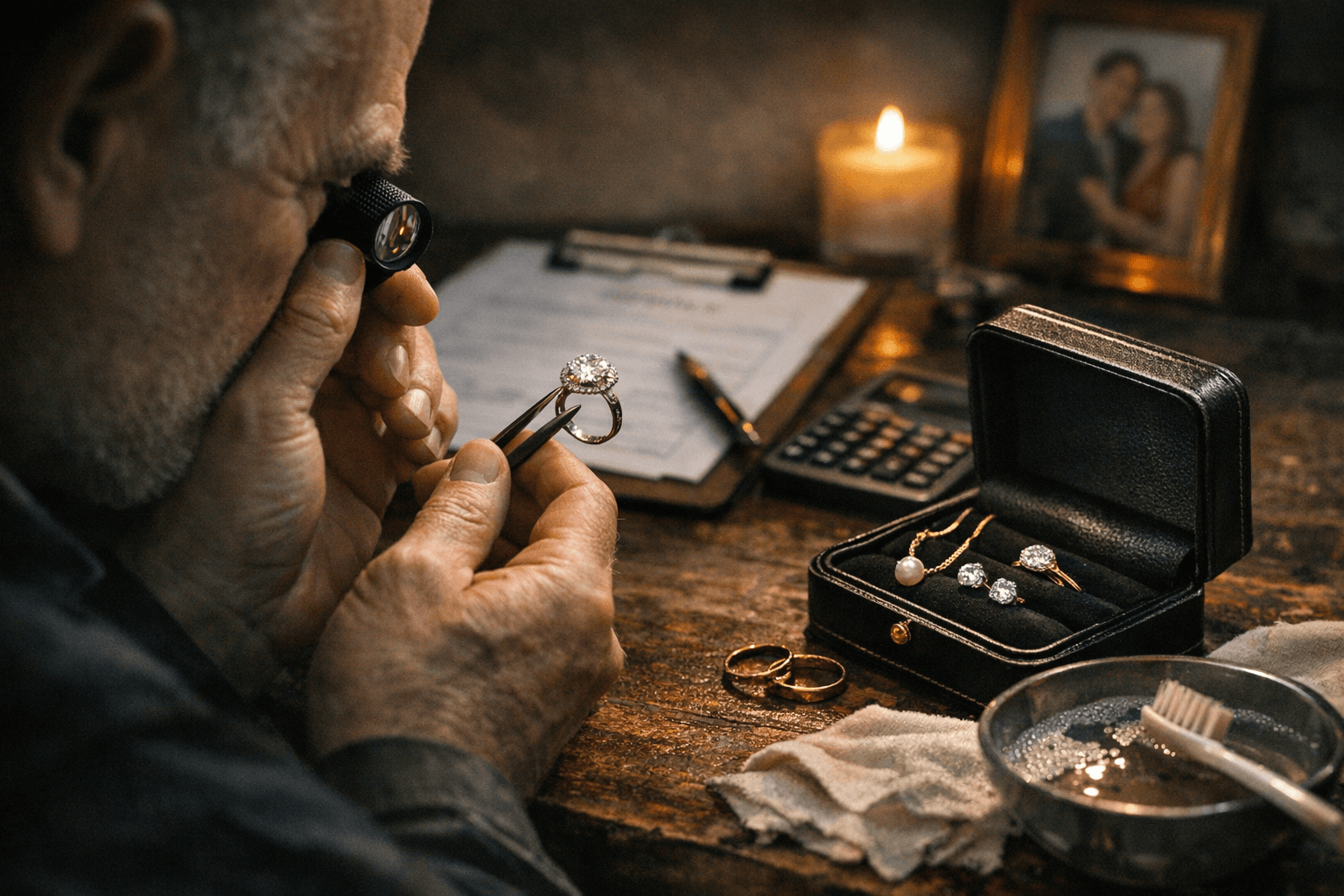
The ring has been worn through handwashing, cooking sessions, and years of unconscious fidgeting. The pearl necklace lives at the bottom of a jewellery box, occasionally tangled with a gold chain. The diamond engagement ring gets a cursory wipe on a sleeve. For most people, jewellery care is improvised, sporadic, and optimistic. The National Association of Jewellers takes a more structured view, and the gap between their standard and common practice is wider than most owners realise.
Start with the valuation, not the cleaning cloth
Before thinking about cleaning products or storage solutions, the NAJ's guidance begins somewhere most people overlook: insurance. "Make sure you have a detailed insurance valuation for your jewellery," the association advises, and the standard they set for "detailed" is worth pausing on: a professional valuation should be "detailed enough that a jeweller could use it to draw a pretty accurate sketch of the item." That is not boilerplate language. It means the document must describe not just metal type and carat weight, but the cut, shape, settings, and identifying characteristics of each piece.
This matters because most standard home insurance policies offer inadequate cover for jewellery. A valuation should include the valuer's details along with a precise description covering metal type, cut, weight, colour and clarity of stones, and for watches, the make, model, and serial number. A photograph is often essential. The NAJ's Institute of Registered Valuers (IRV) has been raising industry standards for more than three decades. A number of UK insurers specifically require valuations from a Member or Fellow of the Institute, and all IRVs abide by the NAJ's Principles of Best Practice for Valuers. The NAJ has registered valuers located across the UK.
How to find a jeweller you can trust
Not every shop that sells jewellery is qualified to appraise, repair, or advise on it. The NAJ offers a clear signal for consumers: look for the Grant-of-Arms, a mark that identifies retail jewellery shops around the UK that have been vetted by the association. This is the physical equivalent of checking a hallmark. If you are uncertain about the care, repair, or valuation of any piece, the NAJ recommends seeking the advice of a member.
The jewellery MOT: routine maintenance matters
A professional should regularly check jewellery for damage or wear. If you have concerns about a piece's condition, the NAJ advises taking it to your local member, who "will take great pride in helping you keep yours looking as good as the day it was bought."
Think of it in the same terms as a car service. A loose stone setting, a worn prong, or a weakening clasp will only worsen with daily wear. Catching these issues early is almost always cheaper and less stressful than dealing with a lost stone or a broken chain. The reassurance from the NAJ is genuine: "The best news of all is that your jewellery will very rarely be beyond repair or restoration."
General daily care: the basics that make the biggest difference
The NAJ's practical guidance for everyday wear is straightforward but frequently overlooked:
- Remove jewellery before cooking, cleaning, and washing up, and keep it away from sunlight, excessive heat, and damp conditions when storing.
- Take pieces off for any activity that could scratch, knock, or damage them. If in doubt, remove and keep safe.
- Store jewellery separately, ideally in a soft-lined box or case, so pieces do not tangle, rub, or scratch one another. Fasten chains and necklaces when storing to avoid knots.
- Pearls should be kept separately, as they are easily scratched by hard gemstones.
Cleaning gold
Fingerprints and daily dirt build up faster than most people expect, dulling even the brightest gold. The NAJ's step-by-step method is gentle and effective:
1. Add a few drops of washing-up liquid or another mild degreasing solution to a bowl of lukewarm water. Avoid hot or ice-cold water, as extreme temperature changes can damage the piece.
2. Clean the whole piece, working into hard-to-reach areas, and take extra care around stone settings.
3. Rinse thoroughly in clean water to remove all soap residue.
4. Dry gently with a lint-free cloth, or lay the piece on a cloth to air dry. Gold is soft and susceptible to scratching, so be as gentle as possible throughout.
If you prefer a commercial product, a cleaning solution designed exclusively for jewellery is a safe choice, provided it is formulated for the correct precious metal or gemstone. Using the wrong solution on the wrong material is a common and avoidable mistake. One important caution: if your gold piece contains gemstones or pearls, the NAJ advises being "extra careful when cleaning," as the method safe for the metal may not be safe for the stone it holds.
Gemstones: more delicate than they look
Many coloured gemstones have been treated to enhance their colour or clarity, and these treatments can interact poorly with cleaning products. The NAJ recommends using warm water rather than hot or boiling, since many stones are susceptible to heat. Inclusions within gemstones can weaken their structure if aggressively cleaned.
For nearly all coloured stones, warm water, a couple of drops of washing-up liquid, and a soft brush are more than adequate. A toothbrush is ideal due to its head size and flexibility; hard or rigid brushes should be avoided entirely. Emeralds that have been oiled to improve their colour are particularly vulnerable to steam and ultrasonic cleaning, which can strip the treatment irreversibly. Never clean with steam, boiling water, or ultrasonic tools, as these will irreversibly damage certain gems. Malachite is an outlier even among sensitive stones: it requires cool water specifically, as heat can cause permanent damage.
Diamonds: brilliant but not bulletproof
Despite being the hardest naturally occurring substance on Earth, diamonds can still fracture and be scratched by other diamonds due to their directional hardness. Oil from fingertips and general grime adhere to the surface quickly and reduce brilliance. Store diamonds separately from other jewellery, including other diamond pieces; individual small plastic bags or a fabric-lined case offer reliable protection. For cleaning, soak in warm water with a couple of drops of washing-up liquid as a degreasing solution.
Silver: tarnish is normal, and it is treatable
Silver tarnishes over time as it reacts with oxygen and sulphur in the air. The discolouration is unavoidable, but it does not damage the metal and can be removed easily with cleaning. One preventive measure costs nothing: simply wearing your silver jewellery regularly slows the tarnishing process. Careful storage in a separate soft-lined case reduces both the rate of tarnish and the risk of physical wear.
The through-line in all of this is professional involvement. Whether it is a valuation detailed enough to support an insurance claim, a Grant-of-Arms jeweller trusted with a repair, or a routine check that catches a loose setting before a stone disappears, the NAJ's guidance consistently points toward expertise rather than guesswork. For pieces that carry both financial and sentimental value, that is a reasonable standard to hold.
This article was produced by Prism’s automated news system from verified source data, official records, and press releases, then run through automated quality and moderation checks before publishing. The system is built and supervised by the people who set the standards it runs under. Read our full AI policy.
Did this article answer your question?