Natural Diamond Council Challenges Pandora’s Carbon Footprint Claims
Pandora’s new carbon labels promise clarity on lab-grown diamonds, but the Natural Diamond Council says the comparison tilts shoppers toward a misleading takeaway.
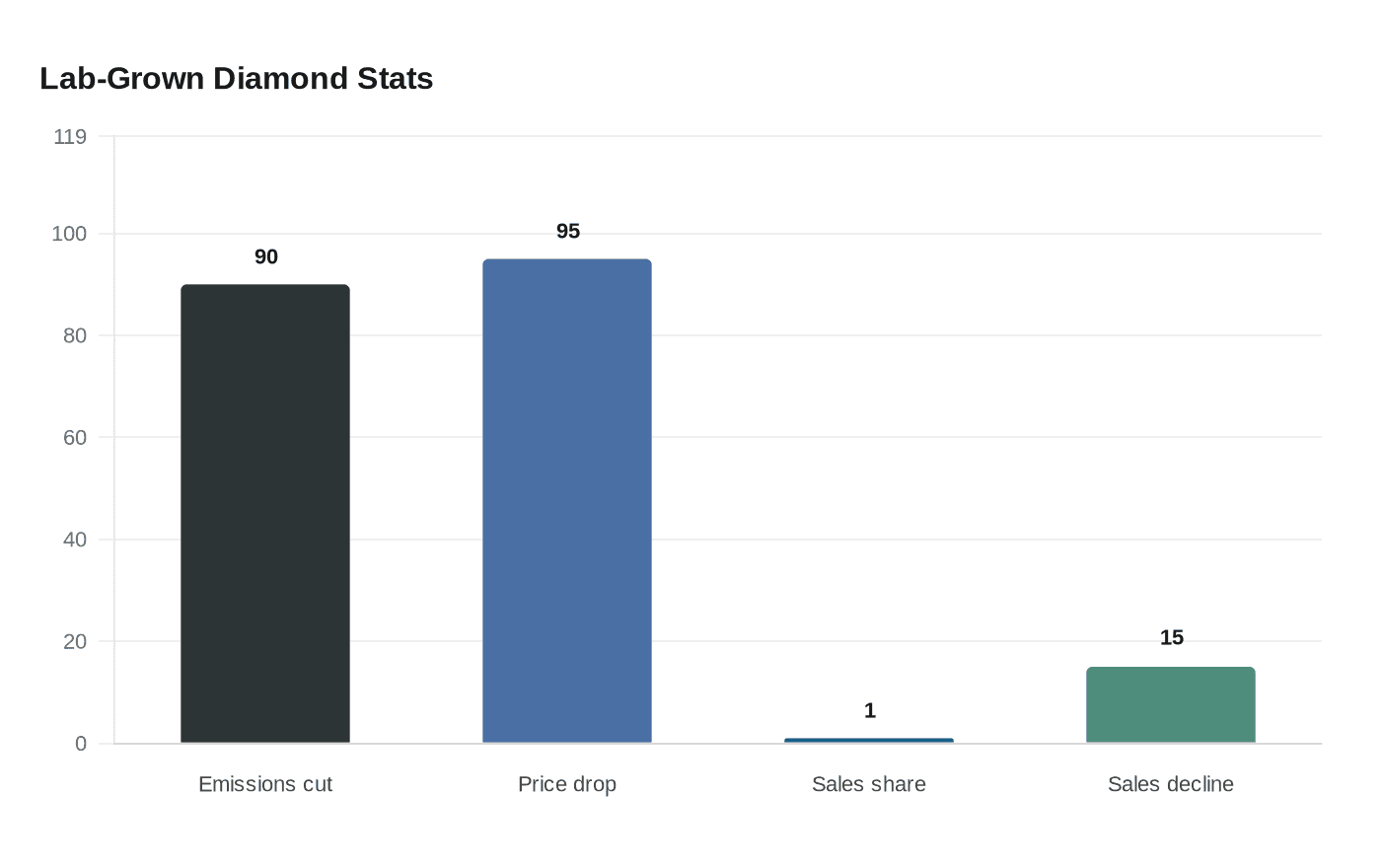
Pandora tried to turn diamond shopping into a carbon-conscious decision this week, adding footprint labels to its lab-grown stones and calling the move the “5th C.” The brand said a one-carat lab-grown diamond carries 12.58 kg of CO2e emissions, about 90% lower than a mined diamond of the same size, a claim meant to answer the question many buyers are now asking at the counter: what am I really paying for?
The Natural Diamond Council answered with a public rebuke aimed at Pandora chief executive Berta de Pablos-Barbier. In an open letter, the council called the campaign “another disappointing PR stunt” and said the comparison unfairly attacked the natural diamond industry. It also said Pandora’s framing leaned on outdated data, in some cases from 2013, and on a 2019 study commissioned by the Diamond Producers Association, the council’s predecessor.
For shoppers, the fight is more than corporate sparring. Pandora said its lab-grown diamonds are made with 100% renewable electricity, set in 100% recycled silver and gold, and sold with emissions figures calculated by external life-cycle assessment experts and verified by EY. The company said the labels cover emissions from raw materials through cutting and polishing, and that it would share its methodology with other jewelry makers. Pandora has also said its lab-grown diamonds are “identical to mined diamonds in every way.”
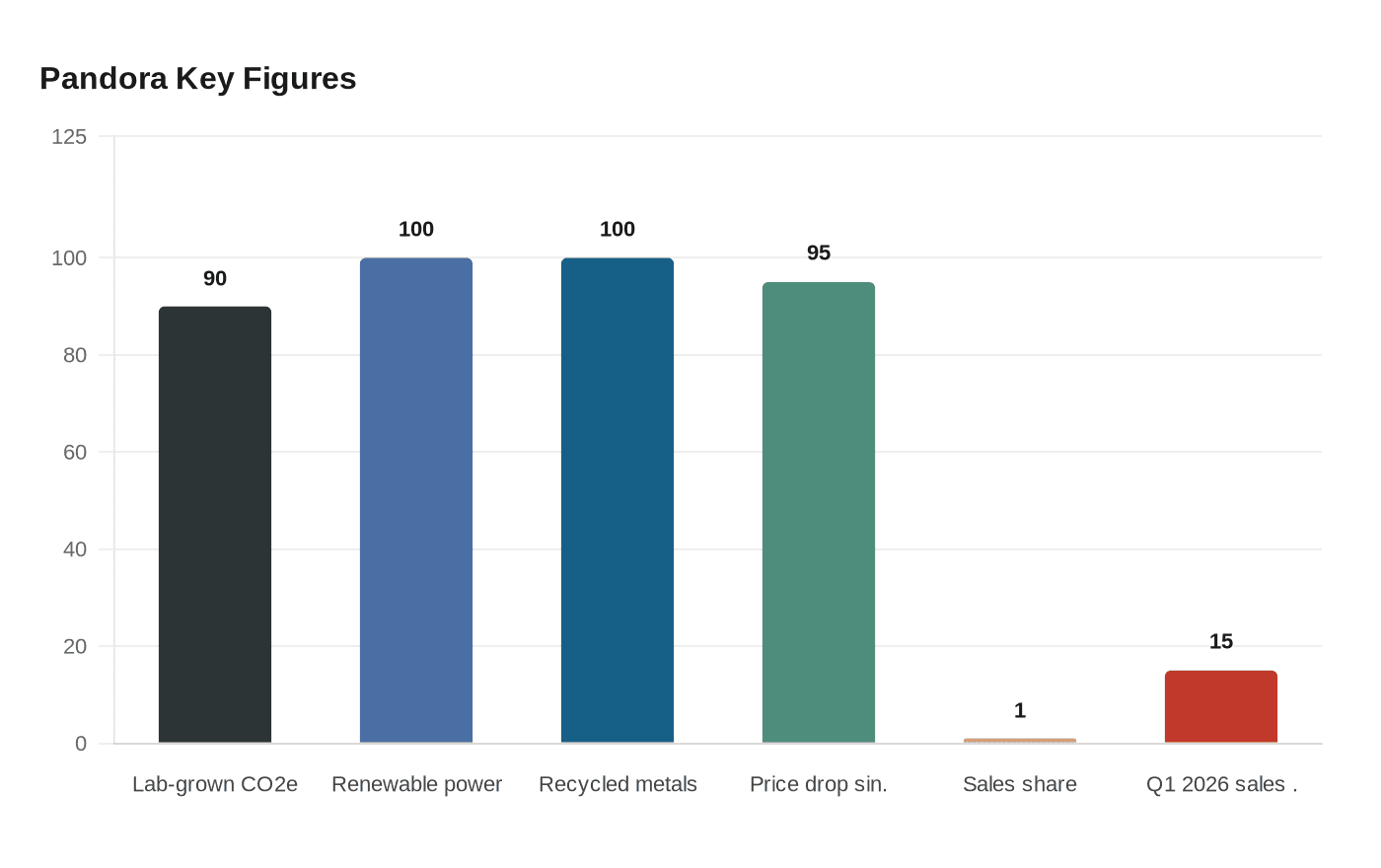
The Natural Diamond Council rejects that framing. Its materials say lab-grown diamonds are manufactured products, mass-produced mainly in China and India, and that sustainability claims should be backed by evidence on social footprint as well as carbon. Its 2025 report says more than 70% of lab-grown diamonds are produced in China and India, where much of the grid electricity still comes from fossil fuels, and says wholesale prices for a one-carat lab-grown diamond have fallen 95% since 2018.
That context matters because Pandora is one of the biggest mainstream brands to go all-in on lab-grown diamonds. It stopped using mined diamonds in 2021, launched its lab-grown strategy that same year, and said the category still represents only about 1% of total sales. Those sales fell 15% year over year in the first quarter of 2026, even as the collection was being sold in the United States, United Kingdom, Canada, Australia, New Zealand and Denmark.
The consumer gap is obvious: one side is selling carbon clarity, the other is warning that the numbers do not tell the whole story. Before choosing lab-grown or natural, buyers should ask what the emissions figure includes, whether the metals are independently certified as recycled, how the diamonds were powered and cut, and whether the brand is disclosing provenance as carefully as it is advertising sustainability. In fine jewelry, the label on the case is only as useful as the truth behind it.
This article was produced by Prism’s automated news system from verified source data, official records, and press releases, then run through automated quality and moderation checks before publishing. The system is built and supervised by the people who set the standards it runs under. Read our full AI policy.
Did this article answer your question?