Oscar Heyman Debuts First Spring Catalog
Oscar Heyman's Spring 2026 Lookbook, featuring 35 handcrafted pieces including a 111-carat tourmaline necklace, is the season's first major colored-stone forecast.
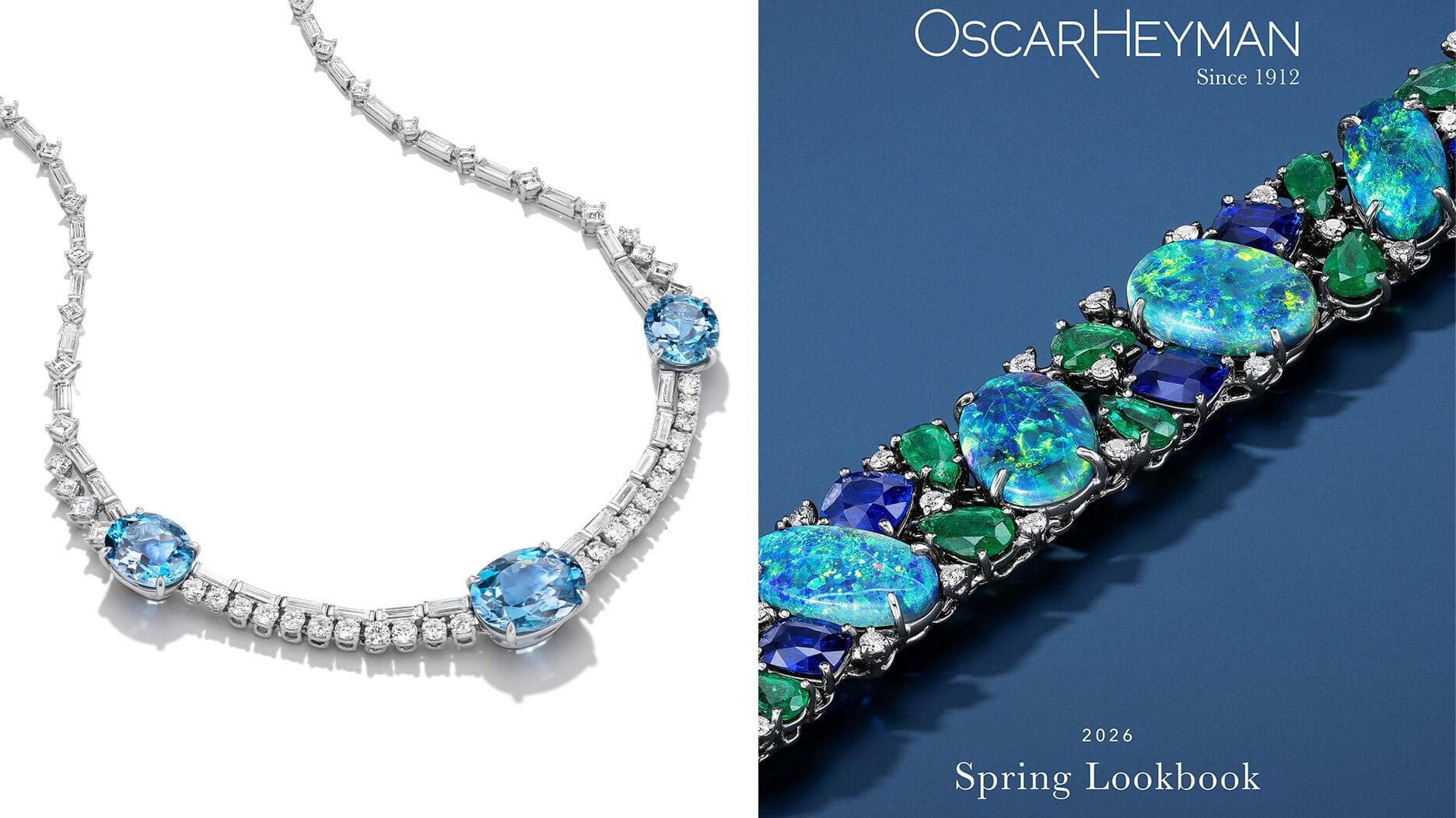
Picture a 111-carat multi-color tourmaline and diamond flower necklace moving from a Madison Avenue workbench to a catalog page. That is where spring jewelry trends begin. Oscar Heyman, the New York house that spent decades supplying Cartier, Tiffany & Co., and Van Cleef & Arpels with handmade pieces before those brands put their own names on the finished work, released its first-ever spring catalog in late March. The 35 one-of-a-kind pieces in the Spring 2026 Lookbook are handcrafted entirely in the brand's Madison Avenue atelier, and they tell a precise story about where colored-stone design is headed this season, and where affordable brands will follow.
The lookbook was distributed digitally to partner retailers across the country in early April, timed to the opening of the spring fashion season and the run of gifting occasions that follow: Mother's Day, graduation, and wedding and anniversary season. Tom Heyman, co-president of Oscar Heyman, called it "an editorial preview for 2026, an appetizer leading up to the Couture show in Las Vegas where we will unveil a host of spectacular new styles." He also described the firm's guiding formula: "Each design incorporates old world craft with modern styling, resulting in what we call 'modern classics.'"
That description carries particular weight from a house that has been building pieces by hand since 1912. For buyers working at every price point, five design cues in the lookbook are worth tracking now, before their equivalents arrive in stores.
The platinum bracelet set with multiple pear-shaped emeralds, sapphires, and diamonds is the collection's most commercially transferable piece. The pear cut has always been a high-jewelry staple because its elongated teardrop form maximizes a stone's apparent size and creates a drop effect that reads well at any scale, but this season it is clearly moving into accessible territory. The shopping keyword to watch is "pear drop colored stone pendant" or "teardrop gemstone ring" in sterling silver. Lab-grown emeralds and sapphires in pear cuts are available from brands like Brilliant Earth starting well under $1,000, with the same visual drama Oscar Heyman achieves in platinum.
The tourmaline necklace makes the season's clearest argument for color mixing. The 111-carat multi-color tourmaline and diamond flower necklace draws on tourmaline's extraordinary natural range, from hot pinks to deep blue-greens and golden yellows, to build a full spectrum into a single piece. For the same effect without the gemological price tag, search "rainbow gemstone necklace" or "multi-stone ombre bracelet." Enamel versions from Gorjana and Mejuri capture the color-saturated spirit for under $150, and lab-grown multi-stone options are multiplying quickly across major accessible platforms.
The pansy earring deserves its own paragraph. Oscar Heyman originally designed the pansy brooch in the 1930s, producing it exclusively for Tiffany & Co. toward the end of the 20th century. A new edition of the iconic pansy earrings appears in the Spring 2026 Lookbook, and the botanical motif's reappearance at high-jewelry level is a reliable predictor: floral forms propagate downward through the market within two seasons. The keyword to use is "enamel pansy earrings" or "flower stud earrings gold vermeil." Enamel treatments give affordable pieces the same layered, painterly quality that gemstone-set florals achieve at Oscar Heyman's price point, without the lapidary cost.
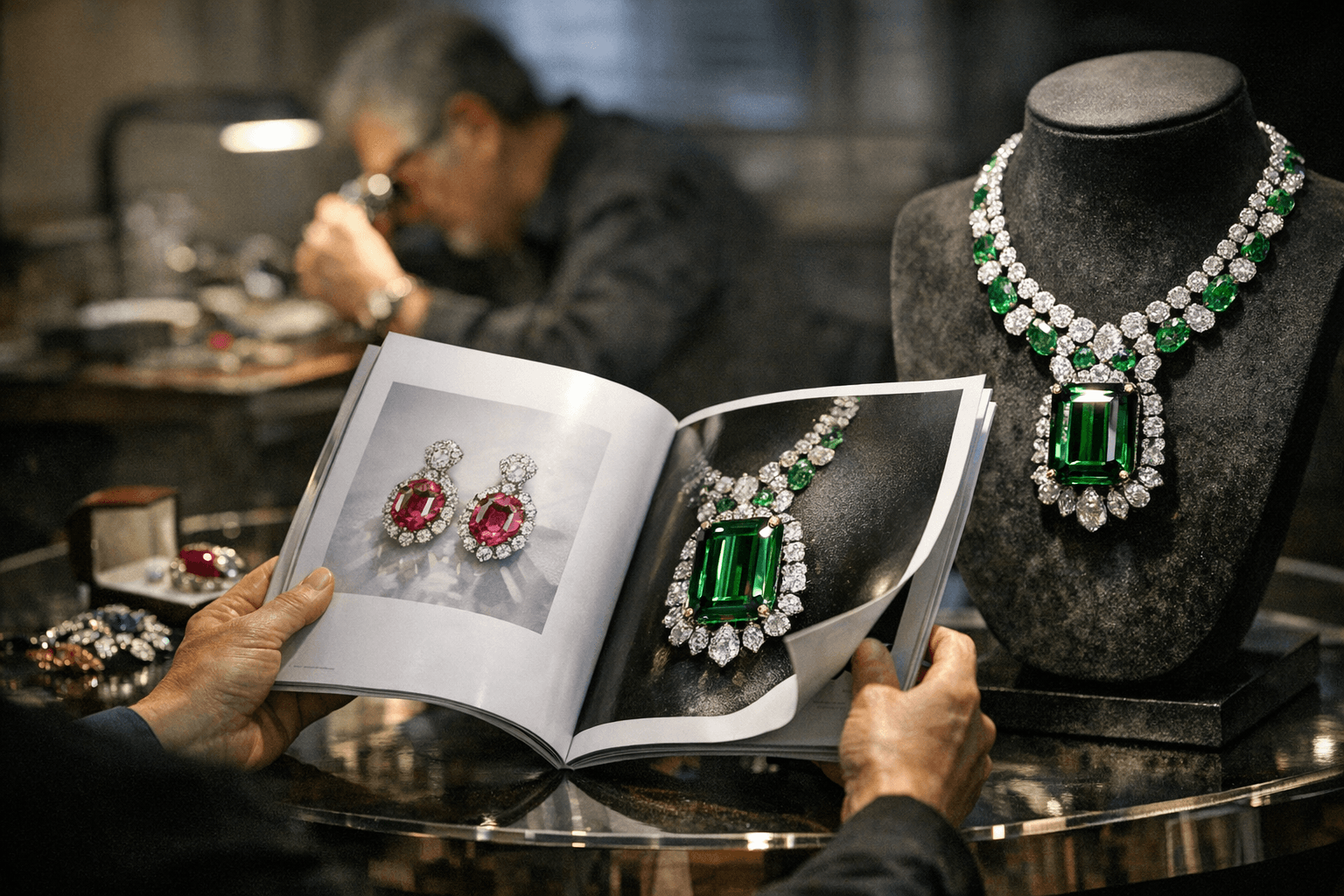
The 4.61-carat no-oil emerald ring is the lookbook's provenance statement. "No oil" means the stone received no clarity-enhancing treatment, a gemological designation that signals natural, unenhanced color as this season's prestige marker. For buyers who want that vivid, deeply saturated green without the certification premium, lab-grown emerald solitaire rings offer full origin transparency and consistent color starting around $300 in white gold vermeil. Chrome diopside, a natural stone with similar depth of green, is available in sterling settings for under $100 and is underused at every price tier.
The aquamarine-and-diamond necklace rounds out the catalog's color program, underscoring a broader shift in high jewelry away from all-white combinations and toward high-contrast pairings. Aquamarine's icy blue against colorless white diamonds is the most accessible version of that direction. The stone carries a double commercial advantage as a birthstone and a warm-weather color. Search "aquamarine and white topaz sterling necklace" for direct equivalents; blue topaz, which sits in the same cool register, extends the options further at a lower price point still.
The lookbook also solidifies Oscar Heyman's position in rare and esoteric colored gemstones, featuring sphene, unheated spinel, and Paraiba tourmaline alongside more familiar rubies and sapphires. An invisibly set ruby and diamond ring points to a revival of that technically demanding setting style. Of the esoteric stones, Paraiba tourmaline's intense neon blue-green has the most cultural momentum right now, and its color is closely approximated in lab-grown versions that are commercially available in silver settings. Sphene, with its fiery dispersion and yellow-green body color, typically takes a full year to translate into accessible work, but independent designers tend to pick up on high-jewelry catalog placements faster than mid-market retail does.
The publication is displayed on the home page of the Oscar Heyman website and will be followed by a larger presentation at the Couture show in Las Vegas. The consistent emphasis across the 35 pieces, on pear cuts, botanical motifs, color contrast pairings, and deeply saturated unenhanced gemstones, makes the seasonal direction unambiguous. This is not a diamond-first spring.
This article was produced by Prism’s automated news system from verified source data, official records, and press releases, then run through automated quality and moderation checks before publishing. The system is built and supervised by the people who set the standards it runs under. Read our full AI policy.
Did this article answer your question?