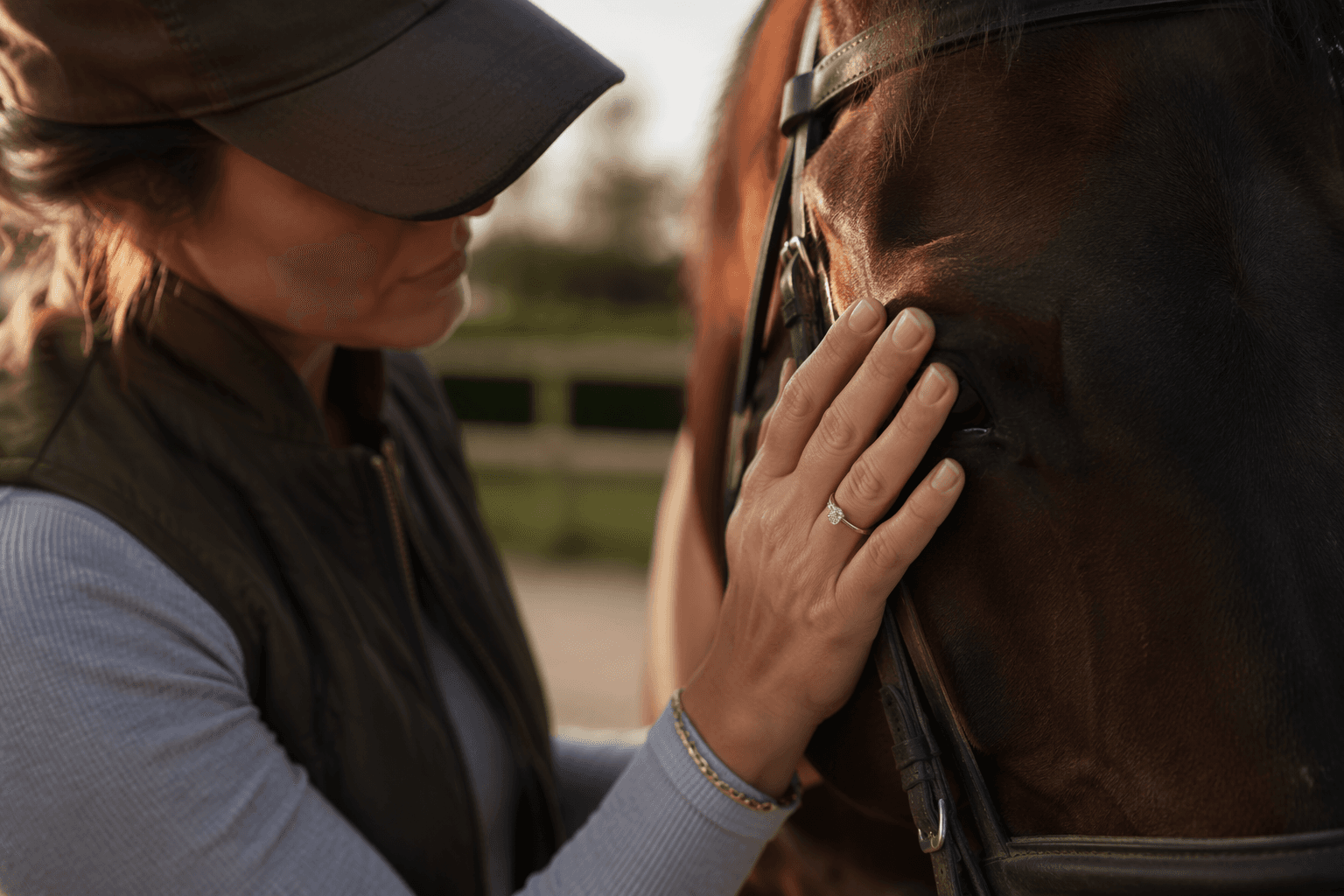
Piaget Opens Doubled-Footprint Flagship at 16 Place Vendôme in Paris
Piaget's new 1,900 sq ft Place Vendôme flagship, designed by Rafael de Cárdenas, features blue sodalite-framed windows and liquid-gold interiors inspired by Haussmann apartments.

Piaget has consolidated its Paris presence into a single, expanded flagship at 16 Place Vendôme, a 1,900-square-foot, two-level space designed by Rafael de Cárdenas that replaces the maison's former split configuration: a modest foothold at Place Vendôme and a larger address on Rue de la Paix.
The move is, by conventional retail logic, a contraction. CEO Benjamin Comar was unbothered. "Honestly, we didn't really ask ourselves that question," he said. "We prefer Place Vendôme. So we wanted to merge the two boutiques into one." The new boutique doubles the footprint of the old Place Vendôme unit, and Comar frames the trade-off as a deliberate bet on intimacy over square footage.
De Cárdenas delivered something that reads less like a boutique than a cabinet of curiosities assembled by a particularly well-traveled collector. From the street, circular windows framed in blue sodalite panels announce the renovation's ambitions, their mineral depth a direct nod to Piaget's historic stone dials and to the decorative vocabulary of 20th-century French masters Jean Royère and Jacques Ruhlmann. Inside, the layout follows the logic of a classic Haussmann apartment: a sequence of adjoining salon-like rooms connected by a sinuous, asymmetrical staircase. Marble and fine blue stones sit alongside coral and gold; tailor-made furniture anchors rooms that shift from intimate to expansive as you move through them; liquid-gold backdrops catch and amplify the light.
De Cárdenas described the architectural brief as holding "two essential Piaget energies in equilibrium: the exacting precision of Swiss watchmaking and the liberated glamour of the maison's spirit and sybaritic legacy." He added: "It is a space where technical mastery and a life of pleasure are not opposites, but partners; where time is measured with rigor but experienced with exuberant passion." In a separate statement, he connected the design's material playfulness to Piaget's own character: "The maison's playful side, conveyed by different materials, colours and interplays of shapes allowed me to create a concept worthy of a cabinet of curiosities."
The design language has a name inside the maison: "Extraleganza," a philosophy that holds precision and exuberance as complementary rather than competing forces. Comar described the finished space as "a celebration of life, an explosion of light."
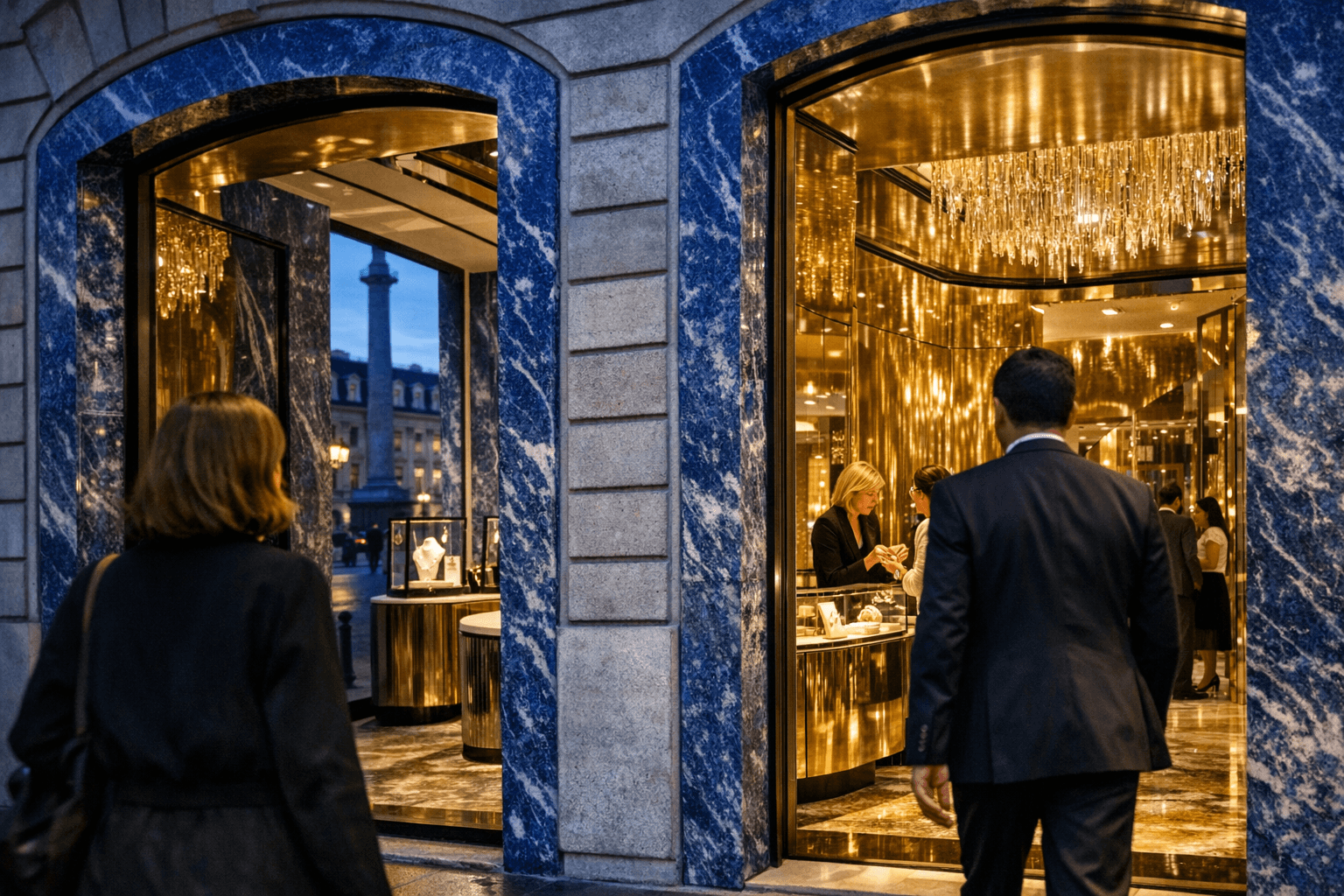
The flagship is not simply a retail environment. Piaget intends the address to function as a cultural hub, hosting a rotating display of contemporary artworks renewed every six months, a program consciously echoing the spirit of the original 1959 Salon Piaget in Geneva. That spirit also informed the interior atmosphere, which carries forward the sensibility of the temporary "Piaget Apartment" the maison set up during the transitional period between Rue de la Paix and its current address.
"Jewelry is also an experience," Comar noted. "You always remember when you bought a piece."
The retail strategy has implications beyond Paris. The new aesthetic is intended as a template for global boutiques across the network. Within Richemont, Piaget's stablemate Cartier has been aggressively expanding its showroom footprint in the United States; the Paris investment signals that Piaget is moving to close that gap on its own terms, starting from the address it has always considered home.
This article was produced by Prism’s automated news system from verified source data, official records, and press releases, then run through automated quality and moderation checks before publishing. The system is built and supervised by the people who set the standards it runs under. Read our full AI policy.
Did this article answer your question?