Queen Camilla’s amethysts turn state visit jewelry into diplomatic storytelling
Camilla’s amethysts and brooches turned Washington dressing into a lesson in provenance, memory, and diplomatic symbolism.
The code hidden in the jewels
Queen Camilla’s American state-visit wardrobe worked like a visual brief for the whole trip. Over four days in Washington, D.C., the King and Queen marked the 250th anniversary of the Declaration of Independence and the close ties between the United Kingdom and the United States, and Camilla answered that diplomatic script with jewels that already carried decades of public meaning.
Why the Kent amethysts matter
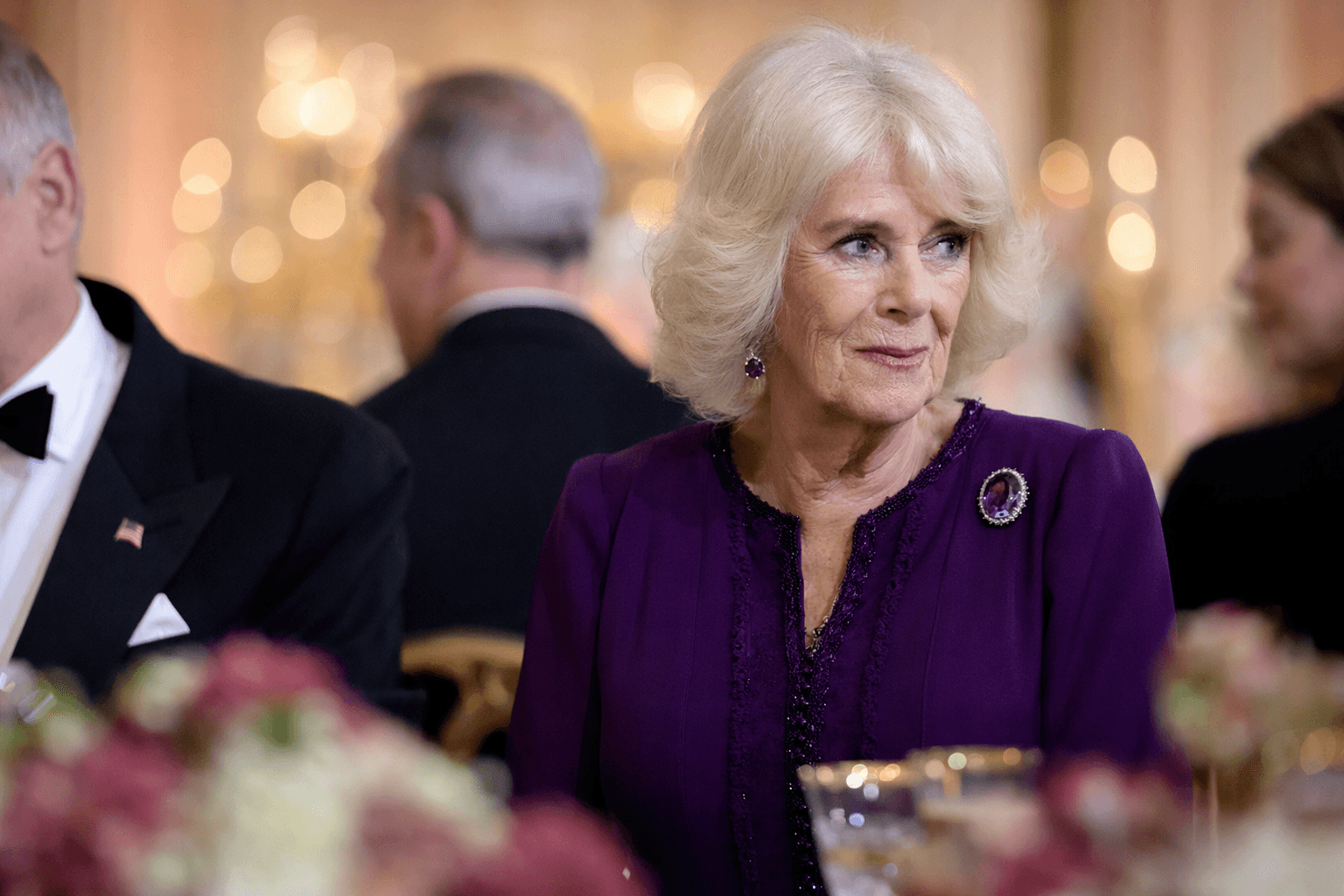
At the White House state banquet on April 28, Camilla reached for one of the oldest surviving jewelry suites in the royal collection, the Kent Amethyst Demi-Parure. Dating to 1818, it originally belonged to Princess Victoria of Saxe-Coburg-Saalfeld, Duchess of Kent and mother of Queen Victoria, and it includes a necklace, earrings, hair combs, and brooches. The necklace’s amethyst and diamond clusters, shell motifs, and star details make it a study in nineteenth-century craftsmanship, but its real power lies in how intact the story has remained.
The suite’s history is entwined with succession politics and dynastic continuity, which is why it still reads as more than beautiful color. Queen Elizabeth II wore the amethysts in Portugal in 1985 and again in Washington in 1991, including at Arlington National Cemetery in Virginia, so Camilla’s choice placed the White House dinner in direct conversation with earlier royal diplomacy on American soil. She left the tiara at home, which made the necklace and earrings feel even more intentional, less like display and more like memory.
Brooches as diplomatic punctuation
The amethysts were only one chapter. On arrival, Camilla pinned on the Cartier Union Jack and Stars and Stripes brooch, a jeweled flag piece given to Queen Elizabeth II by New York City officials in 1957, when Elizabeth made her first American state visit as monarch. The message was immediate and legible: Britain and America, side by side, rendered in diamonds, rubies, sapphires, and patriotic symbolism that needed no speech to be understood.
At the White House welcome ceremony, attended by President Donald J. Trump and First Lady Melania Trump, Camilla switched to the Cullinan V brooch, a heart-shaped jewel cut from the Cullinan diamond discovered in South Africa in 1905. That stone has lived many public lives, from Queen Mary’s collection to Queen Elizabeth II’s wardrobe and now to Camilla’s diplomatic dressing, where it reads as both heirloom and signal. Even in a room full of ceremony, it was a reminder that one jewel can carry a century of political and personal history.

For the address to Congress, Camilla changed again and wore the Queen Mother’s Art Deco Cartier diamond-and-rock-crystal brooch. That choice mattered because the piece is linked to the first British royal state visit to the United States in 1939, when the Queen Mother and King George VI made their own historic passage into American diplomacy. Camilla’s quick change was not an afterthought. It was a curated sequence, with each brooch giving the day a different register: welcome, alliance, continuity.
What this teaches everyday jewelry wearers
The useful lesson is not about owning royal-level diamonds. It is about understanding that jewelry becomes most powerful when its meaning is clear and repeatable. A piece with a known origin, whether inherited, gifted, commissioned, or bought from a maker who documents materials and sourcing honestly, will always say more than a stack of anonymous sparkle. That is also where greenwashing falls apart: vague heritage language is not the same thing as real provenance.
- Choose one piece with a story you can actually tell.
- Favor materials and settings you can identify, whether that means amethyst and diamond, rock crystal, or a signed Cartier design.
- Wear the same piece in more than one setting so it can accumulate meaning instead of gathering dust.
- Keep documentation when you can, because the paper trail is often what separates sentiment from marketing.
Camilla’s state-visit jewels offer a practical checklist for your own collection:
How to read a meaningful piece
The deeper lesson is that repetition can be a form of elegance. Camilla did not rely on one look to do all the work; she let each jewel speak to a different audience and occasion, from the White House dinner to the congressional address. For everyday jewelry, that is the model worth borrowing: one well-chosen piece, worn often, with enough history, craftsmanship, or personal meaning to make it feel larger than the outfit around it. In the end, the strongest jewelry stories are the ones that can travel, be re-worn, and still make sense every time they reappear.
Know something we missed? Have a correction or additional information?
Submit a Tip