Simple Steps to Clean Your Jewelry and Keep It Sparkling
A soft toothbrush and dish soap are all you need to restore a diamond's brilliance at home — here's the full material-by-material care guide.
Most jewelry doesn't lose its sparkle because it's old. It loses it because of a thin film of lotion, soap residue, cooking oils, and environmental grime that builds up, imperceptibly, with every wear. The fix is simpler than most people expect: warm water, a few drops of mild dish soap, and a soft-bristled toothbrush kept specifically for the purpose. But getting the details right by material matters enormously, and cutting corners with the wrong cleaner can cause damage that no amount of polishing will undo.
"Regular jewelry maintenance restores sentimental value, beauty, and guards your financial investment," as one care guide puts it. That framing is exactly right. A diamond ring is not a passive object; it's something that requires a modest but consistent relationship.
Starting with the basics: what every piece needs
The foundation of any jewelry care routine is a gentle degreasing solution. Mix a small bowl of warm (not hot) water with a few drops of mild dish soap. This combination loosens oils and environmental buildup without threatening metal finishes or most stone settings. After soaking and scrubbing, rinse under warm running water and dry with a lint-free cloth or clean paper towel. That sequence, repeated regularly, handles the majority of everyday maintenance for most jewelry materials.
The tools matter as much as the solution. Reserve a soft-bristled toothbrush exclusively for your jewelry; using one that's touched toothpaste introduces a mild abrasive to the equation. Toothpaste, bleach, and other household cleaners should be kept well away from any piece, whether gold, silver, or gemstone-set. As one guide warns, these substances "can scratch or damage delicate finishes."
Cleaning by material
*Gold* responds well to the warm-water-and-soap method. Soak the piece, brush gently, rinse thoroughly, and pat dry with a soft cloth. When gold jewelry contains gemstones, check the stone's specific needs before soaking — some treated or porous stones are sensitive to water and soap. Softer or treated stones often require professional cleaning, and when in doubt, a jeweler's advice is the safest path.
*Silver* calls for a different approach. A silver polishing cloth does the most careful work, removing tarnish without introducing any moisture risk. Alternatively, a paste made from baking soda can address heavier tarnish. Silver's main vulnerability is exposure: store it away from direct sunlight and moisture, and ideally in its own fabric-lined compartment, because contact with other metals accelerates tarnishing.
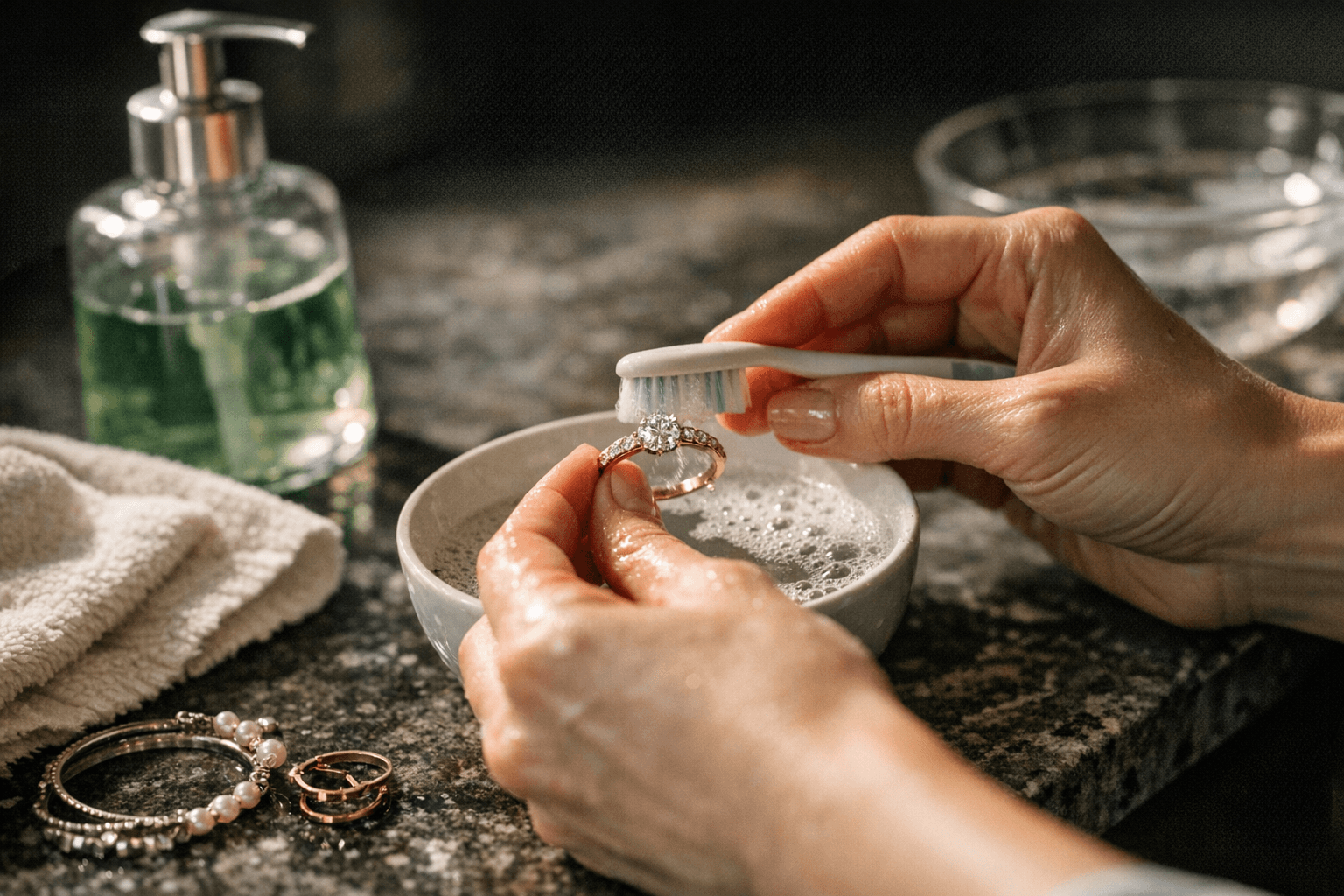
*Diamonds* have the most detailed at-home protocol, and the specifics are worth following closely. The supplies list is short: warm water, a mild degreasing soap such as dishwashing liquid, a soft-bristled toothbrush reserved for jewelry only, and a paper towel or lint-free cloth. Before starting, if you're working near a sink, plug the drain — it's an easy precaution against losing a stone that's worked loose.
The cleaning steps, as outlined by Bcclark, run as follows:
1. Mix a bowl of warm water with a few drops of mild dish soap. Avoid bleach, toothpaste, or any other harsh cleaner.
2. Plug the sink drain if you're working over a basin.
3. Soak the diamond jewelry in the solution for 20 to 30 minutes to loosen dirt and oils. (Nelsoncoleman's guidance puts the soak at 15 to 20 minutes; either range is effective for routine cleaning.)
4. "Gently scrub the jewelry with your soft toothbrush, paying special attention to the back of the diamond and any crevices where grime tends to build up."
5. "Rinse thoroughly under warm water until all soap residue is gone."
6. "Pat dry with a clean paper towel. Allow the piece to air dry completely before wearing or storing."
7. "Repeat this process as needed — weekly, monthly, or whenever your jewelry loses its sparkle."
The back of the stone and the underside of the setting are where oils accumulate most heavily and where light return suffers most. Don't skip them.
*Plated jewelry* requires a sharply different approach. Plating is a very thin layer of metal over a base material, and it is genuinely fragile. Do not soak plated pieces; as one jewelry designer explicitly cautions, "Don't soak them, and always store them separately to avoid having them rub against harder jewelry items." Do not use abrasive cleaners or scrub aggressively, as both will strip the finish quickly. Clean delicately with a damp soft cloth, and accept from the outset that all plating eventually wears away. Regular, gentle touch-ups extend its life; harsh cleaning shortens it dramatically.
Vermeil pieces like Oak & Luna's name necklaces and stackable initial rings in 14k gold vermeil hold their warm color well with this gentle cloth-only approach, making them a good example of plated jewelry that rewards careful maintenance.
*Porous and treated gemstones* — opals, pearls, and many treated stones — should be wiped with a damp cloth rather than soaked. Immersing them risks structural damage or alteration to treated surfaces. Ultrasonic cleaners, which some jewelers offer for at-home use, are effective only for untreated stones and should be used with professional guidance. If you're uncertain whether a stone has been treated, ask before cleaning.
The chemicals and habits that quietly do damage
The bigger risk for most everyday jewelry isn't improper cleaning; it's routine exposure to chemicals that accumulate unnoticed. Perfume, sunscreen, hairspray, and household cleaners all dull metal and can compromise settings. The practical fix: put jewelry on after applying these products, not before. Thick lotions and creams leave residue on stones and in settings, so remove rings before moisturizing. During cooking, oils and spices cling to diamonds and settings; during sports, gardening, or swimming, physical stress combined with chemical exposure risks loosening prongs and stones. Before any of these activities, the jewelry comes off.
"Buff pieces with a soft cloth after each use to remove oils" is a simple habit that compounds into real preservation over time.
Storage: the underrated half of jewelry care
How you store your jewelry determines a great deal about how it ages between cleanings. Tossing pieces together in a dish or drawer is a fast route to scratches, tangled chains, and accelerated tarnish. Each piece should be stored individually, in a fabric-lined compartment or a soft pouch, away from direct sunlight and moisture. This is especially important for silver and for plated pieces, both of which react to contact and environmental exposure. For those in dry climates, introducing some form of humidity control to storage reduces the stress that very low moisture places on certain metals and settings.
A maintenance schedule worth keeping
The consensus across care guides is a three-tier rhythm: at-home cleaning once a month for frequently worn pieces (more often, as Bcclark notes, "whenever your jewelry loses its sparkle"), combined with the daily habit of buffing and removal before risky activities. Beyond that, a professional cleaning and inspection every six to twelve months addresses what home care cannot: checking prong integrity, cleaning in ultrasonic baths where appropriate, and catching any settings that have shifted before a stone is lost. As one professional recommendation puts it, "nothing beats a professional touch" for catching what the eye doesn't easily see.
Weekly cleaning, monthly checks, and yearly professional service form the complete picture. The at-home steps are quick, the tools are inexpensive, and the return is jewelry that looks, and structurally behaves, as if it were just purchased. A piece that receives this kind of attention doesn't just stay beautiful; it stays intact for the next generation to inherit.
This article was produced by Prism’s automated news system from verified source data, official records, and press releases, then run through automated quality and moderation checks before publishing. The system is built and supervised by the people who set the standards it runs under. Read our full AI policy.
Did this article answer your question?