Smart Rings Are Now Everyday Jewelry: Oura, Samsung, and Top Picks Tested
The Oura Ring 4 still leads, but subscription-free rivals like Samsung's Galaxy Ring and RingConn's $199 Air are closing the gap fast.
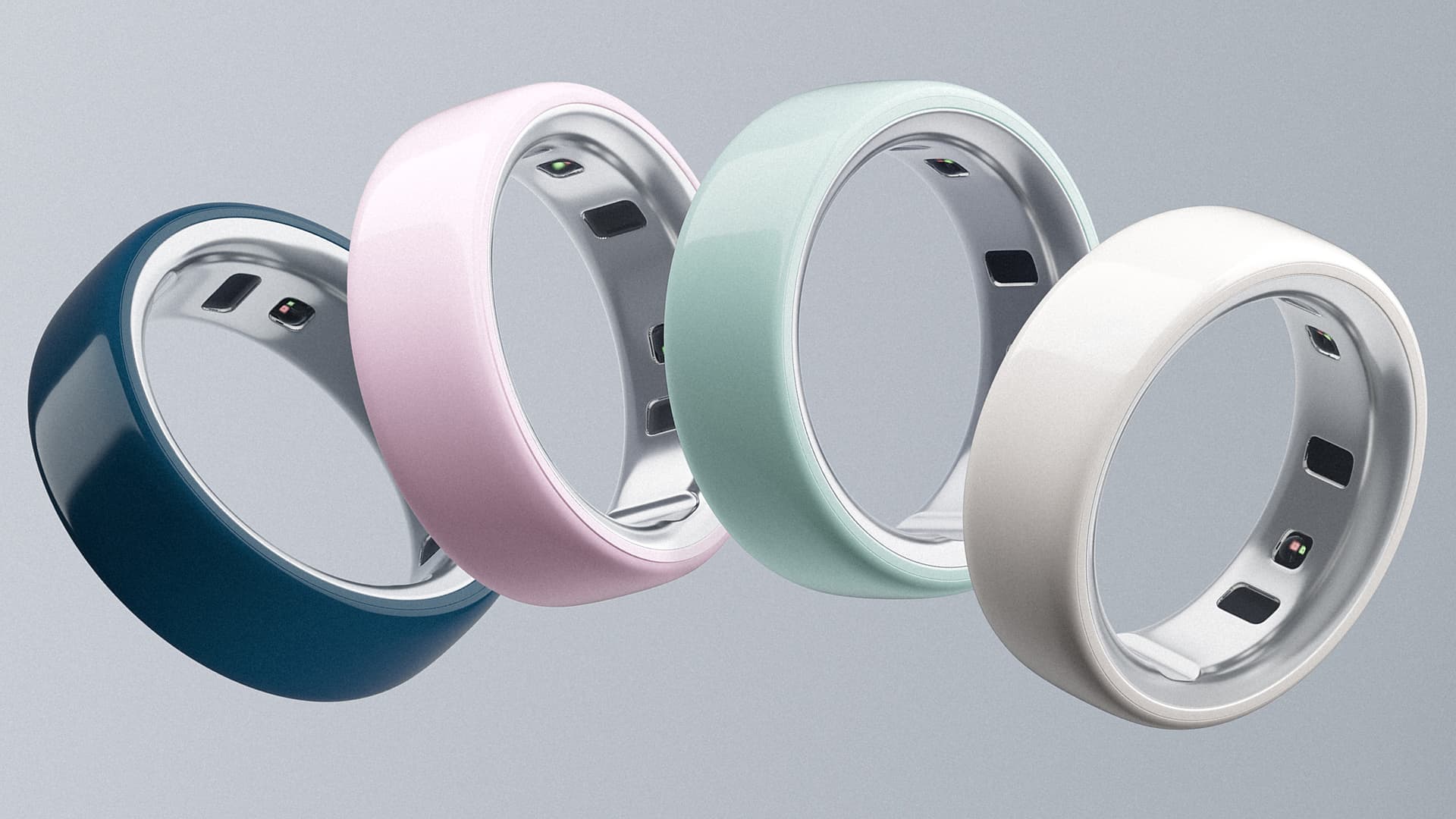
The smart ring category arrived quietly, worn by biohackers and wellness devotees who didn't mind paying a premium for a sensor disguised as jewelry. By 2026, that niche has become a market, and the question is no longer whether a smart ring belongs on your finger alongside your gold stacking bands — it's which one earns the spot.
The field has expanded rapidly. The market boomed through 2025, and 2026 is bringing new entrants from household names and startups alike, all aiming at Oura's long-held dominance. Prices have dropped, subscription models have been challenged, and the rings themselves have become genuinely attractive objects. What follows is a ranked guide to the best options available right now, based on long-term testing and cross-outlet consensus from Wareable, PCMag, Wired, and Tom's Guide.
1. Oura Ring 4
Every serious review of the smart ring category in 2026 reaches the same conclusion: the Oura Ring 4 remains the best. Wareable calls it "the best smart ring you can buy," citing its premium designs, the most polished app in the category, and "countless actionable insights into your nighttime rest, readiness, and body responses." PCMag's Senior Writer Andrew Gebhart, who has covered the category since the Ringly and Kovert Designs Altruis launched roughly a decade ago, states plainly: "In terms of accuracy, features, and the overall user experience, the Oura Ring 4 is the best smart ring we've tested." The redesigned sensors from the previous generation maintain accuracy even as the ring naturally rotates on your finger during sleep, closing the data gaps that plagued earlier designs. Priced at $349, the Oura Ring 4 is not the most expensive ring on this list, but it carries the only mandatory subscription fee among the major options: $5.99 per month or $69.99 per year. That ongoing cost is the single biggest reason anyone looks elsewhere. Wired's February 2026 update also noted that Oura has expanded its product lineup to include a ceramic ring, a charging case, and a blood labs feature, while the company navigates reported lawsuits and bans whose specifics have not yet been fully detailed in testing coverage.
2. Samsung Galaxy Ring
Tom's Guide names the Samsung Galaxy Ring "the first true competitor to Oura's throne," and the description holds. At $399 — the highest price point on PCMag's tested list — the Galaxy Ring costs more than the Oura Ring 4 upfront, but it carries no monthly subscription fee, which changes the long-term math considerably. The hardware is refined: weighing just 2.3 to 3.0 grams with a seven-day battery life, it is, as Wired notes, "a gram lighter than the Oura ring and noticeably lighter and slimmer." It arrives in an attractive, clear charging case with an LED battery indicator, a small but considered design detail. In Wired's testing, heart rate tracking proved "very accurate" against an Apple Watch Ultra benchmark, and the ring auto-detected workouts including pool sessions. The one notable hardware limitation: without a gyroscope, sleep tracking runs a little generous. The Galaxy Ring also integrates seamlessly with the Galaxy Watch8 series and Galaxy Watch Ultra, with both devices able to trade tasks and share battery-life responsibilities — a genuinely clever ecosystem solution that Wired describes directly: "exclusivity is a feature, not a bug." The caveat applies equally: gestures work only with select Samsung devices, and non-Samsung users will not extract the ring's full value.
3. RingConn Gen 2 Air
At $199, the RingConn Gen 2 Air is the most affordable option on PCMag's tested list, and comfort is its defining credential. Wired's reviewer Adrienne called it "the most comfortable, light, and well-fitting ring that Adrienne has tried, bar the Oura." It also offers colored ring protectors for personalization — a small concession to the jewelry instincts of wearers who resent being locked into a single finish. The tradeoffs are real and consistent across reviewers: workout tracking is limited and breaks down when heart rate is elevated, sleep is consistently overestimated relative to both Oura and Apple Watch, and steps and activity come in slightly under. RingConn added an AI assistant to the app that generates personalized plans and adjusts targets weekly, but Wired's assessment was frank: "It's fine. You can ask questions and get tips, but it didn't add much for me." For those prioritizing maximum battery life, Vertu's 2026 roundup specifically recommends the newer RingConn Gen 3, though long-term testing data on that model is less developed than the coverage available for the Gen 2 Air.
4. Ultrahuman Ring Air
The Ultrahuman Ring Air earns consistent praise as a subscription-free alternative that holds its own in long-term testing. Wareable explicitly groups it alongside the Samsung Galaxy Ring and RingConn Gen 2 as a device the outlet was "very impressed by" during in-depth evaluation, and it is one of three major alternatives Wareable identifies as carrying no ongoing subscription requirement. Wired references Ultrahuman among the upstarts applying genuine pressure to Oura. Detailed comparative sensor data from the current testing cycle is limited in the excerpts available, but the subscription-free positioning and favorable testing reception make it a strong candidate for anyone who wants data depth without Oura's monthly commitment.
5. Amazfit Helio Ring
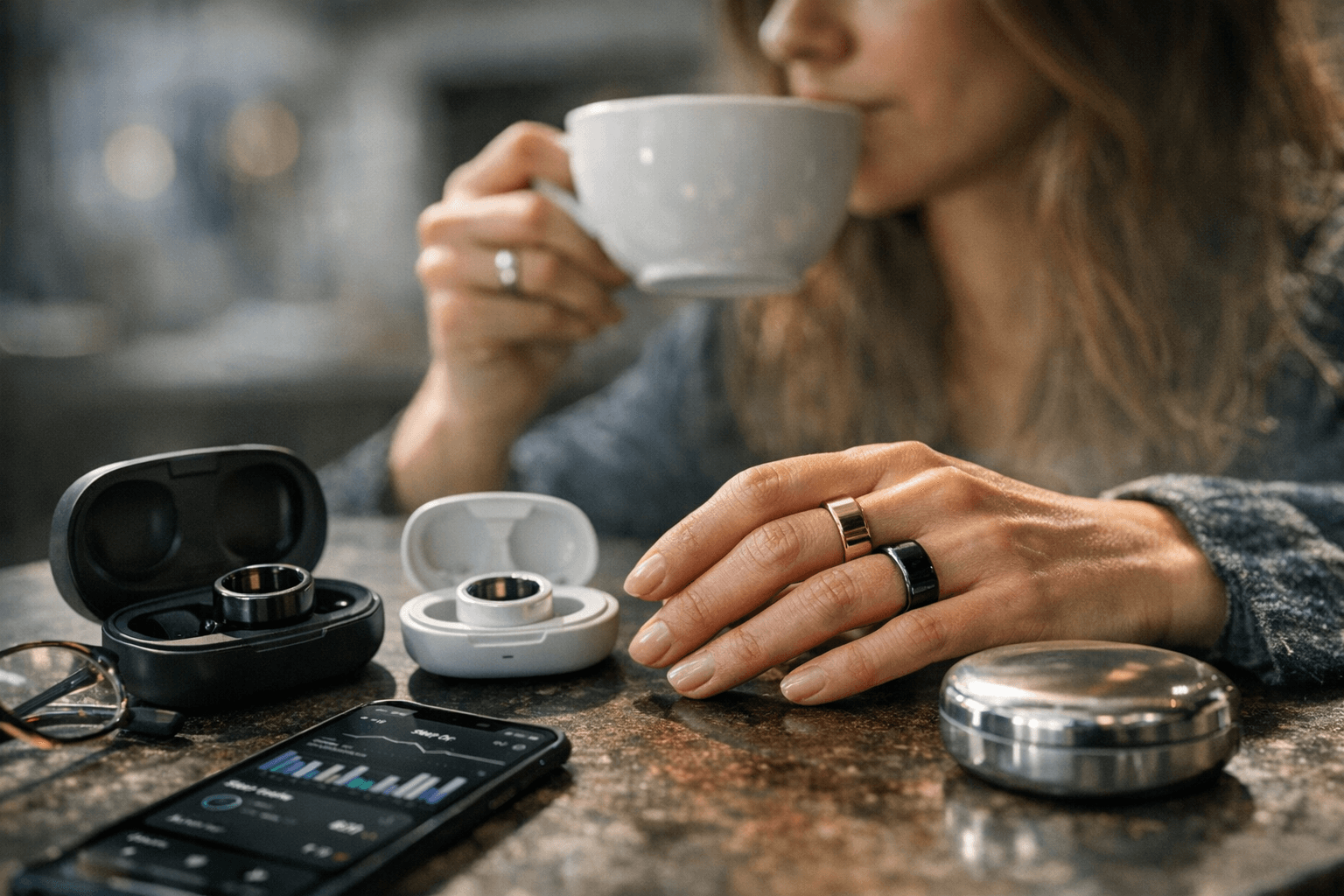
For wearers outside the Android ecosystem who want to stay under $200 and avoid subscription fees entirely, Tom's Guide recommends the Amazfit Helio Ring alongside the RingConn Gen 2 Air. The Helio's sensor suite is notably broad for its price tier: PPG, accelerometer, temperature sensor, and an EDA sensor, all packaged in a titanium build rated IP68 and 10ATM, meaning it is waterproof to 100 meters. At 3.75 grams, it sits between the ultralight Samsung Galaxy Ring and heavier options like the Prevention Circul+. The combination of serious water resistance, a richer sensor array than many competitors, and zero subscription fees makes this ring a compelling proposition for swimmers and travelers who want health data without platform lock-in.
6. Movano Evie Ring
The Movano Evie Ring is one of the few smart rings built specifically with women in mind, and its spec sheet reflects that focus. At 4.5 grams, it carries PPG, accelerometer, and gyroscope sensors — the gyroscope placing it ahead of the Samsung Galaxy Ring on that specific hardware point — and it is rated IPX8 swim-proof to 50 meters. It comes in silver and rose gold, with black listed as coming soon. For wearers who want a ring that takes sleep tracking seriously (the gyroscope matters here) and isn't tethered to a tech-giant ecosystem, the Evie holds a specific and defensible position in the market.
7. Prevention Circul+
The Prevention Circul+ is the heaviest ring in Wareable's comparison table at 4.9 grams, which is a meaningful distinction in a category where jewelry weight is part of the appeal. Its sensor load is on the lighter side: PPG and accelerometer only, without the temperature or EDA sensors found in the Amazfit Helio. Water resistance is rated IP67, meaning protection to one meter for 30 minutes — adequate for handwashing and rain but not swimming. It comes in silver, black, and rose gold. For wearers whose priority is basic biometric monitoring in a familiar color palette, it covers the fundamentals, though the weight and limited sensor depth make it harder to recommend against more capable alternatives at comparable price points.
8. Reebok Smart Ring
The Reebok Smart Ring enters the list with one significant asterisk: after the first year, it requires a $99 annual subscription fee. Wareable flags this explicitly as an example of how fee structures vary across the category. In a market where Samsung, Ultrahuman, and RingConn have normalized subscription-free data access, a $99-per-year commitment places Reebok in an awkward middle position — more expensive than Oura's $69.99 annual plan while lacking Oura's depth of insight and brand authority.
9. Leep Smart Ring
Wired's February 2026 update included a mention of Leep's new smart ring as a category entrant worth watching, though detailed testing data is not yet available. It represents the broader pattern that defined 2025 and appears set to continue: the smart ring category is attracting new voices, and the range of options for every budget and preference will keep expanding. Whether Leep differentiates on price, sensor depth, or design remains to be seen through independent long-term testing.
One category-wide limitation deserves a clear-eyed statement before any purchase decision: smart rings as a class still struggle with elevated-heart-rate workout tracking, and very few offer advanced sensors such as ECG or blood pressure monitoring. The absence of a screen and NFC also means these rings cannot replicate a smartwatch's daily utility. They are precision instruments for recovery, sleep, and resting biometrics — worn as jewelry, evaluated as data tools. The rings that understand and honor that distinction are the ones that earn their place in the daily rotation.
This article was produced by Prism’s automated news system from verified source data, official records, and press releases, then run through automated quality and moderation checks before publishing. The system is built and supervised by the people who set the standards it runs under. Read our full AI policy.
Did this article answer your question?